Synopsis
After an accident, working with insurance companies can feel overwhelming. At the Committed Collision & Auto Body Center in North Hampton, NH, we handle the entire insurance coordination process while providing your vehicle with safe, manufacturer-compliant repairs. Learn how we advocate for proper collision repair, document every step, and protect your rights throughout the claims process.
The phone call comes at the worst possible time. You’ve been in an accident. Your vehicle has damage. Now you face dealing with insurance companies, repair estimates, and unfamiliar terminology.
The insurance claims process often creates confusion for vehicle owners. Adjusters provide estimates. Repair shops submit supplemental requests. Parts discussions arise. Throughout this process, one question matters most: Will my vehicle be repaired safely and correctly?
Committed Collision & Auto Body Center is a trusted car collision repair shop in North Hampton, NH. We’ve over 20 years of experience and handle insurance coordination. We work with all major insurance providers to help you receive proper repairs that meet manufacturer standards. Our team manages communication, documentation, and authorization processes while you focus on getting back to normal life.
We explain how insurance coordination works in collision repair, what rights you have as a vehicle owner, and how we ensure your safety comes before cost savings.
Why Insurance Coordination Matters in Collision Repair
The Role of Insurance After an Accident
Insurance companies process millions of collision claims each year. When you file a claim, an adjuster evaluates your vehicle’s damage. This evaluation determines what repairs the insurer will initially authorize and cover.
According to CCC Intelligent Solutions’ 2024 report, over 63% of repairs involve a supplemental claim, with the average gap between the insurer’s initial estimate and the final approved repair cost ranging from $1,200 to $1,800. This gap exists because adjusters cannot always see hidden damage during visual inspections.
Many insurance estimates miss structural problems, sensor damage, or mechanical issues. These become visible only after disassembly begins. Hidden damage beneath bumper covers, frame components, and suspension systems often requires supplemental authorization.
The Balance Between Insurer Guidelines and OEM Standards
Modern vehicles require specific repair procedures outlined by manufacturers. These Original Equipment Manufacturer (OEM) standards dictate welding techniques, part specifications, structural measurements, and safety system calibration requirements.
Insurance companies sometimes suggest alternatives to reduce claim costs. They may recommend aftermarket parts or simplified repair procedures. While insurers manage fiscal responsibility, we must prioritize manufacturer compliance and vehicle safety.
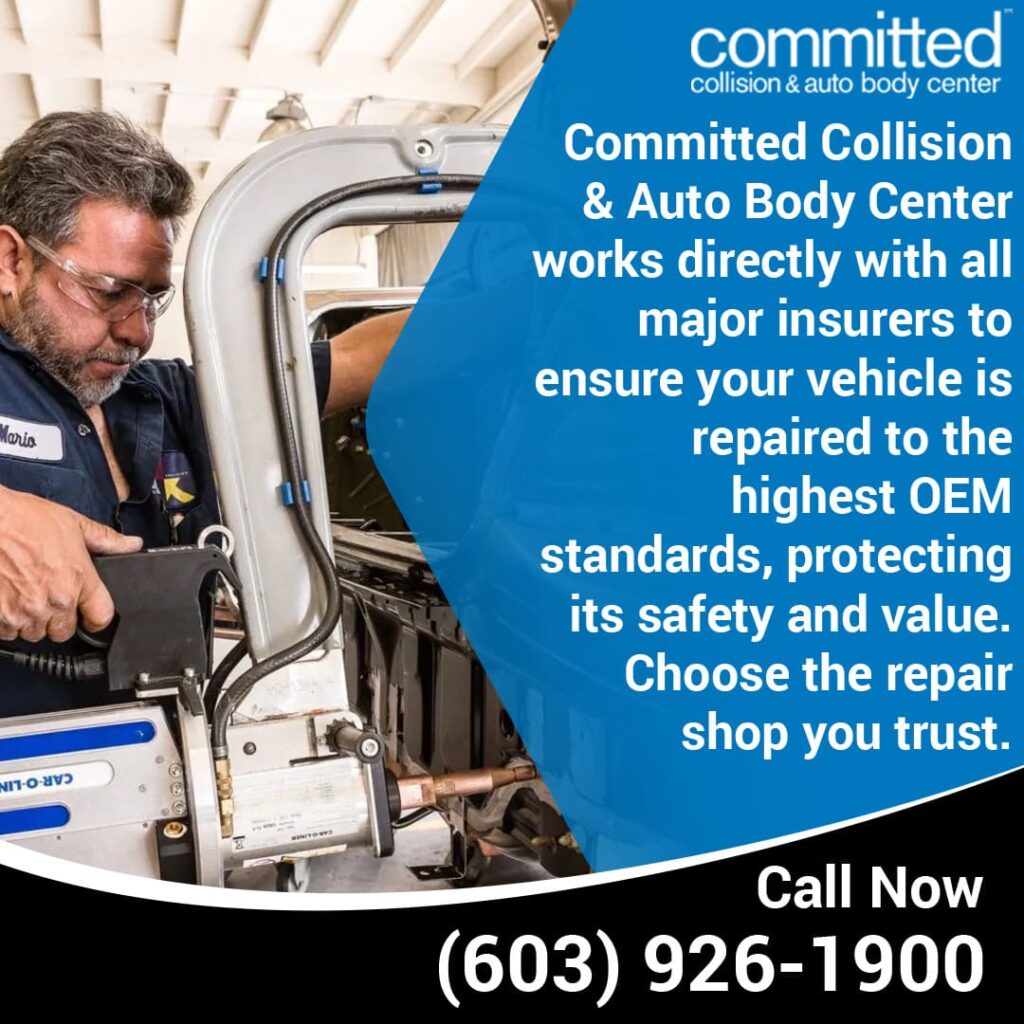
We follow OEM repair standards for every vehicle we repair. When insurers initially suggest cheaper alternatives, we provide documentation explaining why manufacturer procedures are necessary for your safety. With I-CAR Gold Class certification and ongoing manufacturer training, we understand current OEM requirements for all vehicle makes and models.
Step-by-Step: How We Work With Insurance for Proper Collision Repair
Step 1: Detailed Damage Assessment
Your repair process begins with a thorough inspection. We document all visible damage using photographs and detailed notes. Our certified technicians reference OEM repair databases to identify manufacturer-specific procedures for your vehicle’s make and model.
We use advanced measuring equipment like our Chief 3D Laser Measuring System to assess structural damage. This technology detects frame misalignment invisible to visual inspection. Our initial assessment provides accurate information for the repair estimate we submit to your insurance company.
Step 2: Writing and Submitting the Estimate
We create detailed estimates using industry-standard software that integrates with insurance company systems. Each estimate includes labor costs, required parts, and specific repair procedures based on OEM guidelines. We submit this documentation directly to your insurer for review and authorization.
Initial estimates cover visible damage only. Once we begin the disassembly process, additional problems often become apparent. These include bent frame components, damaged suspension parts, or malfunctioning sensors. When we discover these issues, we document them with photographs and measurements. We then submit supplemental estimates to your insurance company for approval.
Step 3: Repair Authorization and Communication
Clear communication keeps everyone informed throughout the process. We maintain regular contact with both you and your insurance adjuster during each phase of the repair.
You receive updates when we:
- Begin disassembly and detailed inspection
- Discover supplemental damage requiring authorization
- Receive insurance approvals for repairs
- Complete major repair stages
- Finish final quality control inspection
We handle negotiations with your insurer regarding repair procedures and parts selection. If your insurance company questions a repair recommendation, we provide OEM documentation explaining why specific procedures are necessary for your vehicle’s safety and structural integrity.
Important Note: We use written documentation and photographs to justify every repair procedure. This ensures insurers understand why manufacturer-level work is necessary for your safety.
Understanding Your Rights in the Collision Repair Process
You Have the Right to Choose Your Repair Shop
New Hampshire follows a fault-based insurance system, and you have the legal right to choose a collision repair specialist. Insurance companies cannot force you to use their preferred providers.
Insurance companies often maintain “preferred provider” networks. While these partnerships can streamline paperwork, you’re never required to use an insurer-recommended shop. You can select any licensed repair facility you trust.
Committed Collision & Auto Body Center works with all major insurance providers. Your choice of our shop doesn’t complicate the claims process or delay repairs. We handle all communication and documentation directly with your insurer.
You Have the Right to OEM Repairs
Factory procedures and parts preserve your vehicle’s warranty and safety systems. Modern vehicles contain sophisticated electronics, advanced materials, and precise engineering. Using non-OEM parts or incorrect repair methods can compromise these systems.
OEM parts are constructed with high-quality materials that match the original components of your vehicle, for durability and long-lasting performance. Some insurance policies may initially authorize aftermarket parts. However, you typically have the right to choose OEM parts.
We prioritize OEM parts for quality and safety. If alternatives are needed, we will discuss options with you. We explain these choices clearly and help you make informed decisions about your repairs based on safety, warranty concerns, and vehicle value considerations.
You Have the Right to Full Transparency
You deserve to understand exactly what repairs we’re performing and why they’re necessary. We provide detailed documentation throughout the repair process, including repair plans, damage photographs, measurement reports, and calibration records.
This transparency protects you if issues arise later. Complete documentation proves auto collision repairs were performed correctly according to manufacturer standards. It also validates insurance claims by showing exactly what work was completed and why it was necessary.
Why OEM Procedures and Proper Documentation Protect You
The Importance of OEM Repair Procedures
Modern vehicles incorporate aluminum, high-strength steel, and advanced electronics. These materials require specific repair techniques.
Incorrect welding on high-strength steel weakens structural integrity. Improper handling of aluminum compromises crash protection. Many newer standard vehicles have 1,400-plus semiconductor chips and roughly 30,000 parts, with electronic components accounting for 40% of a new vehicle’s total cost.
Repairing these complex systems demands specialized training and equipment. Our technicians maintain I-CAR Gold Class certification and ASE credentials. We receive yearly training on new vehicle technologies. This education helps us understand current repair procedures for the latest vehicle models, including proper welding techniques and ADAS calibration requirements.
How Documentation Helps Insurance Claims
Comprehensive documentation validates every aspect of the repair process. We create detailed records, including:
- Frame measurements before and after repair using our Chief 3D Laser Measuring System
- Repair procedures performed according to OEM specifications
- Parts invoices and specifications
- Calibration reports for safety systems
- Quality control inspection results
This documentation serves multiple purposes. First, it provides proof to your insurance company that repairs were necessary and performed correctly. Second, it creates a permanent record of work completed on your vehicle. Third, it protects you if future claims arise related to the accident damage.
| Documentation Type | Purpose | Benefit to Customer |
| Frame measurements | Verify structure restored to factory specifications | Safety assurance and quality proof |
| OEM repair procedures | Confirms manufacturer-approved methods used | Maintains warranty integrity |
| Calibration reports | Validates ADAS sensor accuracy | Confirms safety systems function correctly |
| Photographic evidence | Documents pre-repair damage and post-repair condition | Protects against future disputes |
Common Issues Between Shops and Insurance and How We Solve Them
Underestimated Damage and Supplements
Hidden damage may become visible only after we remove exterior panels and components.
Common hidden damage includes:
- Bent frame rails or structural components
- Damaged suspension or steering parts
- Malfunctioning sensors or cameras
- Electrical system damage
- Mechanical component failures
When we discover additional damage, we immediately document it with photographs and detailed descriptions. We then submit a supplemental estimate to your insurance company explaining what we found and why additional repairs are necessary. As the best collision repair shop in North Hampton, NH, our documentation includes OEM repair procedures that specify how the damage must be addressed.
Most insurance companies expect supplemental claims. They have established processes for handling them. We work directly with adjusters to expedite approvals and minimize delays to your repair timeline.
Part Type Disagreements (OEM vs. Aftermarket)
Insurance companies sometimes specify aftermarket parts to reduce claim costs. Aftermarket parts can be 30-50% cheaper than OEM parts, allowing insurance companies to minimize claim payouts. However, quality varies significantly among aftermarket manufacturers.
We explain the differences between OEM and aftermarket parts clearly:
- OEM parts: Guarantee proper fit, maintain warranty coverage, meet manufacturer safety standards
- Aftermarket parts: Vary in quality, may have fitment issues, and could affect warranty coverage
We prioritize OEM parts for quality and safety. If alternatives are needed, we will discuss options with you. Ultimately, it is your choice as long as it follows state laws.
We document our part recommendations and justify them to insurance adjusters. If your insurer insists on aftermarket parts, we inform you of potential implications for safety, warranty, and resale value.
Labor Time or Procedure Disputes
Insurance estimating software uses generic labor times that may not reflect manufacturer requirements. Modern vehicles often require additional procedures not captured in standard databases.
These procedures include:
- Pre-repair and post-repair diagnostic scanning with OBD-II scanners
- ADAS calibration after structural repairs through our sister company, Automotive Alignments & Calibrations, which uses Hunter/Bosch DAS 3000 equipment
- Specific welding or bonding techniques per the manufacturer’s specifications
- Multi-stage paint systems with proper curing cycles
- Component programming or initialization
We use manufacturer time standards and OEM repair procedures when estimating labor. If your insurance company questions our labor charges, we provide documentation from the vehicle manufacturer explaining why specific procedures are required.
This documentation protects you from receiving incomplete repairs that don’t address all safety-related systems.
How Technology Supports Accurate Insurance Communication
Digital Estimating and Photo Documentation
Our estimating software integrates directly with major insurance company systems. This integration allows faster communication and streamlined approval processes.
Digital photo documentation accompanies every estimate. We photograph damage from multiple angles before beginning repairs. During disassembly, we document hidden damage as we discover it. These photographs become part of supplemental estimate documentation, helping insurance adjusters understand why additional repairs are necessary.
Advanced Measuring and Scanning Tools
Precise measurements prove repairs meet manufacturer specifications. We use our Chief 3D Laser Measuring System to verify frame alignment matches factory tolerances. These measurements become part of your repair documentation, proving structural repairs were completed correctly.
Our collision repair specialists perform OBD-II diagnostic scanning before and after repairs. This scanning detects trouble codes related to accident damage. Post-repair scanning confirms all systems function correctly and no error codes remain. These scan reports provide additional documentation for insurance claims.
Seamless Communication
Our workflow enables regular updates to both you and your insurance adjuster throughout the repair process. You receive notifications at key milestones. Your insurance company receives updates when we submit estimates, discover supplemental damage, or complete major repair stages.
This transparency reduces confusion about repair status. Everyone involved in your claim has access to the same information, preventing miscommunication and delays.
Why Choose Our Collision Repair Services for Insurance-Backed Repairs
Certified and Experienced Technicians
Our team maintains I-CAR Gold Class certification and ASE credentials. We attend yearly training sessions covering new vehicle technologies, repair techniques, and safety system calibration. This ongoing education keeps us current with evolving manufacturer requirements.
Our 20+ years of serving the New Hampshire seacoast community demonstrate our commitment to quality collision repair.
Complete Transparency
We believe informed customers make better decisions. From your first estimate through final delivery, we explain every aspect of your repair. You understand what we’re fixing, why it’s necessary, and what it costs.
We maintain transparency with insurance companies, too. Our detailed estimates and documentation eliminate confusion about repair requirements.
Commitment to Proper Repairs
We never compromise on safety to satisfy insurance company cost preferences. If manufacturer procedures require specific repair techniques or OEM parts, we advocate for those procedures with your insurer.
We invest in proper equipment to perform manufacturer-compliant repairs:
- Chief 3D Laser Measuring System and Spanesi Multibench pull stations
- Pro Spot welding equipment (i4s and i5s spot welders, SP-5 Smart Mig)
- Three USI Spray booths with Glasurit waterborne paint systems
- Keco PDR and Glue Pull Station for paintless dent repair
- Advanced scanning tools, including factory scan equipment for multiple manufacturers
We work closely with our sister company, Automotive Alignments & Calibrations, for ADAS calibration and precision alignment services. This approach allows us to meet OEM requirements for modern vehicle repairs.
Local Reputation and Trust
We’ve served the New Hampshire Seacoast community since 2005. Our family-owned business has built relationships with local customers and insurance providers throughout this time. Insurance companies respect our repair recommendations and trust our documentation.
Local ownership means we’re invested in our community’s satisfaction. This accountability drives us to deliver exceptional service on every repair.
Committed Collision & Auto Body Center: Putting Safety, Quality, and Transparency First in Every Insurance-Approved Repair
Proper collision repair requires collaboration between customers, insurance companies, and body collision repair specialists. Each party plays an important role. Insurance companies provide financial coverage. Repair shops deliver technical expertise. Customers make informed decisions about their vehicle repairs.
We act as your advocate throughout this process. We handle insurance communication, document every repair step, and deliver manufacturer-compliant repairs. Our goal is to make the insurance claims process stress-free while never compromising on repair quality or your safety.
If you’ve been in an accident, contact Committed Collision & Auto Body Center for a professional inspection and help with your insurance claim. Our team will assess your vehicle’s damage, explain necessary repairs, and work directly with your insurance provider to ensure proper coverage.
Call (603) 926-1900 or email info@committedcollision.com to schedule your free estimate. Let us handle the insurance coordination while you focus on getting back to your normal routine.