
Synopsis
Winter in New Hampshire creates conditions that sharply increase collision risks and lead to hidden structural and electronic damage. Committed Collision & Auto Body Center explains the top hazards, the types of damage they cause, and why precise diagnostics and auto body repair are essential for modern vehicles. Understanding these dangers helps you protect your car and know when expert evaluation is necessary.
Key Takeaways
- Black ice and hidden ice layers cause sudden loss of traction and structural damage.
- Snowbanks and reduced visibility lead to low-speed impacts that hide deeper issues.
- Road salt accelerates rust, which increases collision severity.
- Winter conditions frequently disrupt ADAS sensors, requiring recalibration.
- Freeze-thaw cycles create potholes that damage suspension and body components.
- Professional inspections reveal winter-related hidden damage not visible from the outside.
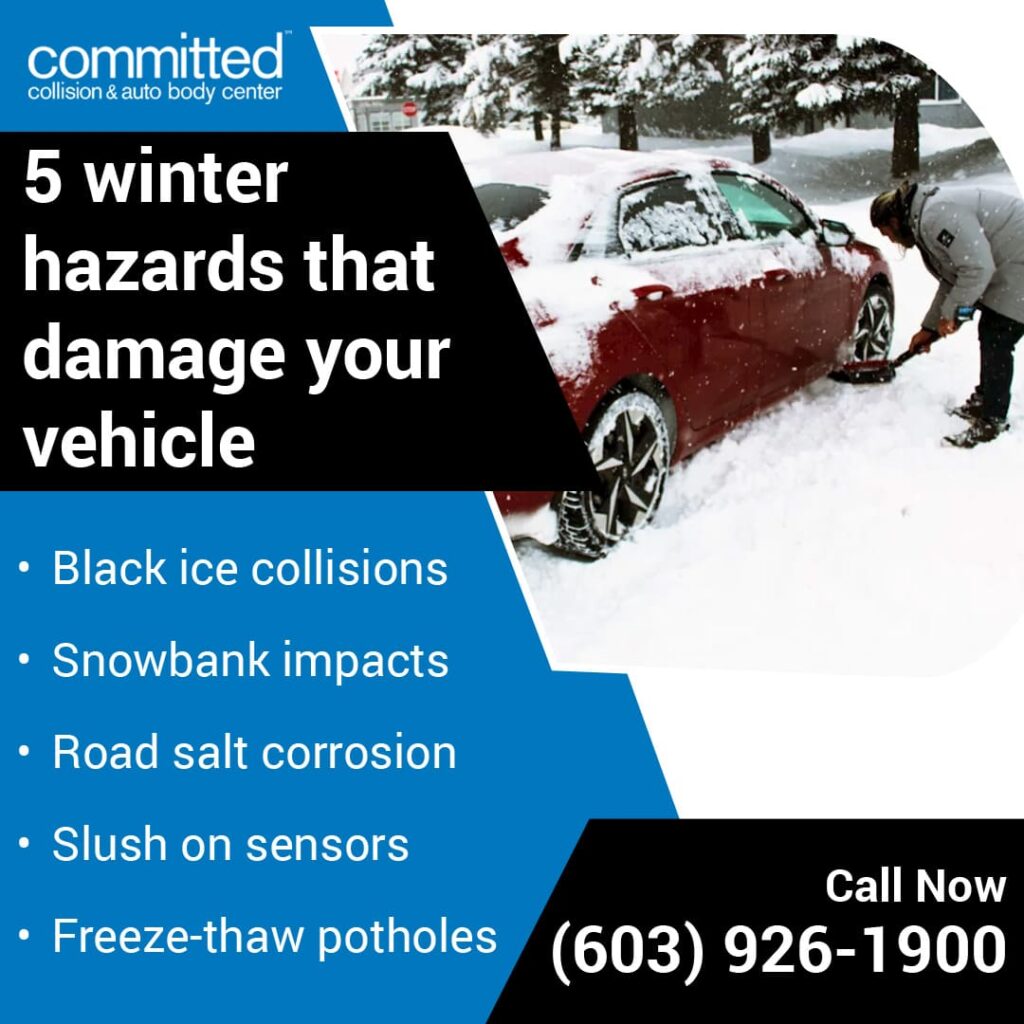
Winter driving in New Hampshire tests every vehicle owner’s skills. Snow-covered roads, invisible ice patches, and salt-damaged surfaces create hazards that lead to costly vehicle damage. Each season, drivers face conditions that turn routine commutes into collision risks.
Understanding winter’s specific hazards helps you protect your vehicle and recognize when damage requires professional attention. Committed Collision & Auto Body Center is an auto body shop in North Hampton, NH, with twenty years of experience. We see these seasonal risks throughout every New Hampshire winter. We explain five common winter driving hazards and how proper auto body repair restores your vehicle’s safety.
Why Winter Conditions Increase the Risk of Auto Body Damage
Winter creates factors that increase both collision frequency and damage severity. Snow reduces visibility and road traction. Ice eliminates the friction your tires need for controlled braking. Road salt improves traction but accelerates corrosion that weakens body panels.
The Federal Highway Administration reports that over 1,300 people are killed annually in vehicle crashes on snowy or icy pavement. More than 116,800 people are injured. These crashes happen on familiar roads where drivers underestimate conditions. Temperature fluctuations common in New Hampshire create additional challenges. A road surface that appears wet at 35 degrees becomes slippery when temperatures drop to 28 degrees.
How Winter Weather Impacts Vehicle Control
Winter conditions change how your vehicle responds to steering, braking, and acceleration. Stopping distances in winter conditions can be significantly longer than on dry pavement, sometimes several times greater, depending on road surface, tire type, and vehicle condition. Official data shows that slippery conditions dramatically reduce friction and increase crash risk, but exact distances vary widely.
Reduced traction affects more than braking. When ice eliminates friction, your vehicle continues in its original direction regardless of steering input. Modern vehicles incorporate electronic stability control and anti-lock braking. However, these systems cannot overcome physics. They optimize whatever limited traction exists.
Why Winter Collisions Often Lead to Hidden Damage
Today’s vehicles use lightweight materials designed to absorb collision energy. These materials protect occupants but often hide damage beneath minor exterior dents. Advanced Driver Assistance Systems add complexity. Cameras, radar units, and sensors require precise alignment. Even a five-mile-per-hour impact can shift these sensors enough to compromise operation.
Winter Hazard #1: Black Ice & Hidden Ice Layers
Black ice represents one of winter’s most dangerous hazards because it remains virtually invisible. This thin transparent ice forms when temperatures hover near freezing. Moisture from fog, drizzle, or melting snow refreezes on road surfaces. The ice appears black because you see dark pavement beneath it.
Bridges, overpasses, and shaded sections develop black ice first. North Hampton drivers traveling Route 1 or Interstate 95 encounter these conditions frequently during winter mornings and evenings. When your vehicle hits black ice, you experience a sudden, total loss of traction.
Typical Auto Body Damage From Ice-Related Loss of Control
Loss of control on ice produces distinct damage patterns:
- Guardrail impacts cause deep scrapes along doors and quarter panels.
- Side-impact collisions damage doors, B-pillars, and rocker panels.
- Front or rear impacts crush bumper reinforcements and damage radiator supports.
- Suspension damage affects wheel alignment and handling.
How Technicians Detect Structural Issues After Ice-Related Impacts
Our local auto body repair specialists use systematic inspection to identify all damage. We thoroughly clean your vehicle to expose every scratch and deformation. This reveals damage that dirt and winter grime conceal.
We use our Chief 3D Laser Measuring System to assess structural dimensions and detect frame damage invisible to the naked eye. Pre-measurement compares thousands of reference points to manufacturer specifications. Then we remove bumper covers, fender liners, and trim panels. This disassembly often reveals buckled reinforcement bars, cracked mounting brackets, and damaged sensor housings hidden beneath plastic covers.
Winter Hazard #2: Snowbanks, Reduced Visibility, and Parking Lot Collisions
Snowbanks created by plows transform familiar parking lots into visibility nightmares. These walls of snow block sight lines, hiding vehicles and obstacles. According to the Insurance Institute for Highway Safety, parking lot collisions account for approximately 20% of all insurance claims.
North Hampton’s commercial areas along Lafayette Road experience heavy snowbank accumulation. Drivers pulling from shopping centers face limited visibility. Poor visibility also affects backing maneuvers when snow covers sensors or cameras.
Damage Patterns Common in Snowbank and Parking Lot Incidents
Low-speed parking lot collisions typically damage front or rear corners. Fenders, headlight assemblies, and grille components absorb most impact energy. Modern headlights cost between $500 and $2,500 per assembly. Side-swipe collisions scrape doors and mirrors. Rear impacts into snowbanks damage liftgates, rear bumpers, and exhaust systems.
Repair Methods for Winter Visibility-Related Damage
Professional auto body repair restores both structural integrity and appearance. We use specialized Keco PDR and Glue Pull Station equipment for paintless dent repair when panel integrity remains intact. When dents are severe, we replace panels with OEM parts that maintain proper fit and safety standards.
Our computerized paint matching system identifies exact color formulas, accounting for paint fading over time. We refinish your vehicle using Glasurit 100 Line waterborne paint in our three USI Spray Booths and prep deck for finish quality matching factory standards.
Winter Hazard #3: Road Salt, Corrosion, and Rust-Related Weakness
New Hampshire applies substantial road salt annually to maintain winter driving safety. While effective at melting ice, salt accelerates corrosion on vehicles. Salt mixed with water attacks metal components, particularly where road spray accumulates.
Vehicles driven regularly in winter develop rust in rocker panels, wheel wells, door bottoms, and frame sections. This corrosion weakens structural components. The National Highway Traffic Safety Administration identifies corrosion as a notable factor in vehicle structural integrity.
Why Corrosion Makes Winter Collisions More Severe
Rust-weakened body panels crumple more easily during impacts. A minor fender-bender may tear through rusted metal, requiring complete panel replacement. Structural corrosion affects frame rails, subframe mounting points, and suspension attachment locations. When rust compromises these areas, even low-speed impacts cause disproportionate damage.
How Rust Repair Restores Structural Strength
Professional rust repair removes corroded metal and replaces it with new material to restore structural integrity. Surface rust requires grinding to bare metal, proper treatment, and protective primer application. Structural rust demands cutting away compromised frame sections and welding in replacement metal, meeting original equipment specifications.
We use Pro Spot welding systems, including our i4s spot welder, i5s spot welder, SP-5 Smart Mig, and PR-5D equipment designed for modern vehicle construction. After rust removal and repair, we apply protective treatments to seal metal from moisture and salt exposure.
Winter Hazard #4: Slush, Snow Build-Up, and ADAS Malfunctions
Modern vehicles rely on Advanced Driver Assistance Systems using cameras, radar units, and ultrasonic sensors. These power features include automatic emergency braking, lane departure warning, and blind spot monitoring. Winter conditions compromise these systems.
Snow and slush accumulation block sensors’ ability to detect obstacles. Forward-facing radar units become snow-packed during highway driving. Cameras accumulate ice and road spray film. Even minor winter collisions affect ADAS functionality. A five-mile-per-hour slide can shift radar position by millimeters.
How Winter Conditions Disrupt ADAS Sensors
Camera-based systems require clear lines of sight. Snow accumulation blocks cameras even when drivers clear the glass to see. Radar sensors operate through plastic bumper covers. Heavy snow accumulation degrades radar performance. Ultrasonic sensors emit sound waves and measure return time. Snow or ice covering these sensors prevents sound transmission.
Why Calibration Is Required After Winter Collisions
Vehicle manufacturers specify ADAS calibration requirements in repair procedures. Many manufacturers require recalibration after any collision, even minor winter incidents. Any impact affecting vehicle structure, suspension geometry, or sensor mounting demands recalibration for safety.
Calibration involves precise measurement and adjustment of sensor positions using static and dynamic methods. Committed Collision & Auto Body Center works closely with our sister shop, Automotive Alignments & Calibrations (AAC), for proper ADAS recalibration. They use Hunter/Bosch DAS 3000 Calibration equipment and manufacturer-approved procedures to restore safety systems to factory specifications.
Winter Hazard #5: Potholes From Freeze-Thaw Cycles
New Hampshire’s freeze-thaw cycles create severe pothole problems. Water seeps into pavement cracks during above-freezing days. When temperatures drop overnight, water freezes and expands, breaking apart asphalt. The American Automobile Association estimates pothole damage costs U.S. drivers $3 billion annually.
New Hampshire drivers face a particularly high risk during late winter and early spring when freeze-thaw cycles occur frequently. Pothole strikes happen suddenly, sending shock through your vehicle’s structure.
How Pothole Strikes Damage Auto Body Components
Front bumper covers take direct hits from potholes. The impact cracks plastic, breaks mounting tabs, and damages fog lights. Modern bumpers include sensors and cameras that add to replacement costs. Wheel wells experience damage when tires strike pothole edges. Severe strikes tear fender liners completely.
| Component | Common Damage | Typical Repair |
| Front Bumper | Cracks, sensor damage | OEM replacement |
| Fender Liner | Tears, detachment | New liner installation |
| Wheel Assembly | Bent wheels, tire damage | Straightening or replacement |
| Suspension | Bent control arms | Component replacement, alignment |
Mechanical and Structural Checks After a Hard Impact
Pothole damage extends beyond visible body damage. Wheels absorb tremendous force, creating vibrations and air leaks. Suspension components experience shock loads. Control arms, struts, and shock absorbers can bend or crack without obvious external damage.
Our sister shop, Automotive Alignments & Calibrations (AAC), provides thorough mechanical inspection and repair. Their technicians assess suspension components, steering systems, and wheel alignment using their Full Hunter Alignment Machine to identify damage before it causes handling problems.
How Professional Auto Body Repair Identifies Winter-Related Hidden Damage
Winter collisions often hide damage beneath surface dents and scratches. Committed Collision & Auto Body Center is an auto body repair shop that performs systematic inspections designed to reveal all damage before repairs begin.
Advanced Diagnostic Steps Used in Modern Collision Repair
We start with a detailed visual inspection documented with photographs. Every panel, light assembly, and trim piece receives a thorough examination. Pre-repair scanning comes next. Modern vehicles store diagnostic trouble codes when systems detect malfunctions.
We use OEM-approved OBD-II scanners and manufacturer-specific diagnostic tools to read these codes. This reveals damage to sensors, control modules, and electrical systems, showing no external signs. Electronic measuring systems provide objective structural damage assessment. Our Chief 3D Laser Measuring System compares thousands of reference points to manufacturer specifications, identifying deviations as small as one millimeter.
This precision matters because modern vehicles use unibody construction where the body and frame form a single structure. Pre-measurement during disassembly assesses structural integrity that winter impacts may have compromised.
Why Disassembly Reveals Winter Collision Damage Others Miss
Complete disassembly remains the only way to see all the damage. Removing bumper covers, fender liners, headlight assemblies, and trim panels regularly reveals damage invisible during initial inspection. Bumper reinforcement bars often show bending not visible from the outside.
Moisture from snow and ice penetration appears during disassembly, revealing corrosion risks. We document new findings with photographs and communicate with you and your insurance company before proceeding.
Prevention Tips for NH Winter Driving
While some winter accidents are unavoidable, many result from preventable factors. The New Hampshire Department of Transportation recommends reducing speed by one-third on wet roads and by half on snow-covered roads. Following distance extends to eight to ten seconds on snow or ice.
Vehicle Preparation Tips for Winter Safety
- Install winter tires with rubber compounds that remain flexible in cold temperatures.
- Clean ADAS sensors regularly to maintain safety system functionality.
- Replace worn wiper blades that streak or skip for clear visibility.
- Fill the washer reservoir with winter-formula fluid rated to -30 degrees or lower.
Driving Habits That Reduce Winter Accident Risk
- Use smooth, gradual inputs to steering, brakes, and throttle.
- Plan routes to avoid steep hills, sharp curves, and unprotected bridges.
- Leave earlier to allow travel at appropriate speeds without time pressure.
- Adjust speed as conditions warrant, rather than rushing.
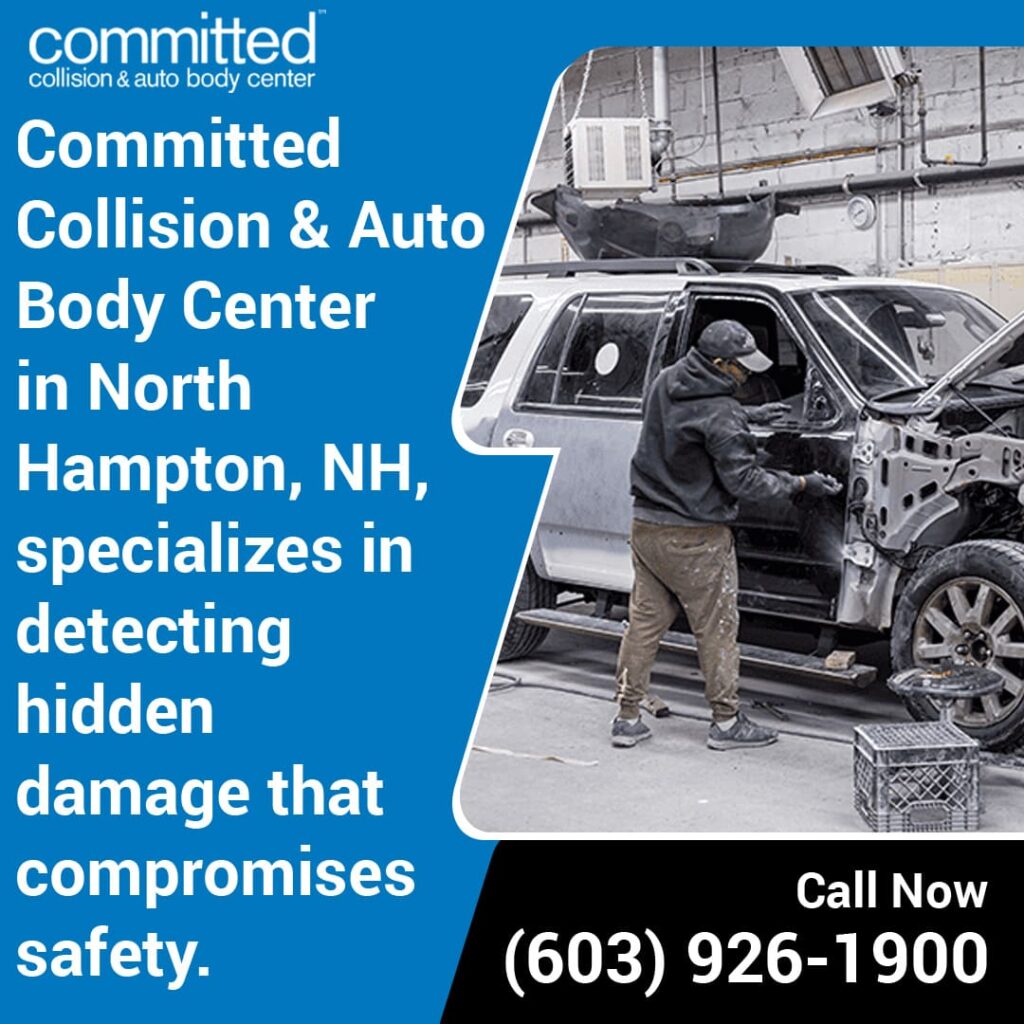
Why North Hampton Drivers Trust Committed Collision & Auto Body Center
For more than 20 years, we’ve provided auto body repair that North Hampton, NH, families and businesses depend on. Our family-owned business understands your vehicle provides the independence and reliability your daily life requires.
Winter collision damage demands specialized knowledge and equipment. We invest continuously in training and technology. Our technicians receive yearly updates on repair procedures and maintain industry certifications.
Capabilities That Support Safe Winter Collision Repair
- Frame straightening with Chief 3D Laser Measuring System, Spanesi Multibench pull stations, and Spanesi Touch Measuring System.
- Paint refinishing in USI Spray Booths and prep deck with computerized color matching.
- Specialized welding using Pro Spot equipment for modern vehicle construction.
- ADAS calibration through partnership with Automotive Alignments & Calibrations (AAC).
- Professional towing through AAC Towing Division for safe transport after accidents.
Our dedication to quality and advanced technology makes Committed Collision & Auto Body Center the preferred choice for professional auto body repair in North Hampton. This review from a customer sums it up. “Great customer service, professional work, paint matching and body lines. Thanks to all, from the front desk to the back shop. Committed Collision has a customer for life.”
Protect Your Vehicle This Winter With Expert Collision Repair
Winter driving hazards affect every New Hampshire driver. Understanding these hazards helps you drive safely and recognize when damage requires professional attention. Not all collision damage shows immediate symptoms. Hidden structural problems and compromised safety systems can result from seemingly minor incidents. Professional inspection identifies these issues before they compromise safety.
Contact Committed Collision & Auto Body Center at (603) 926-1900 or info@committedcollision.com for a free estimate. We’ll assess your vehicle’s condition, explain necessary repairs, and work directly with your insurance company. Don’t let winter damage compromise your vehicle’s safety. Trust the auto body repair shop North Hampton, NH has relied on for more than two decades.