
Synopsis
Understanding whether a vehicle is safe to drive after a collision requires more than a visual check. Hidden structural, mechanical, and ADAS problems can place you at risk, especially on New Hampshire roads. A professional evaluation from qualified collision repair specialists is the only reliable way to confirm safety and prevent further damage.
Key Takeaways
- Hidden structural and steering damage often goes unnoticed without inspection.
- ADAS sensors easily misalign during collisions and require proper calibration.
- Driving with damage can worsen mechanical wear and corrosion.
- Insurance claims may be affected if damage worsens while driving.
- A professional evaluation provides the safest and most accurate assessment.
After an accident, it is natural to wonder whether your vehicle is still safe to drive. Some damage looks minor, and the car may feel normal during a short test. The concern is that collisions create problems most drivers cannot see, especially in areas related to steering, structural support, and safety technology. Driving without knowing the full extent of the damage can place you at risk.
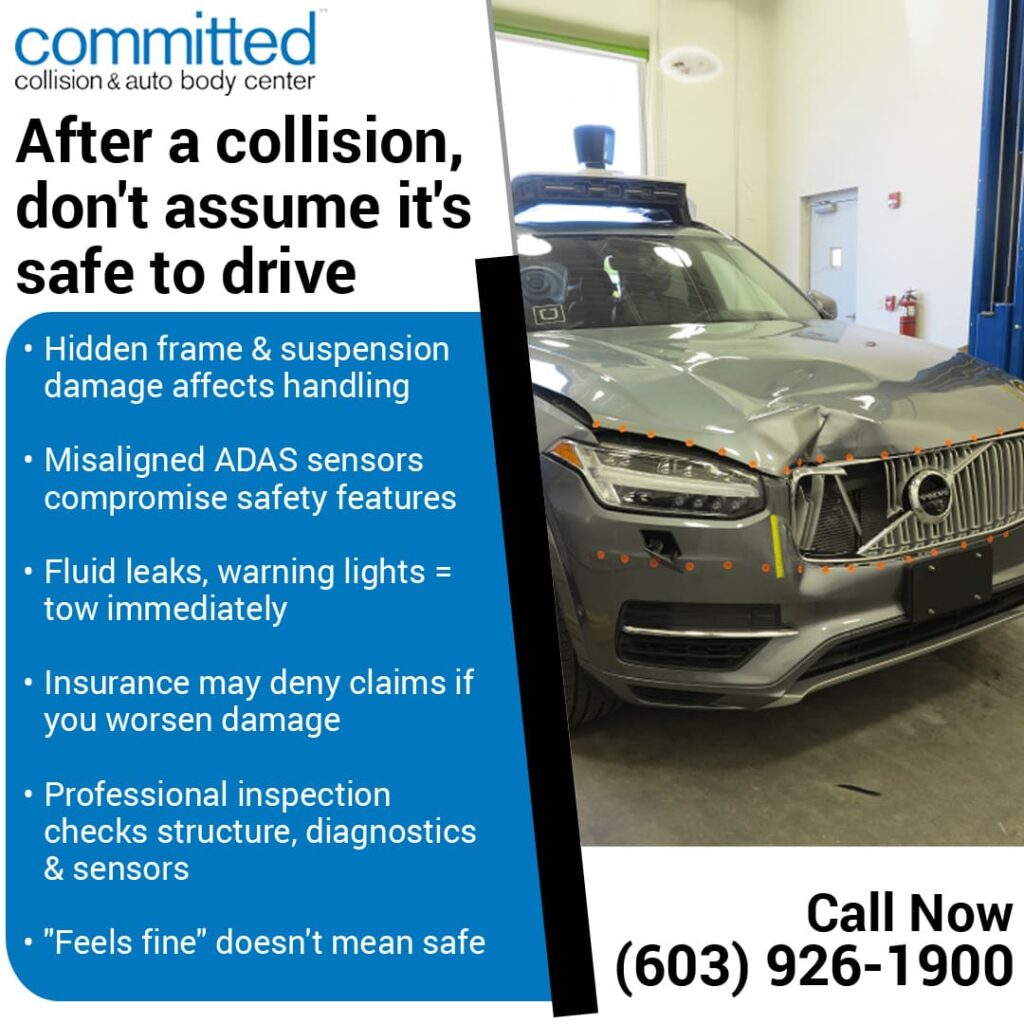
Committed Collision & Auto Body Center is a car collision repair shop in North Hampton, NH, with years of experience. We know that post-collision, vehicles may appear drivable from the outside but reveal deeper concerns once we evaluate the structure and electronics. A post-collision inspection helps you understand what happened beneath the surface and whether it is truly safe to stay on the road.
Signs That Make a Vehicle Unsafe to Drive After a Collision
Physical Damage Indicators You Should Not Ignore
Some visible issues make it unsafe to continue driving:
- Broken or cracked headlights or taillights
- Loose bumpers or panels
- Fenders pushed into the tire
- Leaking fluids
- Smoke under the hood
- Wheels bent or sitting at an unusual angle
Fluid leaks are especially hazardous because they often indicate engine, cooling, steering, or transmission issues that can fail suddenly.
Performance Problems That Suggest Unsafe Driving
How the vehicle behaves after the collision tells you a lot about hidden damage. Warning signs include:
- Steering that pulls left or right
- New vibrations, rubbing sounds, or clunking
- Delayed braking response
- Dashboard alerts, especially for airbags or traction control
Any of these symptoms suggests that structural components, the suspension, or crucial electronics may have been affected by the impact.
New Hampshire Road and Weather Factors That Increase Risk
Winter weather makes post-collision driving even more dangerous. Ice, snow, and salted roads reduce traction and amplify alignment and suspension problems. The Federal Highway Administration reports that over 116,800 injuries occur every year in crashes on snowy or icy roads, showing how quickly control can be lost in winter driving.
Salt is another concern because it accelerates corrosion. If a collision exposes bare metal, rust can begin forming within days during the winter season.
Hidden Damage That Isn’t Visible Until Inspected
Structural Problems Beneath the Exterior
Structural damage is one of the biggest concerns after an accident. A bumper cover may hide a bent reinforcement beam. A minor crease in a panel can indicate that the unibody absorbed force unevenly. When the structure shifts, even slightly, the vehicle may no longer protect you the way it was designed to during another impact.
These problems require advanced measuring systems to detect. Without proper inspection, you may not realize the extent of the damage.
Steering, Suspension, and Mechanical Issues That Get Worse
Accidents place stress on steering and suspension components. Parts like tie rods, control arms, and struts may bend during impact even if they still function. This damage can grow as you continue to drive. Tires may wear unevenly, steering becomes unstable, and suspension parts weaken. What starts as a small issue quickly becomes a more expensive repair if it goes untreated.
Hidden mechanical damage is one of the main reasons that our collision repair specialists advise drivers to get a prompt evaluation after an accident.
How ADAS Safety Systems Are Affected by Collisions
ADAS Features That Stop Working Correctly After an Impact
Modern vehicles rely on Advanced Driver Assistance Systems (ADAS). These include:
- Blind spot monitoring
- Lane keeping assistance
- Forward collision warnings
- Automatic braking
- Rear cross-traffic alerts
These systems depend on precise sensor and camera placement. A small shift can prevent the system from reading the environment correctly. You may not receive warnings, or the alerts may activate late.
Why ADAS Accuracy Matters in New Hampshire Driving Conditions
New Hampshire winters create conditions where drivers rely more on safety technology. Snowfall, ice, and limited visibility make accurate distance and lane tracking crucial. If a sensor or camera is misaligned after a collision, these systems may not help when you need them most.
How We Perform Calibration After Repairs
We complete ADAS calibration through our partner facility, Automotive Alignments & Calibrations LLC. Calibration is often required after auto collision repair to restore sensor accuracy. During our repair process, we review all ADAS-related components and verify that necessary recalibrations are complete before returning the vehicle to you.
Insurance and Legal Considerations Drivers Should Know
NH Requirements for a Road-Safe Vehicle
New Hampshire requires that vehicles remain safe to drive on public roads. If a collision damages headlights, taillights, mirrors, or body panels in a way that creates sharp edges or blocks visibility, your vehicle may not meet state standards.
Driving a vehicle in an unsafe condition exposes you to added legal and safety risks.
How Driving a Damaged Vehicle Can Affect an Insurance Claim
Insurance carriers expect drivers to prevent additional damage after a collision. If you continue using a vehicle and the damage worsens, the insurer may question whether the added repairs should be covered. Early inspection protects you and helps clarify the origin of each issue recorded in a claim.
When It May Be Safe to Drive Temporarily and When It Is Not
Situations Where Low-Risk Driving May Be Possible
You may be able to drive the vehicle a short distance if:
- The damage is cosmetic
- The vehicle drives straight
- Lights, mirrors, and signals work
- No warning lights appear
- No unusual sounds or smells occur
Even in these situations, slow and limited driving is best.
Scenarios That Require Immediate Towing
Certain conditions signal that you should not drive under any circumstances:
- Airbags deployed
- Steering difficulty or binding
- Visible fluid leaks
- Electrical burning smells
- ADAS, airbag, or brake system warnings
If any of these appear, towing protects your safety and prevents further damage. Our towing company, AAC Towing Division, provides safe transport to our car collision repair shop in North Hampton, NH.
How Driving with Collision Damage Can Increase Future Repair Costs
Mechanical Wear That Escalates Over Time
Misalignment from the collision places extra pressure on tires and suspension. As you continue driving, these components degrade faster. What could have been a simple alignment correction may evolve into a larger mechanical repair.
Corrosion Risks from New Hampshire Winters
Salt accelerates corrosion, especially in areas where paint has cracked. Once rust forms, it spreads beneath the surface. Collision-related rust can weaken metal panels and structural supports if not treated promptly.
Electrical and Sensor Problems That Spread
Sensors and wiring disturbed during the collision can become less reliable as vibration and moisture continue affecting the area. A small wiring issue may turn into repeated electronic malfunctions if not addressed quickly.
How Untreated Collision Damage Progresses Over Time
| Damage Type | Immediate Effect | Long-Term Impact |
| Alignment shift | Slight steering pull | Suspension strain, tire wear |
| Paint cracking | Cosmetic issue | Rust formation, structural weakness |
| Sensor misalignment | Inconsistent alerts | ADAS failure during critical moments |
What to Do Immediately If You Believe the Vehicle Is Drivable
Steps to Assess Damage Responsibly
If you believe the vehicle might still be drivable, follow this quick assessment:
- Photograph all visible damage.
- Inspect under the vehicle for pooling fluid.
- Turn the wheel slowly to check for grinding or resistance.
- Confirm that lights, signals, and mirrors are intact.
- Note any dashboard alerts the moment they appear.
Why a Professional Evaluation Matters
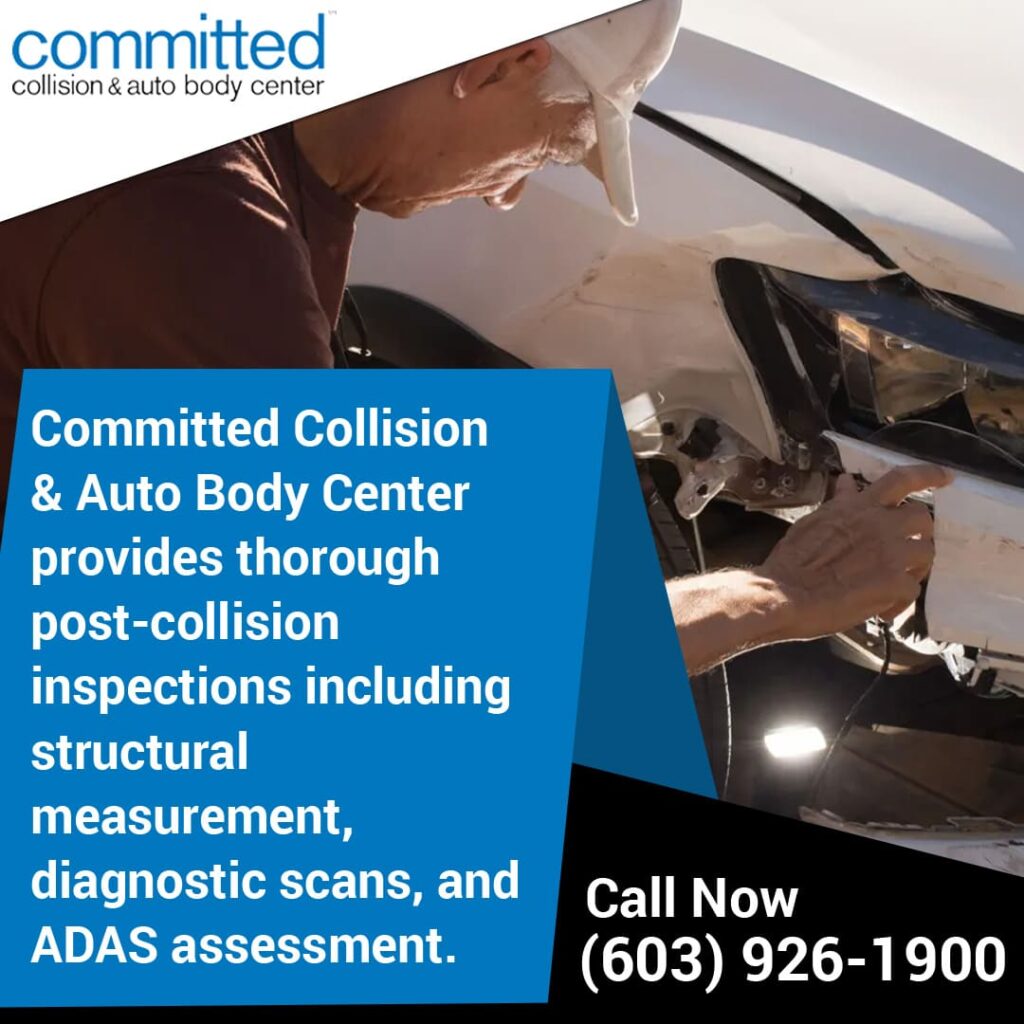
A surface-level walkthrough cannot confirm structural integrity or sensor accuracy. Our collision repair specialists use diagnostic scanning, visual inspection, and structural measurement to identify hidden issues that may not appear until later. An evaluation helps you make the right decision for your safety.
What an Initial Evaluation Includes at Committed Collision & Auto Body Center
Visual, Diagnostic, and Structural Assessment
We begin with a full visual inspection and an OEM-approved diagnostic scan. This identifies electronic trouble codes triggered by the collision. We also review the frame structure and alignment to detect shifts that are not visible to the eye. Disassembly allows us to uncover damage behind panels and bumpers that would otherwise go unnoticed.
Creation of a Repair Plan
Once the inspection is complete, we outline every step of the repair process. This includes structural corrections, part replacements, refinishing, and ADAS requirements. Our auto collision repair plans follow manufacturer specifications to restore safety and performance. We also coordinate with your insurance provider to support documentation and approvals.
Reassembly, Calibration, and Quality Checks
During reassembly, we restore panel fitment and structural alignment. If sensors were affected, calibration is completed through our partner facility. Before we return the vehicle to you, we perform quality checks, diagnostic scans, and a road test to confirm that all systems function correctly.
When You Should Choose Towing Instead of Driving
Conditions That Make Driving Too Risky
If the accident caused clear structural damage, unstable steering, leaking fluids, or electrical problems, towing is the safest choice. Continuing to drive may make the condition worse or cause the vehicle to fail on the road.
Towing Options for North Hampton Drivers
Our AAC Towing Division provides safe transport to our facility when your vehicle is not safe to drive. This helps us begin the repair process with an accurate assessment of the original damage.
Why a Post-Collision Evaluation at Committed Collision & Auto Body Center Matters
Driving after a collision is not always as simple as checking whether the car still moves. Hidden damage can affect structural integrity, steering, and safety systems, especially on winter roads in New Hampshire. A professional evaluation is the most reliable way to understand whether the vehicle is safe and what repairs may be needed. Committed Collision & Auto Body Center is the best collision repair shop in North Hampton, NH, that helps you make informed decisions to protect your safety and restore your vehicle correctly.
Schedule Your Post-Collision Evaluation
If you are unsure whether your vehicle is safe to drive after an accident, schedule an inspection with us. We serve North Hampton and nearby areas, making us the best choice for body collision repair in the region. Call (603) 926-1900 or email us at info@committedcollision.com so we can help you get back on the road safely.