
Synopsis
Even small dents or cracks in a bumper can hide serious structural or sensor damage that compromises vehicle safety. Committed Collision & Auto Body Center in North Hampton, NH, explains when minor-looking bumper damage requires full auto body repair. With certified technicians, OEM parts, and advanced diagnostic tools, we restore your vehicle’s appearance, safety, and performance with precision.
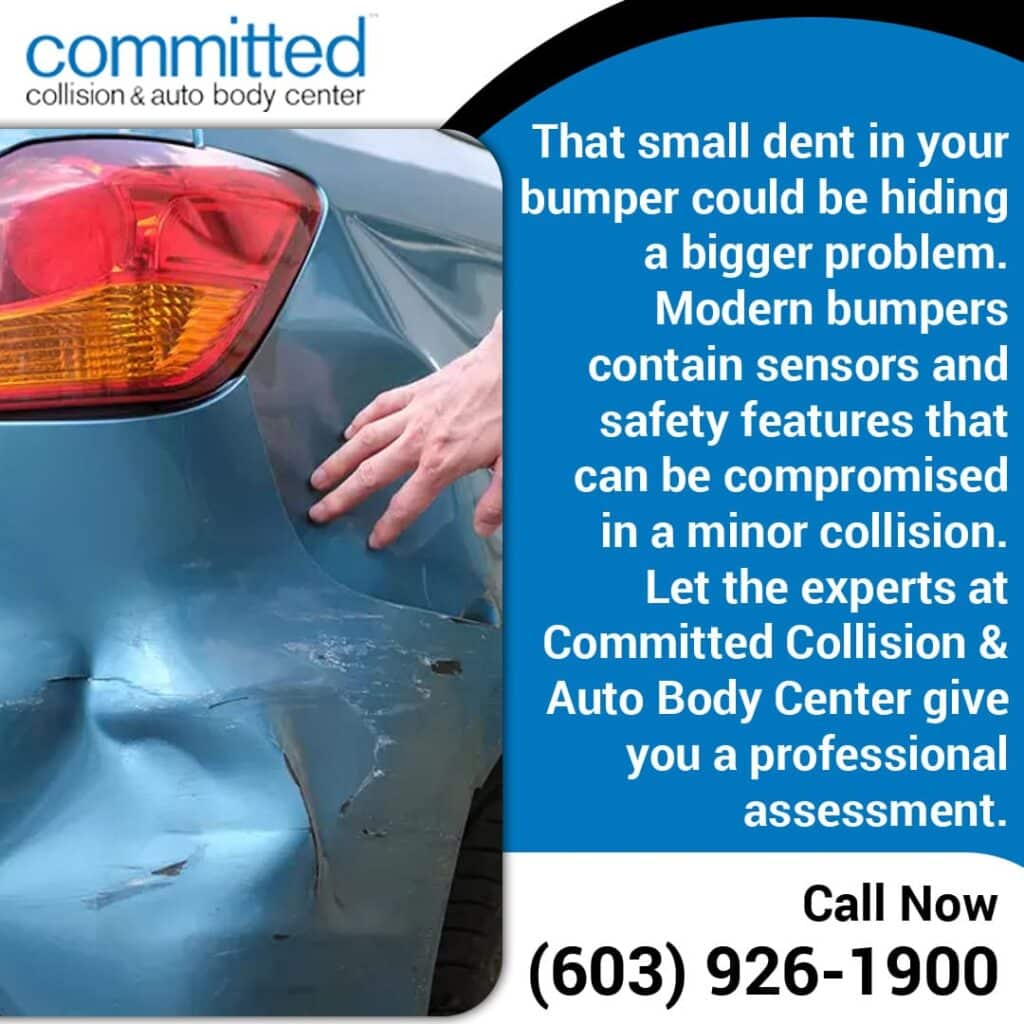
You hear that dreaded crunch as you back out of a parking space. Perhaps your bumper scraped a snow-covered curb this winter, or another vehicle misjudged the distance while parking. These moments happen to every driver eventually. What looks like a simple scratch or small dent might seem easy to ignore. However, bumper damage often hides serious problems beneath the surface that can affect your vehicle’s structural integrity and safety features.
Committed Collision & Auto Body Center is a local auto body repair specialist serving North Hampton, NH. We’ve examined numerous damaged bumpers over two decades. Time and again, we discover that what appears minor on the outside conceals significant issues requiring professional auto body repair. Knowing when your bumper needs complete restoration rather than a quick fix helps protect your investment and keeps you safe while driving.
Your Bumper Does More Than You Realize
Modern bumpers serve as sophisticated safety components, not just cosmetic covers. Vehicle manufacturers design bumpers with crumple zones and energy-absorbing materials that protect passengers and the vehicle frame during impacts. The visible outer shell conceals a network of reinforcement beams, mounting brackets, and increasingly complex electronic sensors.
Today’s bumpers integrate parking assistance sensors, cameras for backup systems, cross-traffic warning devices, and blind spot monitors. These components send critical data to your vehicle’s Advanced Driver Assistance Systems (ADAS). A dent measuring just a few millimeters can shift sensor alignment enough to cause false warnings or complete system failures. Impact forces also transfer through bumpers to the frame, potentially causing misalignment that manifests later as uneven tire wear or poor handling.
The Insurance Institute for Highway Safety conducts low-speed bumper testing at speeds of 3 to 6 mph to evaluate vehicle damage protection. Even at these low speeds, many vehicles sustain thousands of dollars in damage to structural components and safety equipment. We use advanced diagnostic scanning and precision measurement tools at our facility to detect damage invisible during basic visual checks. This thorough approach explains why ADAS calibration becomes necessary after many bumper repairs.
Common Types of Bumper Damage You Shouldn’t Ignore
Bumper damage varies widely in severity and repair complexity. Understanding these differences helps you decide when to contact an auto body repair shop for professional assessment.
Surface Scratches and Paint Damage
Light scratches and scuffs represent the most frequent bumper damage type. These occur when your bumper contacts another surface without substantial force. Though they appear purely aesthetic, even shallow scratches create pathways for moisture to penetrate the bumper material, leading to gradual deterioration.
We carefully evaluate scratch depth to determine whether damage has penetrated just the clear coat, reached the base paint layer, or exposed the primer beneath. Surface-level damage often responds well to our refinishing techniques. For very minor imperfections where the paint structure remains intact, we employ paintless dent repair using specialized Keco PDR equipment, restoring the bumper without requiring new paint application.
Cracked or Split Bumpers
Cracks signify more serious concerns than surface scratches. When bumpers crack, their ability to absorb future impacts becomes compromised. Manufacturers construct modern bumpers from various materials. Thermoplastic polymers are used in most domestic vehicles, flexible polypropylene composites, fiberglass-reinforced plastic in older models and trucks, or carbon fiber composites in luxury and performance vehicles. Each material behaves differently under stress and demands specific repair methods.
Identifying the bumper material guides our repair approach. Plastic bumpers sometimes accept welding and reinforcement using our Pro Spot welding systems. Deep cracks penetrating the full bumper thickness typically indicate impact forces strong enough to damage the reinforcement beam behind the cover. Vehicles with aluminum bumper components receive specialized aluminum repair, including welding, refinishing, and heat treatment according to manufacturer specifications.
Misaligned or Detached Bumpers
Uneven gaps between your bumper and vehicle body panels indicate problems beyond cosmetic damage. Misaligned bumpers usually point to compromised mounting hardware, damaged brackets, or frame distortion. Bumpers that no longer sit properly cannot fulfill their protective function during subsequent impacts.
Our inspection process includes visual assessment, diagnostic scanning, and careful disassembly when necessary. Simple-looking alignment problems frequently reveal bent mounting brackets, crushed energy-absorbing structures, or frame deformation requiring precision correction. We employ our Chief 3D Laser Measuring System and Spanesi Touch Measuring System to identify and quantify these structural issues.
Dented Bumpers With Sensor Damage
Dents in modern bumpers create unique challenges due to integrated electronics. Rear bumpers typically house parking sensors, backup cameras, and cross-traffic detection systems. Front bumpers often contain radar units enabling adaptive cruise control and emergency braking functions. Even a minor dent can misalign these sensors enough to trigger malfunctions or inaccurate alerts. After repairing the physical damage, proper system recalibration becomes necessary through our sister company, Automotive Alignments & Calibrations (AAC), which specializes in these precise adjustments.
Signs That Bumper Damage Requires Professional Auto Body Repair
Determining whether your bumper needs complete restoration versus minor touch-up work requires careful evaluation. Several red flags indicate that a professional assessment is necessary.
Physical damage indicators:
- Cracks extending across multiple bumper sections
- Visible spacing between bumper and adjacent body panels
- Paint exhibiting cracks or bubbling (suggesting substrate damage)
- Exposed metal reinforcement or mounting hardware
- Obvious asymmetry compared to the opposite bumper side
Functional warning signals:
- Dashboard alerts for parking sensors or safety systems
- Components rattling or moving when driving over rough surfaces
- Trunk or hatch closure difficulties
- Misaligned headlights or taillights
- New gaps appearing around doors or body panels
We never recommend DIY assessments for bumper damage. Our auto body repair shop in North Hampton, NH, follows a systematic approach. This includes scanning for sensor error codes using OBD-II diagnostics, verifying structural integrity through precision measurement, and documenting all findings before providing repair recommendations.
What Happens During a Full Auto Body Bumper Repair
Understanding the repair process helps you appreciate the careful attention proper bumper restoration requires. Our local auto body repair specialists follow systematic procedures addressing both visible and hidden damage.
Thorough Inspection and Disassembly
Repairs begin with comprehensive documentation, including multi-angle photography and detailed visual inspection to establish a preliminary estimate. We explain to every customer that modern vehicles commonly conceal damage beneath external components that only becomes apparent during disassembly.
Electronic diagnostics using OBD-II scanning equipment reveal error codes affecting sensors or safety systems. We then methodically disassemble the bumper cover and related parts, exposing reinforcement structures, mounting hardware, and sensor assemblies. Additional damage discovered during this phase occurs frequently with today’s complex vehicles, prompting us to maintain constant communication throughout the repair process.
Structural Verification and Correction
With underlying structures exposed, our technicians perform precision measurements using our Chief 3D Laser Measuring System and Spanesi Touch Measuring System. These instruments compare your vehicle’s current dimensions against manufacturer specifications with millimeter precision. Frame distortion, bent reinforcement beams, and compromised energy absorbers all become visible during this measurement phase.
Correcting structural damage requires specialized equipment and expertise. Our facility includes six Spanesi Multibench pull stations and frame straightening systems that apply carefully controlled force to restore damaged structures according to OEM standards. Aluminum structural components receive specialized treatment using appropriate techniques. We maintain zero compromise on structural repairs because passenger safety depends on your vehicle’s capacity to manage impact forces correctly.
Paint Restoration and Assembly
Following structural corrections and component replacement, we proceed to refinishing. This multi-stage process involves:
- Preparing surfaces through sanding and thorough contamination removal
- Applying primer to create adhesion and corrosion resistance
- Matching color using computerized analysis of your existing paint
- Building a base coat in multiple thin layers for proper coverage
- Protecting with a clear coat applied in several controlled passes
- Curing paint through controlled temperature baking
Paint restoration occurs in our three USI spray booths with an integrated prep deck using Glasurit 100 Line waterborne paint. This system provides exceptional color accuracy while meeting environmental standards. Our computerized color matching accounts for paint fading over time. Multiple thin applications provide proper adhesion and factory-quality appearance.
Post-Repair ADAS Calibration and Alignment
The final stage involves calibrating affected safety systems. Modern vehicles require both static calibration (performed in controlled environments) and dynamic calibration (completed through test driving). Our sister company, Automotive Alignments & Calibrations (AAC), ensures your vehicle’s safety systems function correctly after repairs using their Full Hunter Alignment Machine with an in-ground alignment rack and Hunter/Bosch DAS 3000 calibration equipment.
This calibration step isn’t optional. Vehicle manufacturers require it after any auto body repair affecting sensor positions or mounting points. Skipping this calibration can leave you with malfunctioning safety features that may fail when needed most.
Repair vs. Replacement: When Is a New Bumper Necessary?
Not every damaged bumper can be repaired. Understanding when replacement becomes necessary helps you make informed decisions about your vehicle’s restoration.
| Damage Characteristics | Typically Repairable | Usually Requires Replacement |
| Shallow scratches (clear coat damage only) | Yes. Refinishing or PDR | No |
| Minor dents without cracks | Yes. Paintless dent repair possible | No |
| Single crack not reaching reinforcement | Sometimes, welding may work | Sometimes |
| Multiple through-thickness cracks | No | Yes |
| Compromised reinforcement beam | No | Yes |
| Destroyed mounting points | No | Yes |
| Severe deformation | No | Yes |
Bumpers can typically be repaired when damage remains limited to the cosmetic cover while mounting structures stay intact. Shallow cracks, small dents, and surface scratches usually fall within repairable parameters.
Replacement becomes necessary when:
- Crack damage extends into reinforcement beams
- Bumper cover deformation exceeds restoration capability
- Mounting point damage prevents secure attachment
- Multiple separate damage areas exist
- Repair costs approach replacement expenses
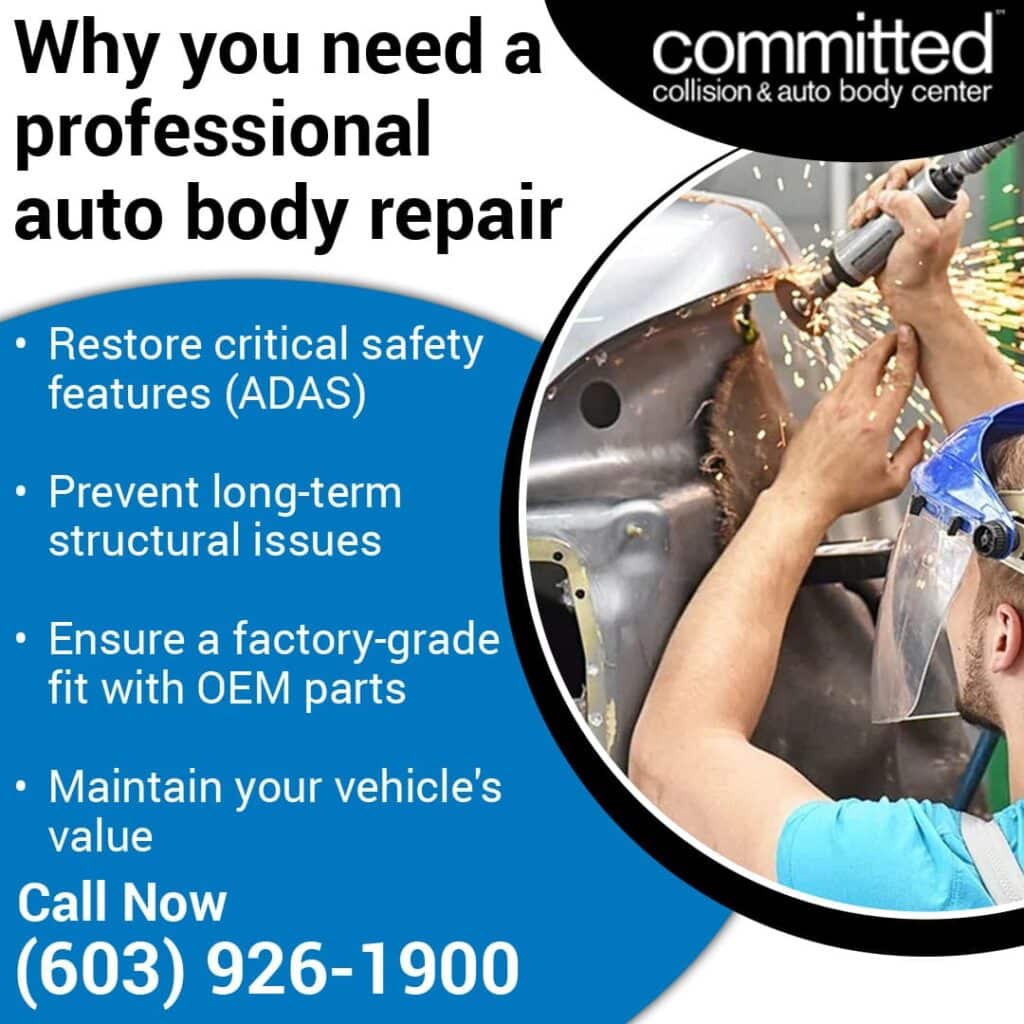
We prioritize Original Equipment Manufacturer (OEM) parts because they match your vehicle’s factory specifications precisely. OEM bumpers guarantee correct fitment, finish quality, and structural performance. Paint adhesion characteristics, sensor mounting specifications, and crash protection capabilities all align with factory standards.
Aftermarket bumpers present variable quality levels. Some manufacturers produce components closely matching OEM specifications, while others compromise on materials, fit, or finish. When customers select aftermarket alternatives, we source components exclusively from reputable manufacturers. Our auto body repair shop never utilizes low-quality parts from unreliable sources, including Amazon, eBay, or RockAuto, as stated in our commitment to quality standards.
Insurance and Bumper Damage: What to Expect
Understanding how insurance companies evaluate bumper damage helps you navigate the claims process effectively. Most comprehensive and collision policies cover bumper repair expenses after your deductible.
Insurance adjusters create initial estimates based on visible damage assessment. These preliminary evaluations frequently overlook problems that surface during disassembly. Committed Collision & Auto Body Center works with all major insurance providers and manages documentation on your behalf. Our team photographs all damage comprehensively, develops detailed repair plans, and maintains ongoing adjuster communication throughout repairs.
Essential documentation for your claim:
- Multi-angle photographs showing bumper damage extent
- Images capturing sensor locations and dashboard warnings
- Incident date, time, and location details
- Other party’s insurance information, when applicable
- Police report reference numbers if filed
Some insurers encourage policyholders toward Direct Repair Program (DRP) facilities. While these arrangements may expedite paperwork, New Hampshire law protects your right to select any repair facility. We maintain positive relationships with numerous insurers while consistently prioritizing your safety and satisfaction above insurer preferences.
Deductibles typically range from $250 to $1,000 based on your policy terms. We provide transparent estimates clearly distinguishing insurance-covered costs from your out-of-pocket responsibility. When insurance carriers decline coverage for specific items, we contact you immediately and help explain options for recovering those costs.
Protecting Your Bumper: Prevention Tips for New Hampshire Drivers
While accidents remain unavoidable sometimes, specific strategies reduce bumper damage risk and subsequent repair needs. These recommendations focus specifically on bumper protection.
Bumper-specific parking practices:
- Leave extra clearance when backing into spaces (at least 12 inches)
- Avoid parking adjacent to high curbs that can catch bumper edges
- Remove accumulated snow from bumpers before driving (frozen snow increases impact severity)
- Use parking sensors, but verify visually (sensors malfunction in extreme cold)
- Avoid parking beneath trees where falling ice or branches strike bumpers
Bumper maintenance for New Hampshire conditions:
- Wash bumpers weekly during winter, removing corrosive road salt
- Monthly inspect bumper mounting points for rust or loosening
- Apply protective film to vulnerable bumper areas before winter
- Address minor scratches immediately, preventing salt penetration
- Schedule post-winter inspections, checking for freeze-thaw damage cycles
New Hampshire’s severe winters make plastic bumpers increasingly brittle and crack-prone. Road salt accelerates corrosion, affecting mounting brackets and reinforcement beams. Our rust repair services address corrosion before it undermines bumper structural integrity.
After any bumper impact, regardless of apparent severity, schedule an inspection and professional auto body repair at our facility. Early problem detection enables less extensive repairs. Our technicians quickly determine whether impacts require repair or if your bumper maintains adequate structural soundness.
Why Choose Local Auto Body Repair Specialists in North Hampton
Our commitment to quality workmanship has served the New Hampshire Seacoast community for more than twenty years. As a family-owned business, we’ve built our reputation through honest service, skilled craftsmanship, and genuine customer care at Committed Collision & Auto Body Center.
What sets our auto body shop in North Hampton, NH, apart:
| Capability | Our Equipment and Standards |
| Technician credentials | I-CAR Gold Class certification, ASE-certified staff |
| Local experience | 20+ years serving North Hampton and Seacoast region |
| Frame measurement | Chief 3D Laser Measuring System, 6 Spanesi Multibench stations |
| Welding capability | Pro Spot i4s and i5s spot welders, SP-5 Smart Mig, PR-5D |
| Paint application | 3 USI Spray Booths with prep deck, Glasurit 100 Line waterborne |
| Specialized repairs | Paintless dent repair, aluminum repair, rust repair |
| Calibration services | AAC sister company with Full Hunter Alignment Machine, Hunter/Bosch DAS 3000 |
| Parts standards | OEM parts preferred, no Amazon/eBay/RockAuto sourcing |
| Warranty protection | Limited lifetime warranty covering workmanship and parts |
| Additional services | Towing through AAC Towing Division |
Our technicians undergo yearly training updates, keeping current with evolving vehicle technologies and modern repair techniques. This continuous education helps us to handle the newest vehicle models with their complex safety systems. We’ve invested in specialized equipment that many auto body repair shops lack, allowing us to complete repairs other facilities must outsource or simply cannot perform.
We serve North Hampton, Rye, Hampton, Portsmouth, Exeter, and surrounding Seacoast communities extending into Southern New Hampshire, Maine, and Massachusetts with consistent care and expertise.
Schedule Your Professional Bumper Assessment
Don’t delay until dashboard warnings appear or damage worsens. When you need expert auto body repair in North Hampton, NH, call Committed Collision & Auto Body Center at (603) 926-1900 or email us at info@committedcollision.com. Schedule your bumper damage assessment. We provide honest evaluations, transparent communication, and repairs, restoring your vehicle to the condition it deserves.
Minor-appearing bumper damage frequently conceals serious structural or electronic problems compromising vehicle safety and resale value. Early professional assessment prevents these issues from developing into costlier repairs requiring more extensive work. Your vehicle receives precise repairs that restore appearance and safety system functionality by choosing qualified local auto body repair specialists like us.