
Synopsis:
Winter road salt and sand protect drivers but quietly damage vehicle paint and metal. Committed Collision & Auto Body Center explains how corrosion starts beneath the surface, why late-model vehicles remain vulnerable, and when professional auto body repair in North Hampton, NH, helps prevent rust from compromising safety and appearance.
Winter road treatments keep New Hampshire drivers safe, but they exact a heavy toll on vehicle exteriors. Salt and sand speed up corrosion and paint deterioration in ways that often start underneath your car and progress silently over time. This is why winter-related auto body damage should never be ignored. Committed Collision & Auto Body Center is an auto body repair shop that serves vehicle owners from Southern New Hampshire, Maine, and Massachusetts. We help North Hampton vehicle owners recognize why winter-related auto body damage needs attention before it affects both looks and structural soundness.
Why Winter Driving Is Hard on Your Vehicle’s Exterior
New Hampshire winters demand aggressive road treatment strategies. State and local crews spread salt, brine solutions, and sand to maintain safe driving surfaces. These materials improve traction and prevent ice formation, but they create harsh conditions for your vehicle’s exterior that often require auto body repair come spring.
Road Salt and Brine Solutions
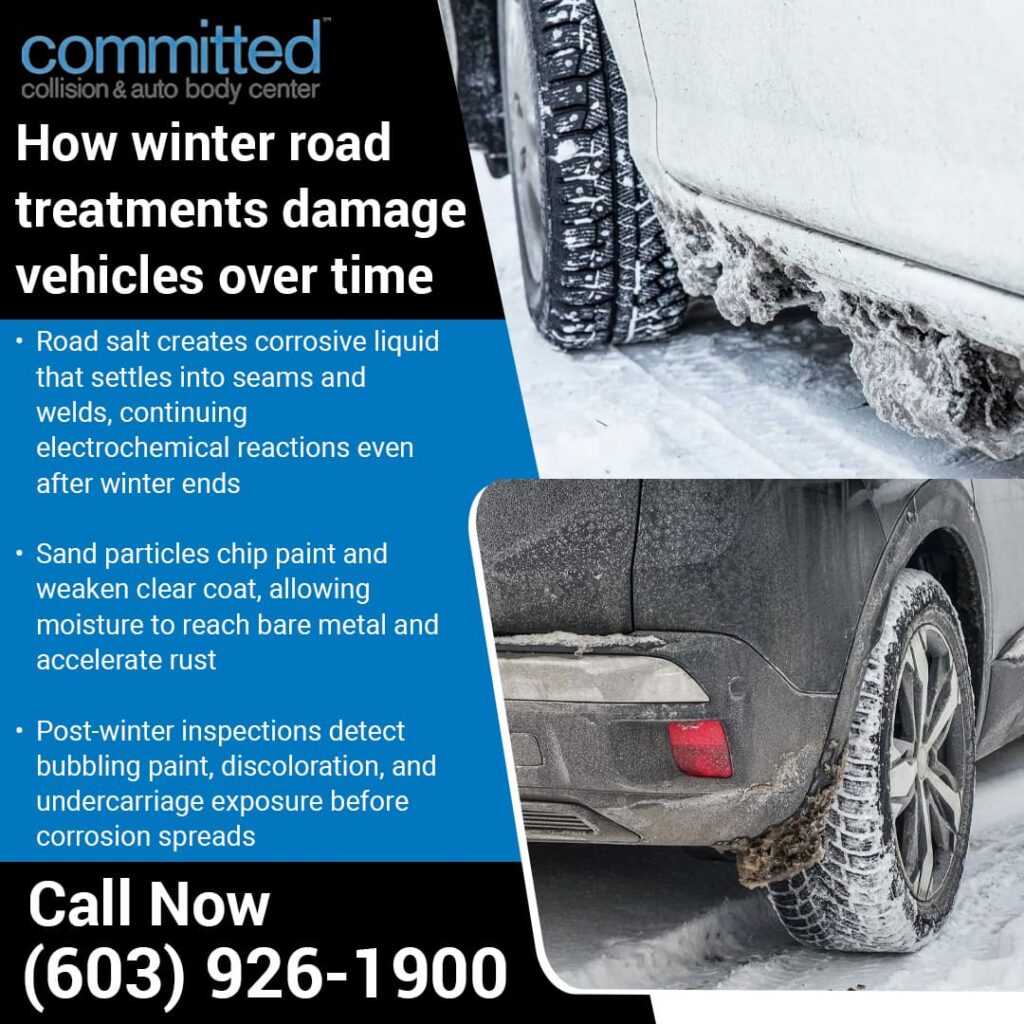
Road salt lowers water’s freezing point, reducing ice formation near and below 32°F, though its effectiveness decreases significantly at lower temperatures. Mixed with melting snow, salt creates a corrosive liquid that adheres to every surface it touches. This brine works its way into seams, welds, and spots where protective coatings sit thinner or show damage.
The interaction between salt, moisture, and steel triggers an electrochemical process that deteriorates metal. Salt serves as an electrolyte, speeding oxidation when it stays in contact with bare metal surfaces.
Sand and Grit on Winter Roads
Sand offers traction on icy surfaces without chemical interaction, yet it brings its own hazards. Sand particles function like abrasive material when flung against painted surfaces by spinning tires. This continuous pounding chips paint on rocker panels, lower doors, and fender edges.
Sand damage typically begins with tiny chips that reveal primer or bare metal. In regions where sand and grit are heavily used, vehicles often experience increased paint chipping due to repeated abrasive impact, particularly on lower body panels.
How Salt Causes Rust Beneath Paint and Panels
Grasping rust formation helps vehicle owners understand why seasonal damage demands swift auto body repair. Local auto body repair specialists recognize these patterns and know how to address them at various stages.
What Rust Is and How It Forms
Rust results from oxidation, a chemical interaction where iron bonds with oxygen when water or moisture is present. Once steel components lose their protective layer, they become open to this reaction. Salt speeds the process by generating an electrolyte solution that hastens electron movement between iron and oxygen.
Winter conditions generate perfect rust environments. Moisture from melting snow mixes with road salt, while temperature swings produce condensation in concealed spaces. After rust starts, it extends beneath intact paint, compromising metal before visible signs emerge.
Common Hidden Rust Zones on Modern Vehicles
Specific areas face elevated rust danger due to their exposure and construction. Wheel arches gather salt spray straight from tires. Rocker panels sit low enough to meet road debris and pooled water. Door seams and pinch welds capture moisture in tight spaces where drainage stays restricted.
Underbody parts and subframes face continuous exposure to road treatments without regular washing benefits. Frame rails, cross members, and suspension attachment points all endure this steady exposure across the winter months. An experienced auto body shop in North Hampton, NH, can assess these hidden areas through thorough inspection.
Paint Damage from Winter Conditions Often Comes First
Paint works as your vehicle’s primary defense against corrosion. When winter conditions breach this barrier, metal exposure follows swiftly. Recognizing how paint fails helps owners seek professional auto body repair before rust establishes itself.
Chips, Scratches, and Clear Coat Breakdown
Sand impact generates the most frequent type of winter paint damage. Small chips strip away clear coat and color layers, revealing primer or metal underneath. Salt then penetrates these openings, starting corrosion at numerous points across affected panels.
Clear coat breakdown happens during freeze-thaw cycles when moisture seeps into microscopic cracks and expands while freezing. This expansion pushes paint layers away from metal surfaces. With time, the clear coat drops adhesion, forming cloudy or peeling zones that no longer shield underlying materials.
Why Paint Chips Deserve Immediate Attention
Even small paint chips can allow corrosion to spread beneath intact paint over a single winter season, often extending well beyond the visible damage. The longer bare metal stays vulnerable, the deeper corrosion digs. Choosing an auto body repair shop that addresses these issues promptly prevents minor damage from becoming major restoration projects.
Undercarriage and Structural Areas Are at Higher Risk in Winter
While visible surface damage is easier to spot, corrosion on the undercarriage can be more insidious; over an extended period and without preventative maintenance, it may affect structural components. North Hampton vehicles endure months of winter exposure, making spring inspections at a qualified facility important for vehicle longevity.
Winter Exposure Under the Vehicle
Salt spray from tires blankets the complete undercarriage throughout winter driving. This mist lands on exhaust systems, suspension parts, and structural members. Drainage channels built to eliminate water get clogged with debris, forming standing water against metal surfaces. Moisture stays caught in these areas long after roads dry, creating ideal conditions for rust to grow unnoticed.
When Rust Can Affect Safety Components
Subframe corrosion stands as one of the most serious winter damage threats. Subframes hold suspension systems and supply structural stiffness. Surface rust on these components may signal deeper deterioration that reduces strength and safety. Auto body repair specialists spot warning signs during complete inspections before they turn into safety risks.
Why Modern Vehicles Are Still Vulnerable to Rust
Vehicle owners occasionally believe newer cars fight rust better than older models. Though manufacturing progress has strengthened corrosion protection, modern vehicles stay susceptible to winter damage. Late-model vehicles benefit from timely auto body repairs. Committed Collision & Auto Body Center is an I-CAR Gold Class certified auto body shop that understands current vehicle construction.
Modern steel alloys, including high-strength steels, may be more susceptible to accelerated corrosion if protective coatings are compromised, which makes proper rust prevention and repair critical. Aluminum doesn’t rust like steel, but in salty environments it can still corrode through pitting or galvanic corrosion, especially where dissimilar metals meet.
Factory testing mimics years of exposure, yet actual winter driving in New Hampshire frequently surpasses these test standards. The mixture of salt concentration, temperature cycles, and physical impact from road debris wears protective coatings more quickly than laboratory conditions forecast.
| Winter Damage Factor | Primary Effect | Typical Onset |
| Road Salt | Sped-up oxidation and rust formation | Within weeks of exposure |
| Sand/Grit | Paint chipping and clear coat damage | Immediate with buildup |
| Freeze-Thaw Cycles | Paint separation and trapped moisture | Throughout the winter season |
| Underbody Exposure | Hidden structural corrosion | Months to years, depending on severity |
Signs of Winter-Related Auto Body Damage You Should Not Ignore
Spotting damage indicators allows action while repairs stay straightforward. Spring offers the best chance to inspect your vehicle after winter treatments halt and schedule professional auto body repair.
Watch for these warning signs once winter weather ends:
- Bubbling paint beneath the surface, showing trapped moisture and active rust
- Discoloration near seams where salt builds up and corrosion starts
- Flaking under rocker panels, revealing paint failure in high-impact zones
- Rust stains near trim or doors where moisture gathers against metal
- Uneven panel edges suggest underlying corrosion that’s warping metal
- Orange or brown streaks flowing from body seams or fastener holes
- Paint lifting at panel edges or around wheel openings
- White or gray powdery deposits on painted surfaces, showing salt residue penetration
What begins as a limited area of concern can extend across whole panels if moisture keeps penetrating weakened paint. Booking an inspection at an auto body repair shop helps you grasp the complete extent of seasonal impact on your vehicle.
Why Professional Inspection Matters After Winter
Many vehicle owners run their own visual checks, yet trained technicians uncover damage that casual examination overlooks. Our team recognizes where seasonal damage conceals itself and provides expert assessment through comprehensive evaluation.
Hidden Damage Is Common After Cold Seasons
Damage beneath trim pieces and panels stays invisible during standard washing or casual examination. Corrosion grows behind wheel well liners, under door trim, and within body seams. These areas capture salt-laden moisture where it acts continuously against metal surfaces.
The initial visual inspection at our auto body shop in North Hampton, NH, documents visible signs of winter damage on panels, bumpers, lights, and body seams. Our repair specialists spot early warning signs that untrained eyes miss. When you authorize repair work, we perform complete disassembly to examine hidden areas with diagnostic tools, revealing the full extent of seasonal exposure.
What Professional Evaluation Identifies
Our process examines paint failure across all exterior surfaces, focusing on lower panels and seams. We search for the earliest stages of corrosion that show as surface discoloration or light oxidation. These initial stages react well to professional auto body repair, unlike advanced rust that needs metal replacement.
Our team at Committed Collision & Auto Body Center delivers rust repair, paint and finish restoration, dent and scratch repair, and structural repair services. We apply proper techniques using our Chief 3D Laser Measuring System, Spanesi Multibench pull stations, Glasurit 100 Line waterborne paint, USI Spray Booths, and Keco PDR equipment to restore your vehicle’s protection.
Preventing Winter Auto Body Damage Going Forward
Prevention demands consistent attention throughout the winter months. North Hampton drivers who adopt these guidelines shield their vehicles from the worst effects of seasonal road treatments and reduce the need for extensive auto body repair.
Simple Habits That Reduce Salt Damage
Regular washing during winter thaws eliminates salt before it dries and concentrates on metal surfaces. Target the undercarriage and wheel wells where spray gathers most thickly. Commercial car washes frequently include undercarriage rinse options that reach areas tough to clean at home.
Clean your vehicle when temperatures climb above freezing, letting components dry before cold returns. Zero in on removing salt from door jambs, hood, and trunk edges, and around fuel filler doors where buildup often stays unnoticed.
Spring Inspections Catch Problems Early
Spring presents a perfect window for tackling seasonal damage. Book an evaluation at an auto body shop once road crews quit applying salt and temperatures level out. This timing lets you spot all damage from the season before summer humidity speeds any corrosion that’s started.
Handle paint chips and scratches through qualified professional auto body repair during the spring months. Local auto body repair facilities can judge damage severity and suggest fitting solutions while repairs stay straightforward and affordable, preventing costly, extensive work later.
Protecting Your Vehicle After Winter Exposure With Auto Body Repair
Winter conditions in North Hampton test every vehicle on the road. Salt and sand cut paint and metal lifespan through constant chemical and physical attack. Understanding when to seek auto body repair makes the difference between simple restoration and complex rebuilding.
Timely attention shields your vehicle’s value and longevity. We encourage you to book a post-winter inspection at Committed Collision & Auto Body Center. Our skilled technicians, backed by over 20 years of experience serving the New Hampshire seacoast, deliver thorough evaluations and clear recommendations for addressing any damage we locate. We offer a range of services, including rust repair, paint and finish restoration, structural repair, and dent and scratch repair. All our work comes backed by our limited lifetime warranty for as long as you own your vehicle.
Contact us at (603) 926-1900 or email info@committedcollision.com, and our local auto body repair specialists will help you protect your vehicle from the lasting effects of salt, sand, and winter road conditions. Visit us for a detailed evaluation and expert service from our ASE-certified technicians. As your trusted auto body repair shop serving North Hampton and the seacoast region, we’re committed to restoring your vehicle to its pre-winter condition with precision and care.