
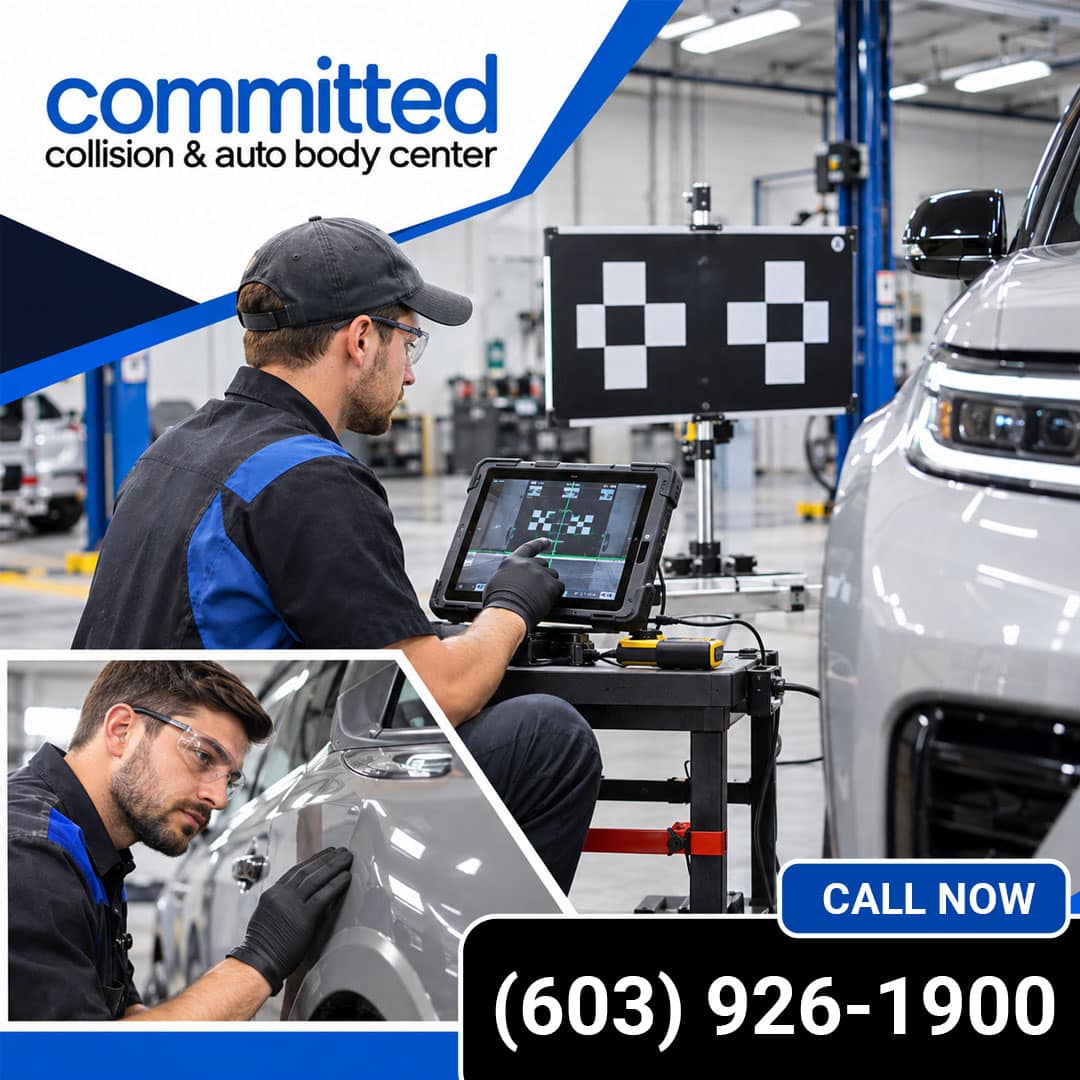
Static ADAS calibration uses positioned targets with the vehicle stationary. Dynamic calibration requires driving under manufacturer-defined conditions. Your vehicle may require either method or both. At Committed Collision & Auto Body Center, we coordinate calibration with Automotive Alignments & Calibrations LLC, which performs the required work.
Key Takeaways:
- Follow manufacturer instructions: The affected system determines the calibration method.
- Separate calibration from testing: A routine test drive does not replace dynamic calibration.
- Check preparation requirements: Vehicle condition, target setup, and road conditions affect the procedure.
How Do Static and Dynamic Calibration Differ?
Static calibration establishes camera or sensor references in a controlled setup. Dynamic calibration establishes references during a prescribed drive. We explain the applicable method as part of your repair plan. The choice depends on manufacturer requirements rather than customer preference or convenience.
Advanced Driver Assistance Systems (ADAS) support functions such as lane-departure warnings and adaptive cruise control. Calibration establishes the references these systems use to interpret their surroundings.
What Does Each Method Involve?
| Comparison | Static calibration | Dynamic calibration |
| Vehicle movement | Vehicle remains stationary | Vehicle is driven |
| Reference setup | Positioned targets or specified equipment | Manufacturer-defined driving conditions |
| Preparation | Required space, measurements, and vehicle setup | Required speed, road conditions, and system setup |
| Sequence | May be followed by a required dynamic procedure | May be required after a static procedure, depending on the manufacturer’s process |
I-CAR’s dynamic calibration guidance explains that some systems require both methods. Dynamic-calibration conditions may include specified vehicle speed, road conditions, clear road markings, and time of day; weather and objects near the roadway can also affect the procedure. I-CAR distinguishes this calibration drive from the separate test drive that should follow all calibrations to confirm proper ADAS operation.
What Determines Calibration After Collision Repairs?
Manufacturer instructions, installed equipment, and repair operations determine post-collision ADAS calibration requirements. We evaluate the damage and repairs affecting camera or sensor locations. Visible damage alone cannot establish which calibration procedure applies to your vehicle.
For example, work around a radar mounting point may raise different requirements from replacing glass that supports a forward-facing camera. We also coordinate radar and steering calibration when the manufacturer requires those procedures after the identified repairs.
How Can Windshield or Suspension Work Affect Calibration?
Windshield replacement can trigger windshield camera calibration requirements on equipped vehicles. Suspension repairs and alignment adjustments may also create calibration requirements, depending on the manufacturer’s instructions.
I-CAR’s static calibration guidance identifies precise measurements and target setup as key preparation requirements. Vehicle-specific service information may also specify tire pressure, fuel level, and the amount of clear, level space needed around the vehicle. We discuss scheduling after the applicable requirements are identified.
How Do We Connect Collision Repairs With Calibration?
We perform collision and body repairs, while Automotive Alignments & Calibrations LLC performs required alignment and calibration work. Committed Collision & Auto Body Center works closely with Automotive Alignments & Calibrations LLC.
Our approach connects three documented capabilities:
- Damage evaluation: We use diagnostic scanning, authorized disassembly, and structural assessment to develop the collision repair plan.
- Calibration equipment: Our sister shop uses Bosch DAS 3000 calibration equipment and Hunter alignment equipment.
- Repair communication: We explain proposed operations and additional damage identified during the repair process.
At Committed Collision & Auto Body Center, our collision repair process addresses damage beneath exterior panels. That assessment helps connect body repairs with subsequent vehicle sensor calibration requirements.
Frequently Asked Questions
Will insurance pay for calibration after an accident?
Ask your insurer whether the required calibration procedures are covered under your claim. We can explain the proposed repair work; your insurer determines coverage.
What calibration records should I request?
Ask for documentation identifying the systems calibrated and the procedure results. We recommend keeping those records with your collision repair estimate and final invoice.
Should I report changed driver-assistance alerts after a collision?
Yes. Tell us about dashboard warnings, unexpected alerts, or changes in driver-assistance behavior after the accident. We use your observations when assessing the damage and coordinating required work with Automotive Alignments & Calibrations LLC. Do not attempt to test emergency braking yourself.
Discuss Your Vehicle’s Calibration Needs With Committed Collision & Auto Body Center
We can explain the calibration requirements identified for your vehicle and how the required work fits your collision repair plan. If you think your vehicle needs ADAS calibration in North Hampton, NH, contact Committed Collision & Auto Body Center at (603) 926-1900 or info@committedcollision.com.