
Vehicle sensor calibration resets a car’s cameras, radar, and other safety sensors to their factory position after a repair disturbs them. At Committed Collision & Auto Body Center, we see this matter most for late-model vehicles, where these sensors power lane keeping, automatic braking, and adaptive cruise control.
Key Takeaways
Here’s what we want customers to know before a repair starts:
- Calibration resets safety sensors: cameras, radar units, and the steering angle sensor return to factory position after repair work moves them.
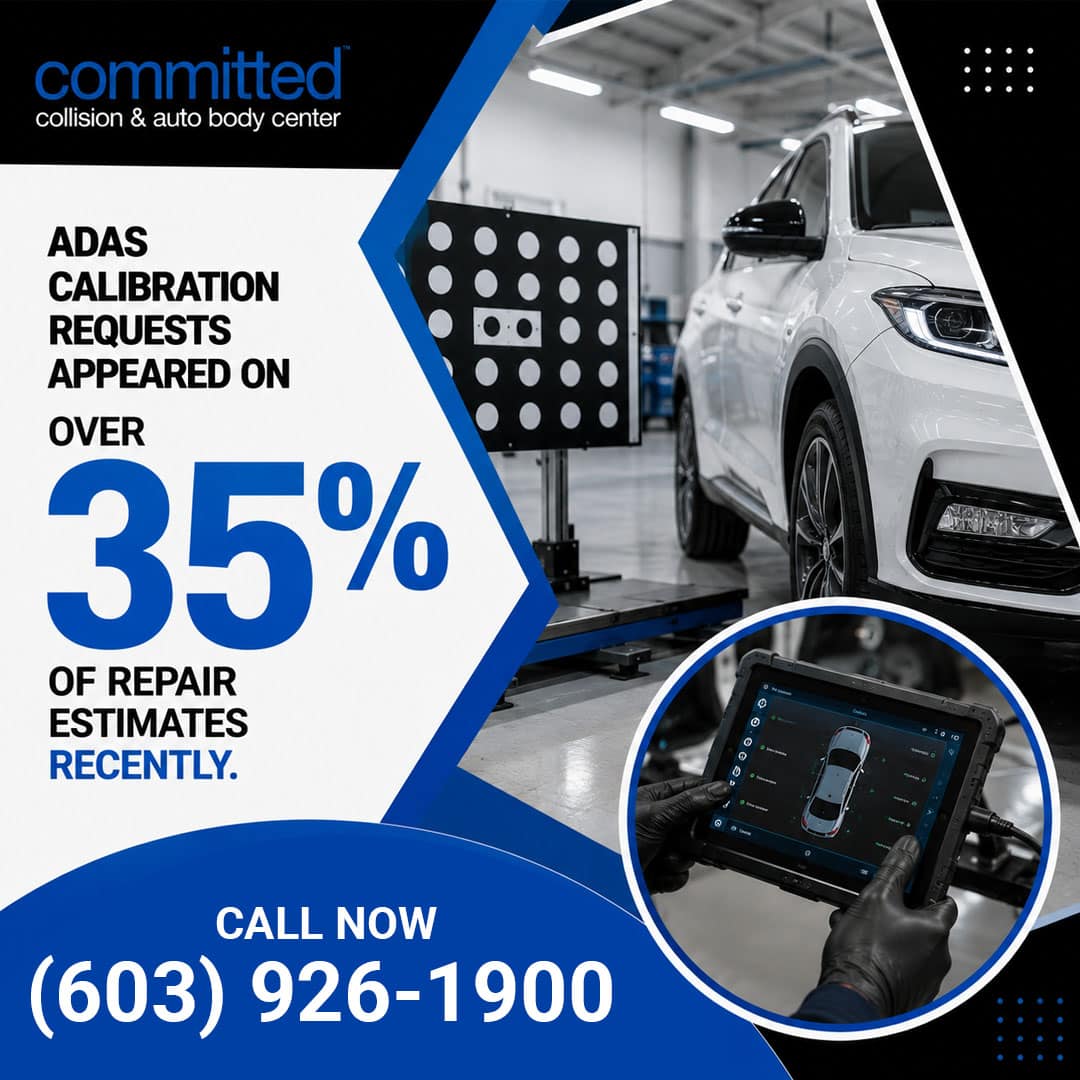
- Demand is climbing industry-wide: calibrations appeared on 35.6 percent of repair estimates in Q3 2025, up from 26.9 percent a year earlier, per CCC Intelligent Solutions.
- Several repairs can trigger it: windshield replacement, bumper repair, and alignment work all commonly require calibration.
How Is Sensor Calibration Defined?
Vehicle sensor calibration is the process of resetting a car’s cameras, radar units, and position sensors so they read the road as the manufacturer intended. A sensor even slightly out of position can misjudge distance or drift out of a lane. We check for this on every vehicle that comes in after an accident.
Which Sensors Typically Need Calibration?
Late-model vehicles carry several sensor types that work together. We see three of these most often. A forward-facing camera behind the windshield reads lane markings. Radar units in the front and rear bumpers judge distance. A steering angle sensor tells the computer which direction the wheels point.
How Do the Main Sensor Types Compare?
| Sensor | Typical Location | Common Trigger for Calibration |
| Forward camera | Behind the windshield | Windshield camera calibration after glass replacement |
| Radar unit | Front and rear bumpers | Bumper repair or replacement |
| Steering angle sensor | Steering column | Wheel alignment or suspension work |
Why Does This Matter After a Collision?
A collision often disturbs more than one sensor at once. Post-collision ADAS calibration checks these systems together, rather than treating each one as a separate repair.
How Fast Is Calibration Demand Growing?
Industry data backs up how common this has become. Calibrations appeared on 35.6 percent of direct repair program estimates in the third quarter of 2025, up from 26.9 percent a year earlier, according to CCC Intelligent Solutions data reported by Autobody News in December 2025. That growth tracks how quickly driver-assistance features have moved from optional to standard equipment on most new vehicles.
How Does Committed Collision & Auto Body Center Approach Sensor Calibration?
We handle the collision repair, body work, and glass replacement that often triggers calibration. For the calibration itself, we work closely with Automotive Alignments & Calibrations LLC, using OEM-compliant procedures and Hunter/Bosch DAS 3000 equipment.
What Steps Does This Process Involve?
- Diagnostic scan: We check the onboard computer for fault codes.
- Static calibration: Target boards go up per manufacturer procedure.
- Radar and steering calibration: Radar units and steering sensor reset to factory spec.
- Dynamic road test: The vehicle is driven at set speed to confirm readings.
Drivers looking for ADAS calibration in North Hampton, NH can have body work, glass repair, and sensor calibration coordinated through a single repair plan rather than separate appointments. Our auto body repair services cover the collision and glass work that leads into this process.
Frequently Asked Questions
Does sensor calibration require a special scan tool?
Yes. Calibration uses OEM-specific software and target equipment, not a generic code reader. We run a basic scan first to confirm a fault code exists, but that alone cannot reposition a camera or radar unit to factory specification.
Can a vehicle be driven safely before calibration is complete?
A vehicle can usually be driven, but its safety systems may not respond as designed until calibration finishes. Features like automatic braking or lane keeping can misjudge distance meanwhile.
Does calibration expire or need to be repeated later?
Calibration itself does not expire, but a later repair or collision can shift a sensor out of position again.
Ready to Have Your Sensors Checked?
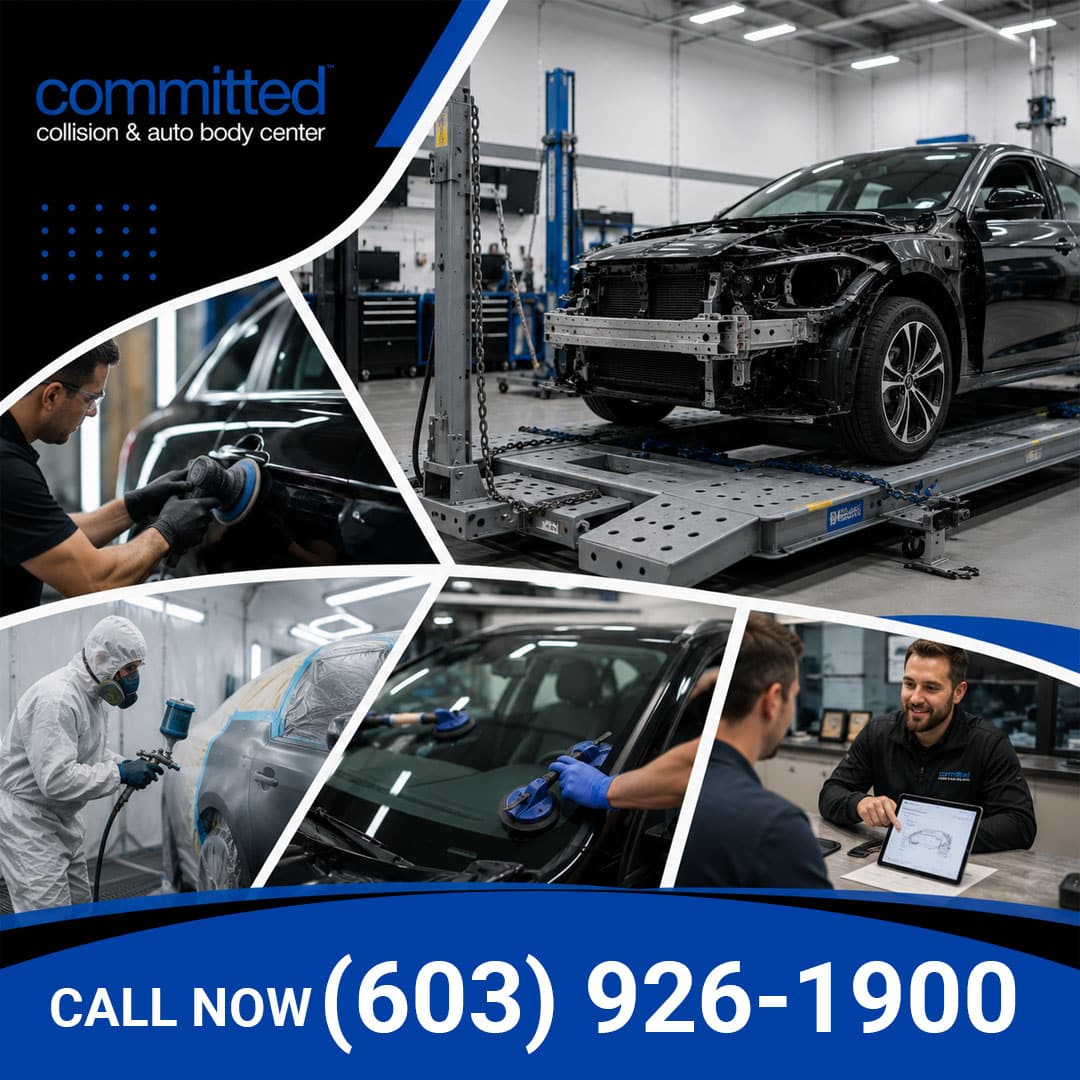
ADAS calibration is not a step to guess about after an accident. It confirms your car’s cameras, radar, and steering sensors are reading the road correctly again. At Committed Collision & Auto Body Center, we handle the repair, then coordinate the calibration so nothing gets missed.
Been in a collision or had body work done? Call us at (603) 926-1900 or email info@committedcollision.com for a free estimate.