
Synopsis:
Suspension damage is a frequently encountered and often overlooked result of a collision. Committed Collision & Auto Body Center in North Hampton, NH, lists the post-collision suspension problems we find most often, why they stay hidden, and what to do if your vehicle doesn’t feel right after an accident.
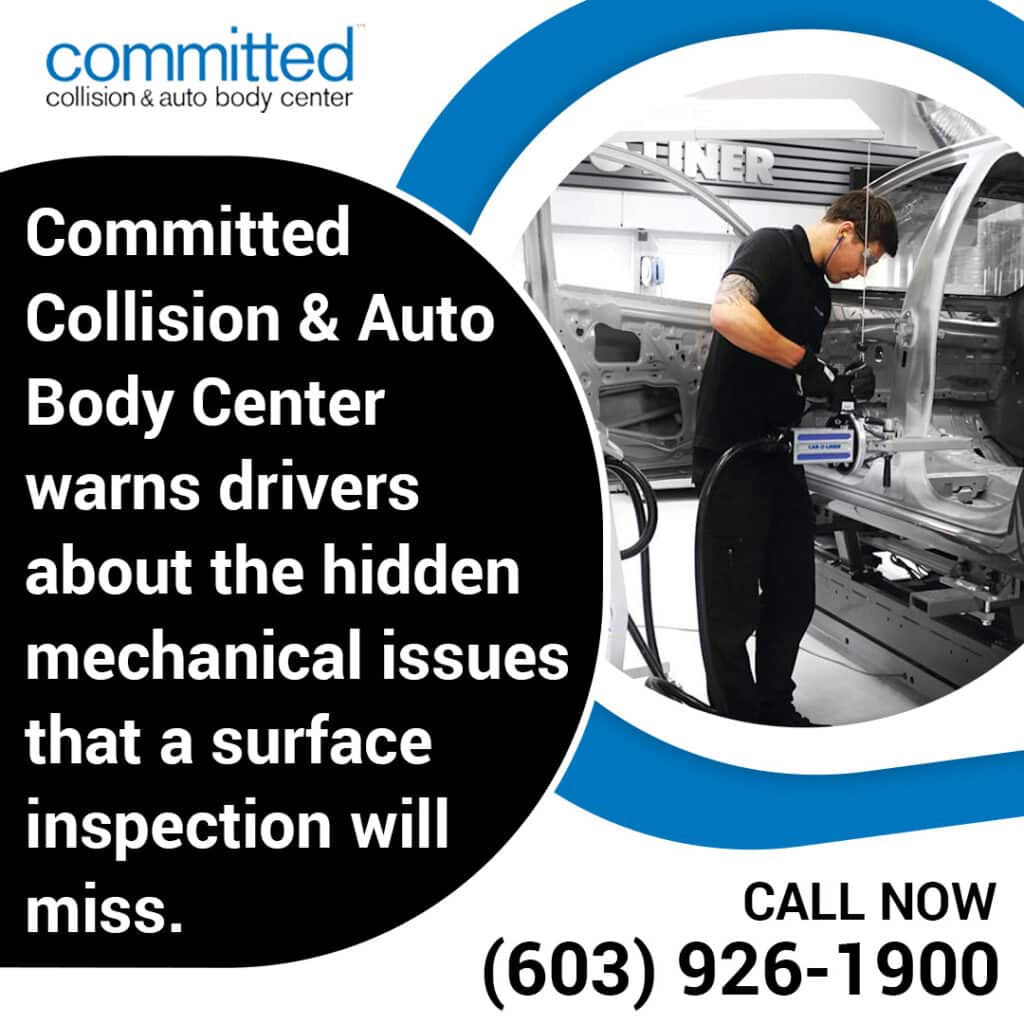
Most drivers expect body damage after a collision: crumpled panels, broken lights, and a damaged bumper. What they don’t always expect is that the suspension took a hit, too. At Committed Collision & Auto Body Center in North Hampton, NH, a vehicle may come in with what looks like straightforward body damage. Once it’s disassembled and measured, we may find bent structural components or shifted suspension parts that weren’t visible during the initial walkthrough.
The suspension system is commonly affected in many types of collisions, especially when impact forces travel through the wheels or undercarriage. Impact force travels through the wheels and directly into the suspension. By the time a driver notices a pull or instability on the road, the damage has often been there since the day of the crash. New Hampshire’s freeze-thaw road conditions and road salt can accelerate wear on already-compromised components, making early inspection important for drivers across the Seacoast.
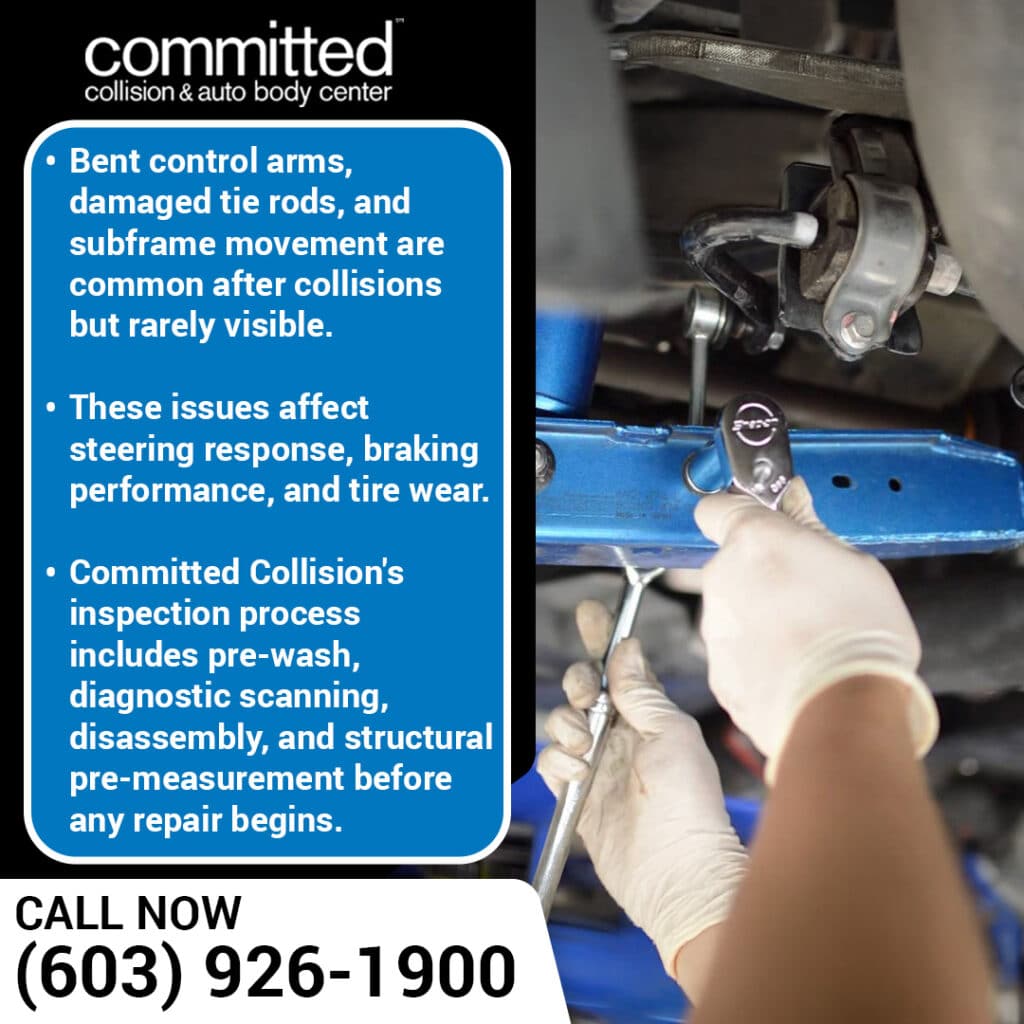
Auto collision repair at our shop goes beyond surface work. Every repair starts with a complete inspection, pre-washing, scanning, disassembly, and structural pre-measurement, to build an accurate picture of what was actually damaged.
Why Collisions Put the Suspension at Risk
The suspension is the mechanical link between the road and your vehicle’s structure. It keeps tires in contact with the road, controls how the vehicle absorbs impacts, and maintains the geometry that makes steering and braking work correctly. These functions depend on each other. When one suspension component is bent or shifted, all three are affected.
In a collision, impact energy moves inward through the bumper structure, through the wheel, and into the suspension mounting points and frame. A front-end impact can stress strut towers and the subframe. A side impact can bend control arms or shift subframe mounting points. Even a curb strike at moderate speed can damage a tie rod or knock alignment out of factory specification.
Visible body damage is not a reliable indicator of suspension condition. A bumper cover may absorb the visible impact while the components behind or beneath the vehicle carry the real structural load. This is one of the most important reasons that complete disassembly and structural measurement are part of every auto collision repair in North Hampton, NH that we perform.
U.S. Traffic Crash Data (2023)
| Figure | Estimated Total |
| Police-reported crashes | 6,138,359 |
| People injured | 2,442,581 |
With over six million crashes reported in the U.S. in 2023, suspension-related damage is far more widespread than most drivers assume, particularly in accidents where the vehicle appeared drivable afterward.
The Most Common Post-Collision Suspension Problems
Bent Control Arms
Each wheel on your vehicle connects to the frame through a control arm, a hinged structural link that holds the wheel at the precise angle the manufacturer engineered for safe handling. When a control arm bends, even slightly, that angle shifts in a way that alignment adjustments cannot correct on their own. The bent component must be replaced first.
A bent control arm is one of the most consistent findings during post-collision disassembly, including after low-speed side impacts and curb strikes. Common indicators include steering that pulls to one side on a flat road, a wheel that visibly sits at a different angle from the others, or tire wear concentrated along the inner or outer edge.
As part of our body collision repair process, we pre-measure the vehicle’s structural geometry before any repair work is approved. This step confirms control arm damage and documents exactly what needs to be corrected before the vehicle is safe to drive.
Damaged Tie Rods and Steering Linkage
Tie rods are the mechanical connection between the steering rack and the wheel hubs. Every steering input travels through them before reaching the wheels. A bent or compromised tie rod breaks that connection, and the wheels stop responding with the accuracy they were designed to deliver.
Post-collision symptoms include a steering wheel that sits off-center on a straight road, a loose or wandering steering feel, or vibration at highway speeds. These are frequently mistaken for an alignment problem. But alignment adjustments will not hold if the tie rod itself is bent. Our technicians trace the full impact path through the undercarriage during disassembly, and tie rod damage is often confirmed at this stage once the full extent of structural and mechanical damage is visible.
Strut and Shock Absorber Damage
Struts and shock absorbers keep tires planted against the road under braking, acceleration, and cornering. A bent strut, a leaking hydraulic fluid line, or a displaced tower cannot maintain that contact, and the effects show up directly in braking performance.
Post-collision signs include a nose that pitches sharply forward under braking, excessive bounce after road irregularities, or visible fluid tracking along the strut body. Strut tower damage is particularly serious because it involves the vehicle’s structural chassis, not just a bolt-on component. When tire contact with the road is reduced due to damaged struts, braking performance can be compromised, potentially increasing stopping distance under certain driving conditions.
Effect of Damaged Struts on Braking
| Detail | Finding |
| Stopping distance | Increases |
| Root cause | Reduced tire-to-road contact under braking load |
| Most common collision source | Front-end and undercarriage impacts |
Wheel Alignment Shifts
A collision can shift toe, camber, and caster angles away from manufacturer specifications, affecting steering response, tire life, and straight-line stability. Alignment adjustments will not hold if bent components underneath are not corrected first.
Common signs include drifting on a flat road, a steering wheel off-center at speed, or uneven tread wear progressing faster than expected. We use the Chief 3D Laser Measuring System to confirm structural and suspension geometry before scheduling any alignment work. In collision repair, alignment is typically performed as a final step after any structural or component damage has been corrected.
Bent Subframe or Suspension Mounting Points
The subframe is the steel structural member that carries the suspension, steering rack, and part of the drivetrain. In moderate to severe front or side impacts, it can crack, deform, or shift out of position. Even a few millimeters of displacement changes control arm geometry, steering rack position, and wheel angles simultaneously.
We pair the Chief 3D Laser Measuring System with our Spanesi Touch Measuring System to measure displacement against factory specifications. Structural corrections follow using our Spanesi Multibench pull stations and Pro Spot welding systems before any suspension work proceeds.
Why Suspension Damage Stays Hidden
A bumper cover is designed to absorb impact energy, and it does. But that energy transfers inward. Behind an intact-looking bumper, we regularly find bent brackets, displaced subframe sections, or cracked strut towers. Tie rod and control arm damage often leaves no visible mark on the body panels at all.
At Committed Collision & Auto Body Center, every repair includes three steps designed to find what the surface doesn’t show:
- Pre-repair scanning: We run a full vehicle diagnostic to identify fault codes and electronic system issues triggered by the collision.
- Full disassembly: Body panels and undercarriage components are removed to map the complete damage path.
- Structural pre-measurement: We record the vehicle’s geometry using laser measuring equipment before any repair begins.
These steps are part of every auto collision repair we perform, not optional add-ons.
Suspension Damage and Your Vehicle’s Safety Systems
Modern safety systems depend on accurate structural and suspension geometry to function correctly. Electronic stability control reads real-time wheel and suspension data to detect skids. Automatic emergency braking uses radar and camera sensors mounted to structural points that may shift in a collision. Lane departure and adaptive cruise systems use cameras that require specific physical positioning to stay within design tolerances.
When suspension or structural geometry is off, these systems can work inaccurately or stop functioning entirely. This is why many manufacturers require recalibration after any collision, not only after major structural repairs.
After structural and suspension repairs, vehicles with driver assistance systems need recalibration before they are safe to drive. We coordinate this through Automotive Alignments & Calibrations (AAC), our sister company in North Hampton, using Hunter/Bosch DAS 3000 equipment and a full Hunter alignment system with an in-ground rack, following OEM-required procedures for each vehicle.
What To Do If You Suspect Suspension Damage
Watch for these symptoms in the days and weeks after any accident:
- Steering that pulls consistently to one side on a level road
- Vibration through the steering wheel or up through the floorboard
- Tire wear that is uneven or accelerating faster than expected
- Clunking or knocking when going over bumps or turning
- Loose or imprecise steering feel that wasn’t there before the accident
- The vehicle is sitting noticeably lower on one corner
Any of these warrants a professional post-collision inspection, not just an alignment check. If your vehicle isn’t drivable, AAC Towing Division provides emergency and flatbed towing directly to our facility.
Frequently Asked Questions
How do I know if my suspension was damaged in a collision?
The most common signs are a steering pull, vibration through the wheel or floor, clunking over bumps, and faster-than-normal tire wear. These may appear right after the accident or develop gradually over days or weeks. A post-collision inspection that includes disassembly is the only way to confirm the condition of suspension and structural components.
Can a minor accident affect wheel alignment?
Yes. A low-speed curb strike or parking lot rear-end collision can shift alignment through bent control arms or tie rods. An alignment adjustment will not hold until the damaged components are replaced first.
Is suspension damage covered by auto insurance?
Suspension damage from a collision is generally covered under collision coverage. What you pay out of pocket depends on your deductible and policy terms. We work with all major insurance providers and document all damage with photos and detailed repair records to support your claim. Under New Hampshire law, you have the right to choose your own repair shop. Your insurer cannot require you to use a specific facility.
Do suspension or structural repairs require ADAS calibration?
For many vehicles, yes. Manufacturers require cameras, radar sensors, and driver assistance systems to be recalibrated after any suspension or structural repair. We coordinate post-repair calibrations through Automotive Alignments & Calibrations (AAC), our sister company in North Hampton, using OEM-compliant equipment and procedures.
Why Committed Collision & Auto Body Center Is Trusted for Post-Collision Repairs
Suspension damage after a collision is common, often hidden, and directly tied to how safely your vehicle steers, stops, and handles. Bent control arms, damaged tie rods, compromised struts, and shifted subframes all affect performance in ways a surface inspection will not catch. The only reliable way to know what was damaged is a complete inspection, disassembly, structural measurement, and diagnostic scanning.
Committed Collision & Auto Body Center is a car collision repair shop that has served NH Seacoast drivers since 2005. Our I-CAR Gold Class and ASE-certified technicians bring over 70 years of combined family-owned auto body experience to every repair. We follow OEM repair procedures on every job and document everything, so you know exactly what was found and what was fixed.
If you are looking for the best collision repair shop in North Hampton, NH, for a thorough post-collision inspection, call us at (603) 926-1900 or email info@committedcollision.com. You can also schedule a free estimate online.