
Synopsis:
Factory repair specifications define how modern vehicles must be restored after a crash. Committed Collision & Auto Body Center explains how proper auto collision repair follows OEM procedures, precise measurements, verified calibrations, and documented quality checks to restore safety, structure, and performance, not just appearance.
Modern vehicles are engineering marvels built to precise manufacturer tolerances. After a collision, restoring these tolerances isn’t optional. It’s the difference between a safe vehicle and one that looks fixed but performs unpredictably in the next accident. Factory repair specifications define the exact methods, materials, and measurements manufacturers require to restore your vehicle’s safety systems, structural integrity, and performance standards.
Committed Collision & Auto Body Center is a car collision repair shop in North Hampton, NH, that follows manufacturer repair procedures for every vehicle that enters our facility. Cosmetic repairs that hide damage without addressing structural alignment or safety system calibration put drivers at risk. Factory-correct collision repair requires specialized equipment, current repair documentation, and technicians trained to interpret manufacturer requirements. We invest in these capabilities because your safety depends on repairs that meet, not approximate, factory standards.
What Factory Specifications Mean After a Collision
Factory specifications are the exact repair standards set by vehicle manufacturers to restore safety, structural integrity, and system operation after a collision. These specifications include structural measurement tolerances, approved repair materials, welding procedures, parts placement requirements, and calibration protocols for electronic safety systems.
Manufacturers develop these standards through crash testing and engineering analysis. When your vehicle leaves the assembly line, thousands of measurements fall within precise tolerances that affect how the structure absorbs crash energy and how safety systems respond. After a collision, restoring these specifications requires following documented procedures specific to your vehicle’s make, model, and year.
Structural Tolerances and Measurement Accuracy
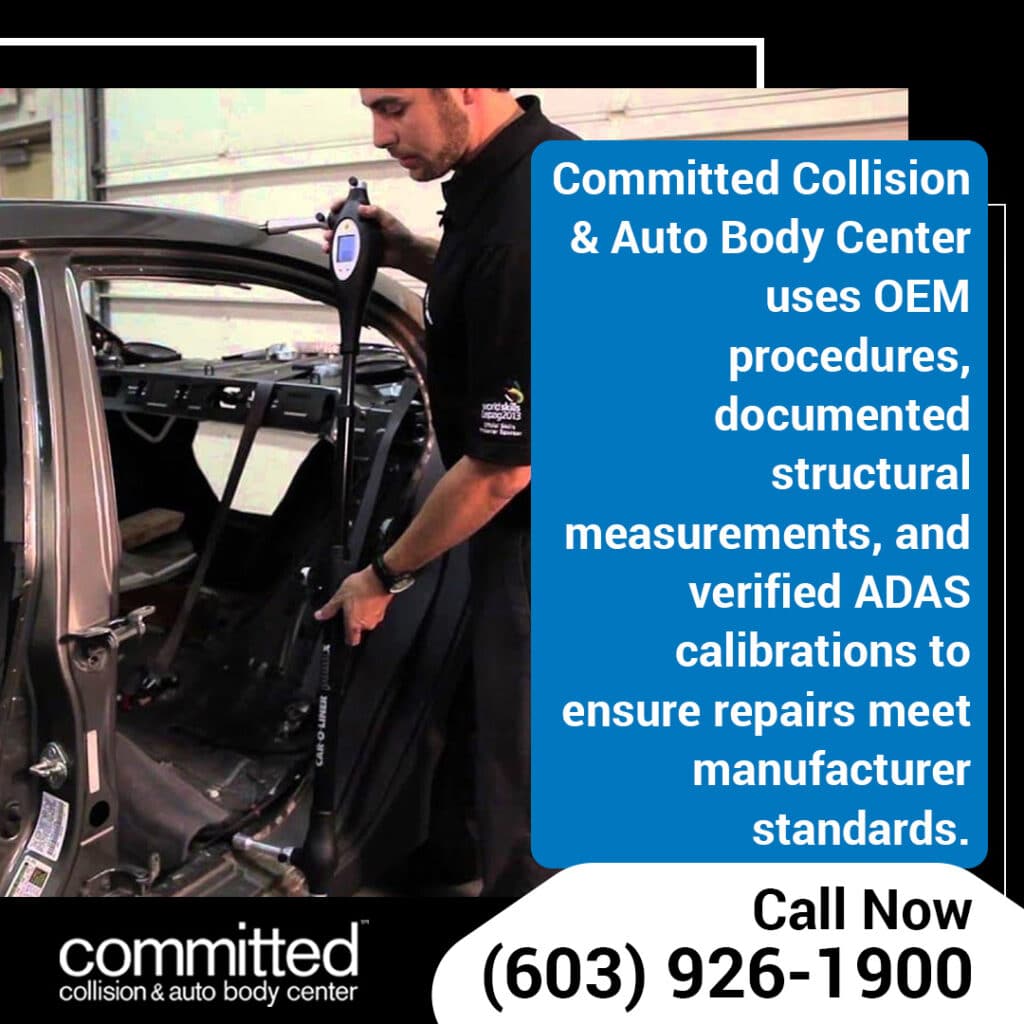
Vehicle manufacturers define structural tolerances down to millimeter accuracy. Even small deviations, measured and documented using computerized systems, can impact how crash forces are distributed and how safety systems perform. Electronic measuring systems verify that structural points return to manufacturer specifications before refinishing begins.
Body collision repair shops that rely on visual alignment or outdated measuring methods cannot verify factory-level accuracy. NHTSA’s crashworthiness research highlights vehicle structural design as essential for occupant protection, with modeling and tests demonstrating how structural performance influences injury outcomes in collisions.
Committed Collision & Auto Body Center uses Chief 3D Laser Measuring Systems and Spanesi Touch Measuring Systems to document structural accuracy throughout the repair process.
Vehicle Materials and Manufacturer Repair Limits
Today’s vehicles combine high-strength steel, aluminum, and advanced composites. Each material requires specific repair techniques. High-strength steel cannot be heated and bent like conventional steel. Manufacturers prohibit heat straightening because it weakens the material’s crash performance. Aluminum requires dedicated welding equipment and cannot be repaired using steel repair methods.
We use specialized welding systems, including Pro Spot i4s and i5s spot welders and Pro Spot SP-5 Smart Mig equipment to meet manufacturer welding specifications for different materials. Manufacturers publish repair procedures that specify when panels must be replaced rather than repaired. These limits exist because attempting to repair beyond manufacturer guidelines compromises structural performance. Our collision repair specialists reference OEM repair procedures before making repair versus replace decisions for every auto collision repair we perform.
Why Factory-Correct Collision Repair Matters for Safety
Your vehicle’s safety depends on precise coordination between structure and electronic systems. When crash sensors detect an impact, they trigger restraint systems based on collision severity, occupant position, and impact location. This process happens in milliseconds. Incorrect repairs affect sensor placement, crash structure deformation patterns, and system calibration, all of which influence how your vehicle protects you.
Shortcuts in body collision repair create hidden safety compromises. Frame damage that isn’t fully corrected changes how crash energy travels through the structure. Safety system sensors mounted in incorrect positions send inaccurate data. These issues aren’t visible but become critical in the next collision. Choosing auto collision repair that follows factory specifications protects your family from these hidden risks.
How OEM Repair Procedures Guide Collision Repair Decisions
OEM repair procedures define how each vehicle must be repaired to maintain safety and performance. These procedures are vehicle-specific. Repair methods approved for one model may be prohibited for another, even within the same manufacturer’s lineup. At Committed Collision & Auto Body Center, we access current OEM repair information for every vehicle through manufacturer databases and technical service bulletins.
Manufacturer Repair Documentation and Procedures
OEM repair procedures specify approved repair methods, required measurements, acceptable materials, and step-by-step instructions for structural repairs. These documents include welding parameters, sectioning locations, adhesive bonding procedures, and parts replacement requirements.
One-size-fits-all repairs ignore these specifications. A repair method that works on a 2015 model may damage a 2023 model with different materials and construction. Body collision repair requires collision repair specialists who verify procedures before beginning work to confirm they’re following current manufacturer requirements.
Approved Tools, Methods, and Repair Sequences
Manufacturers approve specific welding equipment, measuring systems, and repair tools. They also define the sequence in which repairs must be completed. Structural repairs occur first, followed by body work, then refinishing. Calibration happens after structural and refinishing work is complete.
Following the correct repair sequence prevents rework and allows each step to build on properly completed previous work. Our I-CAR Gold Class certified technicians receive yearly training to interpret OEM procedures and use manufacturer-approved tools throughout each auto collision repair process. When you choose the best collision repair shop in North Hampton, NH, our ongoing education and certification help to maintain your vehicle’s safety.
Measuring and Restoring Structural Accuracy
Electronic measuring systems document your vehicle’s structural accuracy before disassembly, during repair, and after completion. These systems compare your vehicle’s actual measurements to manufacturer databases containing factory specifications for thousands of vehicle models.
We use both Chief 3D Laser Measuring Systems and Spanesi Touch Measuring Systems to verify structural accuracy. We use Spanesi Multibench pull stations that allow our collision repair specialists to address multiple structural repair points simultaneously while maintaining precise control over pulling forces and angles. Pre-repair measurements identify all structural damage, including secondary damage not visible during initial inspection. During repair, measurements guide pulling and straightening procedures. Post-repair measurements verify that all structural points returned to factory tolerances before we proceed to refinishing for your auto collision repair.
| Repair Stage | Measurement Purpose | Manufacturer Standard |
| Pre-Repair Scan | Document all structural damage | Baseline measurement |
| During Repair | Guide straightening procedures | Return to factory spec |
| Post-Repair Verification | Confirm specifications met | Within factory tolerance |
| Final Quality Check | Validate completed repair | Exact manufacturer spec |
Why Visual Inspections Alone Are Not Enough
Structural misalignment may not always be visible to the human eye, but it substantially affects vehicle safety. Frame rails may appear straight but fall outside the manufacturer’s tolerances. Suspension mounting points may look correct, but position suspension components incorrectly.
Documented measurements provide objective verification that body collision repair meets factory specifications. We maintain measurement records for every vehicle and can demonstrate structural accuracy throughout the repair process. Any car collision repair shop you consider should provide this level of documentation and transparency.
Why Disassembly and Blueprinting Are Required for Factory-Spec Repairs
Disassembly allows technicians to identify hidden damage not visible during initial inspections. Bumper covers, fender liners, and trim panels conceal structural components and safety sensors. Until these components are removed, technicians cannot assess the full extent of damage or create an accurate repair plan.
Blueprinting occurs after disassembly. Our I-CAR Gold Class certified technicians photograph damage, document all affected components, and create a complete repair plan based on OEM procedures. This process identifies parts requirements, establishes repair sequences, and provides insurance companies with documentation supporting necessary repairs.
Skipping thorough disassembly leads to missed damage discovered mid-repair, causing delays and requiring supplemental approvals. We disassemble vehicles completely before finalizing repair plans, reducing surprises and helping you understand the full scope of required work for your body collision repair.
How ADAS Calibration Supports Factory-Level Collision Repairs
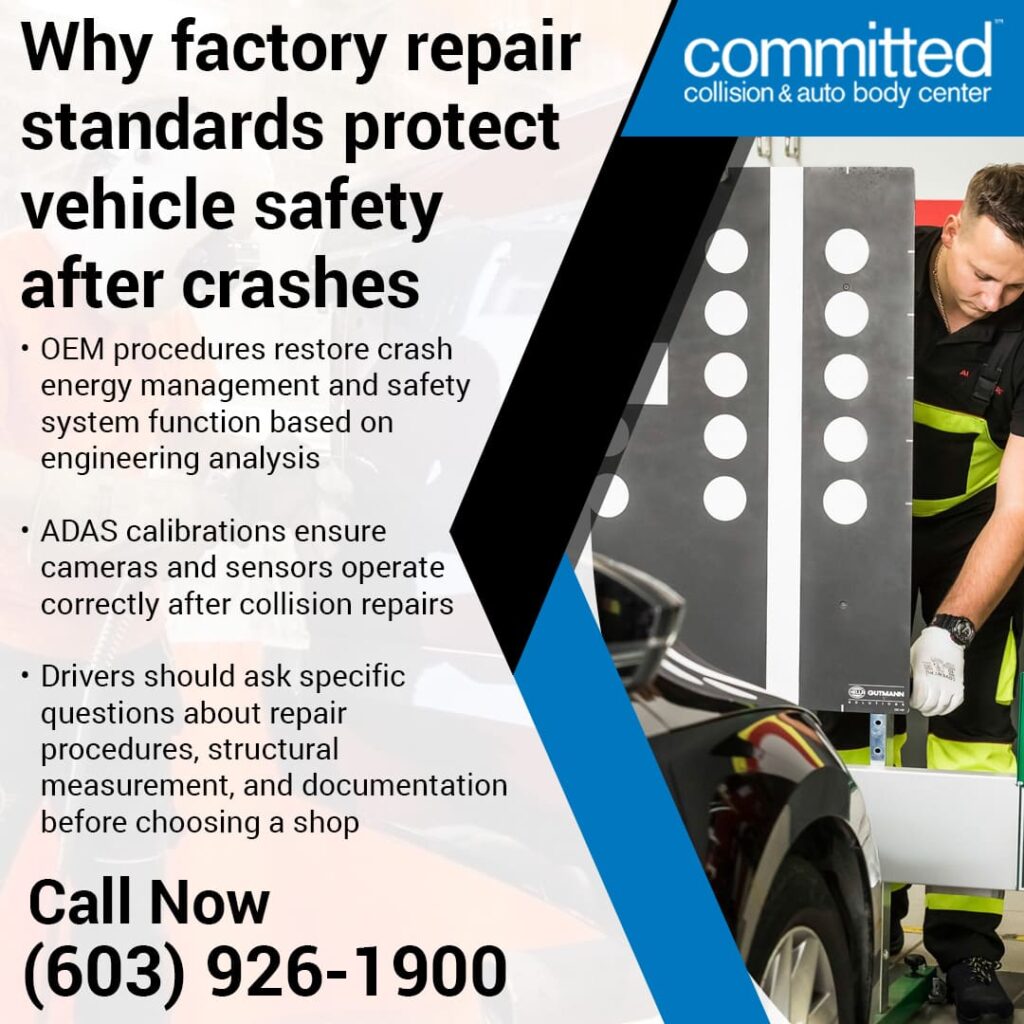
Advanced Driver Assistance Systems (ADAS) depend on precise sensor and camera positioning. When collisions affect vehicle structure, body panels, windshields, or suspension components, ADAS sensors move out of position. Even repairs that restore visual appearance can leave sensors misaligned by degrees that substantially affect system performance.
Manufacturers require calibration after many collision repairs. These requirements appear in OEM repair procedures and must be completed before vehicles return to service. We coordinate closely with Automotive Alignments & Calibrations (AAS) for manufacturer-compliant calibrations. This partnership keeps your vehicle’s safety systems functioning correctly after repairs.
Safety Systems Commonly Affected by Collisions
Forward collision warning systems, automatic emergency braking, lane departure warning, blind spot monitoring, and adaptive cruise control all depend on accurately positioned sensors. Cameras mounted in windshields or behind bumpers, radar units in front and rear fascias, and ultrasonic sensors in bumpers all require calibration when their mounting locations are disturbed.
Minor impacts can disrupt sensor accuracy. A bumper cover replacement may reposition radar units. Windshield replacement affects camera-based systems. Hood or fender repairs can alter sensor sight lines.
Verifying OEM-Compliant Calibration Before Vehicle Release
Calibration verification occurs before we release your vehicle. We received documentation confirming that required calibrations were completed using manufacturer-approved equipment and procedures. This documentation becomes part of your vehicle’s repair record.
Unverified or incomplete calibrations create liability and safety risks. Systems that appear functional may not respond correctly in emergencies. We coordinate required calibrations and verify completion before final inspection.
Parts Selection and Factory Fit Standards
OEM parts meet manufacturer specifications for fit, finish, corrosion protection, and system integration. They include mounting provisions for sensors and brackets, proper material specifications, and factory corrosion protection. When OEM parts aren’t available, or customers choose alternatives, we source parts from recognized manufacturers that meet quality and fit standards.
We never use unknown aftermarket parts from non-automotive suppliers. Low-quality parts create fit issues, corrosion problems, and safety system interference. Parts selection affects repair longevity, vehicle value, and safety system performance. Ask about your car collision repair shop’s parts sourcing standards and quality controls.
Committed Collision & Auto Body Center prioritizes OEM parts in our recommendations. When alternatives are discussed, we explain differences in quality, warranty coverage, and potential fit issues so you can make informed decisions about your body collision repair.
Paint, Refinishing, and Corrosion Protection to Manufacturer Standards
Refinishing restores appearance and provides corrosion protection critical to long-term structural integrity. We use Glasurit 100 Line waterborne paint systems, a premium BASF refinish product approved by many major OEMs worldwide, to achieve high-quality paint finishes that support corrosion protection and color accuracy. Our three USI Spray Booths maintain controlled environments for proper paint application and curing.
Surface preparation follows manufacturer procedures for cleaning, sanding, and priming. Proper adhesion depends on correct preparation sequences. We apply primer systems that provide corrosion protection for exposed metal and create optimal paint adhesion.
Manufacturer-approved paint systems include specific application techniques, temperature ranges, and curing cycles. These specifications ensure proper chemical bonding between coats and achieve factory-equivalent finish durability. Color matching involves computerized analysis and test panels to verify accuracy before final application.
Post-Repair Quality Control and Verification
Quality control confirms repairs meet manufacturer specifications before a vehicle is returned to the road. Our multi-step verification process includes diagnostic scanning, functional testing, visual inspection, and road testing. Many shops skip these verification steps, but we follow documented inspection procedures to ensure every repair meets factory standards.
System Scans and Functional Testing
Post-repair diagnostic scans verify that all vehicle systems function correctly and no diagnostic trouble codes remain. We use factory scan equipment from Hyundai, Kia, GM, Ford, Toyota, Mazda, and Nissan to interrogate vehicle computers and confirm that repairs resolved all collision-related faults.
Functional testing verifies that lights, sensors, cameras, and body components operate correctly. This testing catches issues before vehicles leave our facility and confirms that all repaired and calibrated systems meet performance standards.
Road Testing and Final Inspection
Road testing confirms steering response, suspension performance, brake operation, and overall drivability. Technicians verify that vehicles handle predictably and that no unusual noises, vibrations, or warning lights appear during operation.
Final inspection reviews all repair areas, verifies proper panel alignment and paint finish, and confirms proper component installation. We maintain detailed inspection documentation in your vehicle’s permanent repair record.
What to Ask a Collision Repair Specialist About Factory Specifications
When selecting a car collision repair shop, ask these questions to verify their commitment to factory-correct repairs:
- Do you follow OEM repair procedures for my specific vehicle make, model, and year?
- How do you measure and document structural accuracy during repairs?
- What equipment do you use to verify frame and unibody measurements?
- How are ADAS calibrations coordinated and verified after repairs?
- Can you provide documentation of post-repair inspections and calibrations?
- Do you use OEM parts or manufacturer-approved alternatives?
- Is your repair process documented and backed by warranty coverage?
These questions help you identify shops equipped and trained to deliver factory-specification repairs. Vague answers or reluctance to discuss specific procedures indicate shops that may not follow manufacturer requirements. The best collision repair shop in North Hampton, NH, should answer these questions clearly and confidently.
Choosing Collision Repair That Meets Factory Standards
Factory repair specifications exist to protect you. They represent years of engineering, crash testing, and real-world validation. When collision repair specialists follow these specifications, they restore your vehicle’s ability to protect you in future collisions and maintain the performance characteristics you expect.
Committed Collision & Auto Body Center bases every repair decision on manufacturer requirements. Our investment in equipment, training, and repair information access enables us to meet factory specifications for the latest vehicles. We document our repair processes and provide transparency throughout your repair experience. With over 20 years serving the New Hampshire seacoast, our family-owned business has built a reputation for quality repairs that prioritize safety over shortcuts.
Contact us at (603) 926-1900 or email info@committedcollision.com to schedule a free estimate. Our team will assess your vehicle’s damage, explain required repairs based on manufacturer specifications, and answer your questions about our factory-correct repair process. We provide auto collision repair in North Hampton, NH, that prioritizes your safety and restores your vehicle to manufacturer standards.