
Synopsis:
Snow and ice crashes often leave more damage than you can see. Sliding impacts, snowbank contact, and curb strikes can weaken frame rails, crumple zones, suspension geometry, and ADAS sensors while exterior panels still look fine. Committed Collision & Auto Body Center explains the winter-specific force patterns that cause hidden collision damage, the warning signs drivers miss, and why professional inspection, controlled disassembly, measuring, scanning, and calibration are key to restoring safety after a winter accident.
Winter driving conditions along New Hampshire’s seacoast present various challenges. Snow-covered roads, black ice, and limited visibility create situations where collisions occur suddenly. After a winter accident, visible damage tells only part of the story. Structural and mechanical problems often hide beneath bumper covers, body panels, and snow buildup.
At Committed Collision & Auto Body Center, we’ve provided auto collision repair that North Hampton, NH drivers rely on for more than two decades. We’ve inspected many vehicles following winter collisions. What looks like minor cosmetic damage frequently masks serious structural compromises. We explain how winter accidents create hidden damage, identify vulnerable components, and clarify why professional evaluation protects your safety.
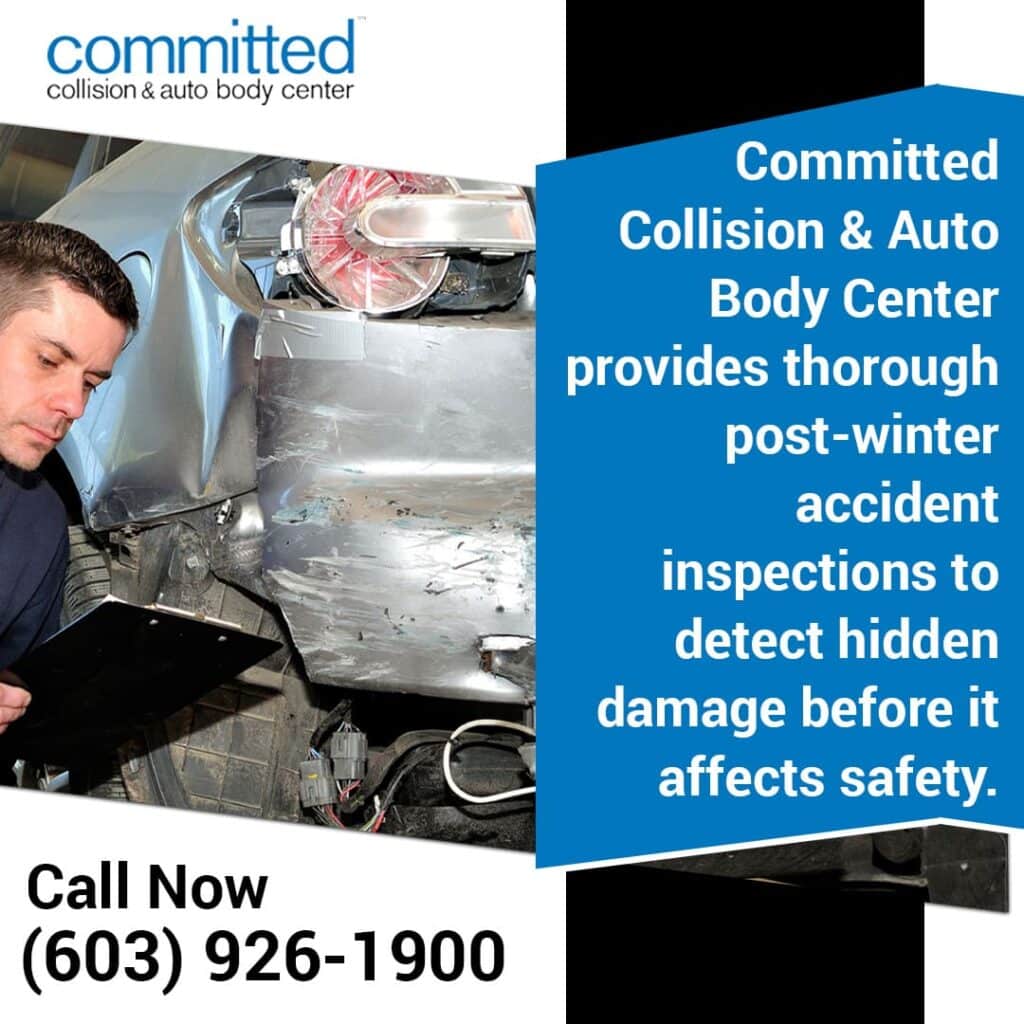
Why Winter Collisions Create Different Damage Patterns
Winter collisions involve reduced traction, angled sliding impacts, and unusual force distribution that damages structural and mechanical parts without creating obvious exterior signs.
Ice and snow eliminate the friction your vehicle needs for controlled stopping. When your car slides, it continues moving even after initial contact. This creates force patterns that affect components in unexpected ways.
Standard accidents transfer energy through engineered crumple zones in predictable paths. Winter crashes introduce rotating forces, multiple impact points, and extended stress during skidding. Your vehicle’s structure absorbs energy along specific paths designed by engineers. Forces from unexpected angles spread damage to components never intended for those loads.
Temperature affects materials. At sufficiently low temperatures, many metals and rubber compounds can lose ductility and flexibility. Some automotive structural steels have lower toughness near freezing, and rubber suspension bushings and tires stiffen in cold weather, which can influence crash dynamics and how components respond during impacts. Choosing a qualified collision repair specialist becomes more important after winter accidents than routine collisions.
Winter Accident Types That Produce Hidden Damage
Low-Speed Sliding With Severe Structural Stress
Impact speed doesn’t correlate directly with damage severity during winter accidents. A 15 mph slide across ice generates forces comparable to a 30 mph dry-road collision. Friction can’t slow your vehicle, so energy must dissipate through frame rails, suspension mounting points, and firewall structures.
Even minor car crashes at low speeds can bend or misalign a vehicle’s frame. This damage often stays hidden without tools like straightedge gauges or computerized measurements. Sideways forces during slides stress attachment points never designed for lateral loads.
Snowbank and Curb Contact
The snowbank that stopped your slide may have prevented worse damage while also concealing serious problems. Packed snow can conceal rigid obstacles such as curbs or stones, causing impacts that transfer significant force into structural parts even when visible damage appears minor. Beneath that soft appearance lie curbs, drainage infrastructure, or frozen earth.
Wheels, suspension parts, and subframes absorb tremendous force when they hit these hidden obstacles. Snow masks the true contact point, making damage identification difficult without raising the vehicle for thorough undercarriage inspection.
Sequential Impacts on Ice
Winter accidents rarely involve single impacts. Your vehicle might contact another car, slide into a barrier, then strike a snowbank. Each contact creates distinct damage. The combined effect stresses your vehicle’s structure beyond what single impacts produce.
Energy moves through bumper reinforcements, frame members, and body panels with each successive contact. Secondary impacts frequently cause more harm than the initial collision because energy-absorbing structures already sustained damage. Recognizing these patterns helps collision repair specialists determine which structural elements need inspection following winter accidents.
Concealed Structural Compromise After Winter Collisions
Structural harm develops beneath panels and bumpers, affecting frame members, crumple zones, and energy pathways, even when exterior damage looks minimal.
Your vehicle’s protective capability depends on structural soundness. Modern automobiles employ designated zones engineered to absorb collision energy. When winter accidents stress these areas from unusual angles, they may look intact while being significantly weakened internally.
Frame Member and Unibody Stress
Frame rails extend your vehicle’s length, creating the foundation for all other components. Minor shifts in these rails change handling characteristics, door alignment, and crucially, performance in future collisions.
Our Chief 3D Laser Measuring System identifies shifts as small as one millimeter. These tiny deformations remain invisible but compromise crash protection. Winter slides frequently bend frame rails at points where suspension or engine cradle components attach, which explains why body collision repair demands precision measurement technology.
Crumple Zone Deformation
Crumple zones function once. Engineers design them to collapse controllably during impact, absorbing energy otherwise reaching occupants. After compression, they cannot repeat that protective function.
Winter collisions frequently compress crumple zones partially without producing visible exterior harm. Metal bends inward, reducing available crush distance for subsequent accidents. This concealed damage means your vehicle provides less protection than its appearance suggests.
Suspension and Steering Angle Changes
Your suspension maintains precise angles between components. These geometry specifications control handling, stopping, and tire wear patterns. Winter impacts alter these angles by bending control arms, shifting subframes, or misaligning attachment points.
You might notice a slight pulling to one side. Tires may wear irregularly. These symptoms reveal that winter damage changed suspension geometry, affecting safety and increasing long-term expenses.
Mechanical and Safety System Damage From Winter Collisions
Steering, Suspension, and Wheel Component Damage
Snow and ice accumulation mask bent suspension parts. During our post-accident evaluations, we routinely discover control arms, tie rods, and strut assemblies with damage invisible from outside. Suspension damage often goes undetected because drivers don’t realize these components are compromised.
Drivers frequently attribute symptoms to normal winter handling behavior. Slight pulling on icy roads appears reasonable. Strange sounds get blamed on snow in wheel wells. These explanations hide actual damage requiring professional evaluation. When we identify mechanical damage during our collision inspections, we coordinate with Automotive Alignments & Calibrations for necessary suspension and brake system repairs.
Brake and Traction Control System Compromise
Current braking systems use sensors monitoring wheel speed hundreds of times per second. Winter impacts can harm these sensors, wiring, or mounting brackets. Systems may continue operating while providing incorrect data to your vehicle’s computer.
Modern traction control and anti-lock braking systems rely on wheel speed sensors. Sensor damage, wiring issues, or misalignment after a winter collision can cause incorrect signals to the vehicle computer, potentially degrading system behavior if not properly diagnosed and recalibrated.
Advanced Driver Assistance System Misalignment
Today’s vehicles include forward-collision warning, lane-keeping assistance, and automatic emergency braking. These technologies depend on cameras and radar sensors in bumpers, behind windshields, and in the side mirrors.
Minor winter collisions shift these sensors from proper alignment. Your ADAS warnings may trigger incorrectly or fail when needed. Our sister company, Automotive Alignments & Calibrations, provides proper ADAS calibration following collision repairs using Hunter/Bosch DAS 3000 Calibration equipment.
Why Proper Disassembly Reveals Hidden Damage
Surface inspections cannot accurately identify hidden collision damage because critical components sit behind panels, bumper covers, and underbody protection.
Visual assessments provide starting points but cannot expose what’s underneath. Modern vehicles use composite bumpers flexing during impact and then return to their original shape. The bumpers look undamaged, while the energy-absorbing foam has crushed, and reinforcement bars have bent. Fenders hide inner structures. Floor panels cover frame rails. Identifying the full extent of damage requires removing these components.
We conduct controlled disassembly during repairs at our car collision repair shop. This lets us photograph, measure, and document all damage beyond surface visibility. Winter debris; packed snow, road salt, ice, actively hides damage by filling gaps and coating surfaces.
Diagnostic scanning adds insight. We use manufacturer-specific scan tools to read diagnostic codes stored in your vehicle’s computers. These codes frequently reveal sensor damage, airbag system problems, or electronic component failures not immediately trigger warning lights after accidents.
Post-Winter Accident Warning Signs Requiring Attention
Handling Characteristic Changes
Your vehicle should drive identically after repairs compared to before the accident. Noticing pulling to either side, unusual vibration at specific speeds, or uneven brake response indicates underlying issues. Winter damage to suspension geometry or frame alignment produces these symptoms.
Dashboard Warning Light Activity
Intermittent warning lights need investigation. Occasional airbag warnings mean the system detected problems even without consistency. Stability control warnings following winter collisions frequently indicate sensor damage or mounting problems.
Your vehicle’s computer stores trouble codes even without illuminated warning lights. Professional scanning exposes these stored codes, revealing systems affected by collisions.
Sound or Ride Quality Changes
Creaking during turns, clunking over bumps, or changed road irregularity absorption suggest suspension damage. These symptoms may develop gradually as stress shifts components or loosens fasteners.
Cold temperatures temporarily hide some symptoms. As the weather warms and components expand, you might notice problems not apparent immediately following winter accidents.
Importance of Professional Auto Collision Repair After Winter Accidents
Professional auto collision repair restores structural soundness, safety systems, and manufacturer-designed performance, not merely visible appearance.
Vehicle manufacturers provide specific repair procedures for each model. These procedures detail welding techniques, replacement requirements, and measurement tolerances. Following OEM guidelines means your repaired vehicle performs as designed during future collisions. When you need auto collision repair, North Hampton, NH, facilities must implement these manufacturer procedures, maintaining your vehicle’s safety ratings.
Committed Collision & Auto Body Center uses frame straightening equipment, including Spanesi Multibench pull stations, laser measuring systems, and manufacturer repair documentation for proper vehicle restoration. This focuses on safety restoration, not cosmetic appearance.
Following structural repairs, we verify work through measurement and testing. Your vehicle’s dimensions must match factory specifications. Safety systems need calibration using specialized equipment. When searching for the best collision repair shop in North Hampton, NH, prioritize facilities that implement manufacturer specifications and invest in appropriate equipment.
| Repair Process Element | Winter Damage Importance |
| Laser Frame Measurement | Identifies micro-shifts from sliding impacts |
| Controlled Disassembly | Exposes damage concealed by bumper covers and snow |
| OEM Repair Procedures | Preserve manufacturer-designed safety performance |
| ADAS Calibration | Returns collision avoidance system accuracy |
| Post-Repair Scanning | Confirms electronic system functionality |
Long-term safety requires proper repairs. Unaddressed hidden damage reduces vehicle crash protection. Future accidents produce worse outcomes because structural elements already sustained compromise. Resale value suffers when potential buyers discover incomplete repair evidence during inspections.
Proper Collision Inspections Protect Long-Term Vehicle Safety
Unrepaired winter damage deteriorates over time. Stress concentrations cause metal fatigue. Small bends enlarge as normal driving loads act on weakened areas. Corrosion accelerates where protective coatings crack during impact.
Paint and coating damage from winter collisions exposes bare metal to salt and moisture. New Hampshire’s substantial road salt application means corrosion develops rapidly on exposed surfaces. What started as hidden frame damage becomes visible rust within months.
Safety risks increase with repair delays. Your vehicle’s occupant protection during subsequent collisions depends on all structural elements functioning as designed. Compromised crumple zones, weakened frame rails, and misaligned ADAS sensors all diminish protection.
We conduct diagnostic scans, road testing, and visual inspections before vehicle return. This post-repair quality control verifies that all repairs were completed correctly and that all systems function properly. Our limited lifetime warranty supports workmanship and parts performance throughout your ownership.
When seeking auto collision repair in North Hampton, NH, vehicle owners should evaluate beyond surface repairs to facilities with specialized diagnostic equipment and trained technicians addressing hidden sensor damage and structural problems. We maintain I-CAR Gold Class certification and invest in yearly training updates for proper modern vehicle technology handling.
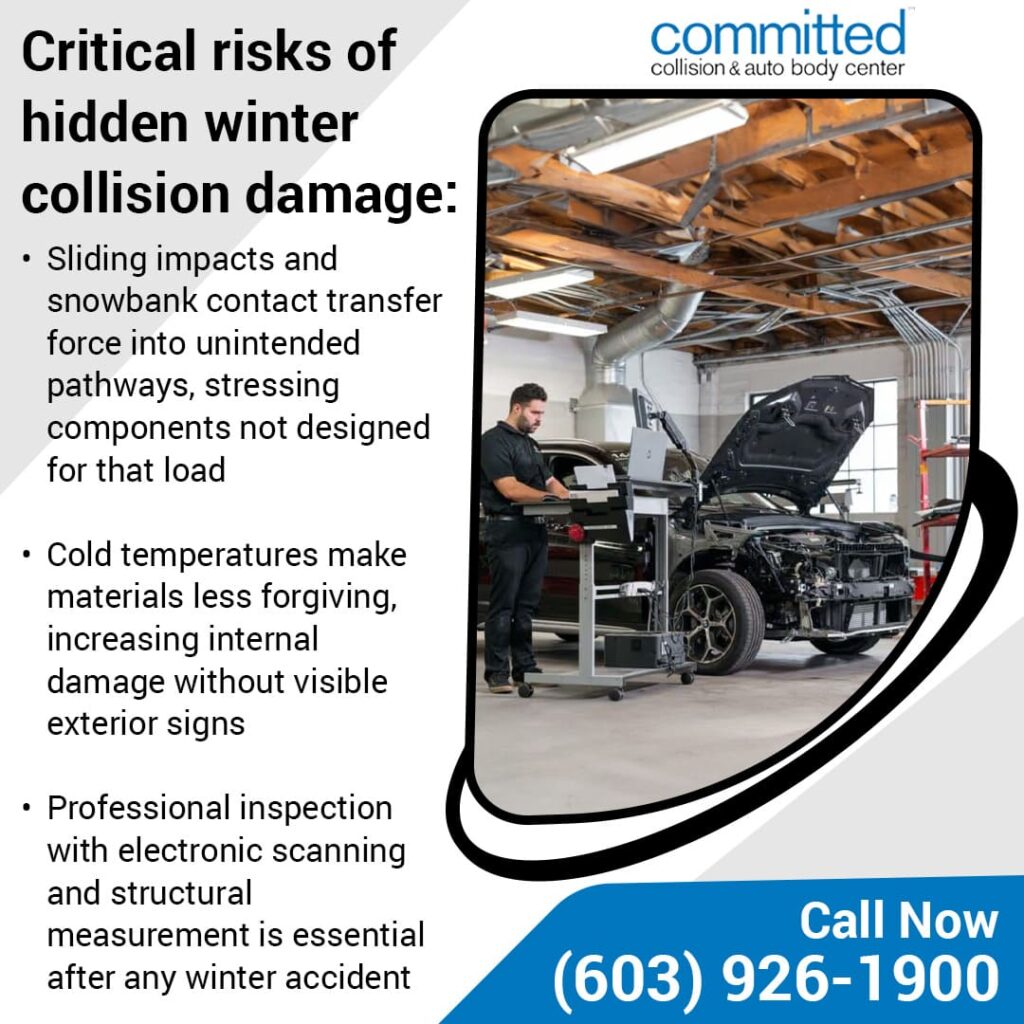
Don’t Let Winter Damage Go Undetected
Snow and ice accidents conceal damage below surfaces. Sliding impacts stress vehicles in ways not immediately visible. Frame rails may bend while bumpers appear fine. Sensors may deliver inaccurate data without triggering warnings.
We conduct thorough inspections exposing hidden damage before it compromises safety. Our team employs advanced measuring equipment and implements manufacturer repair procedures verified through quality control processes refined across 20 years.
If you’ve experienced a winter accident, contact Committed Collision & Auto Body Center at (603) 926-1900 or email info@committedcollision.com. Experience how the best collision repair shop in North Hampton, NH, helps your vehicle function safely and efficiently.