
Synopsis
Frame straightening is a specialized process that restores your vehicle’s structural foundation after an accident. At Committed Collision & Auto Body Center in North Hampton, NH, we use advanced laser measuring systems and certified techniques to realign damaged frames to manufacturer specifications. Understanding frame straightening helps you make informed decisions about your vehicle’s safety, performance, and value after a collision.
Your heart sinks as you survey the damage after an accident. The crumpled bumper and twisted metal tell an obvious story. But what about the hidden structural damage you can’t see? Is your vehicle’s frame compromised? Can it be repaired safely?
Frame straightening is one of the most important aspects of auto collision repair, yet many drivers don’t fully understand what it involves. This process goes beyond cosmetic fixes to restore the structural backbone that keeps you safe on the road.
Committed Collision & Auto Body Center has spent over 20 years perfecting frame repair techniques for vehicles throughout North Hampton, NH. We explain what frame straightening is, when you need it, and how proper structural repair protects your safety and investment.
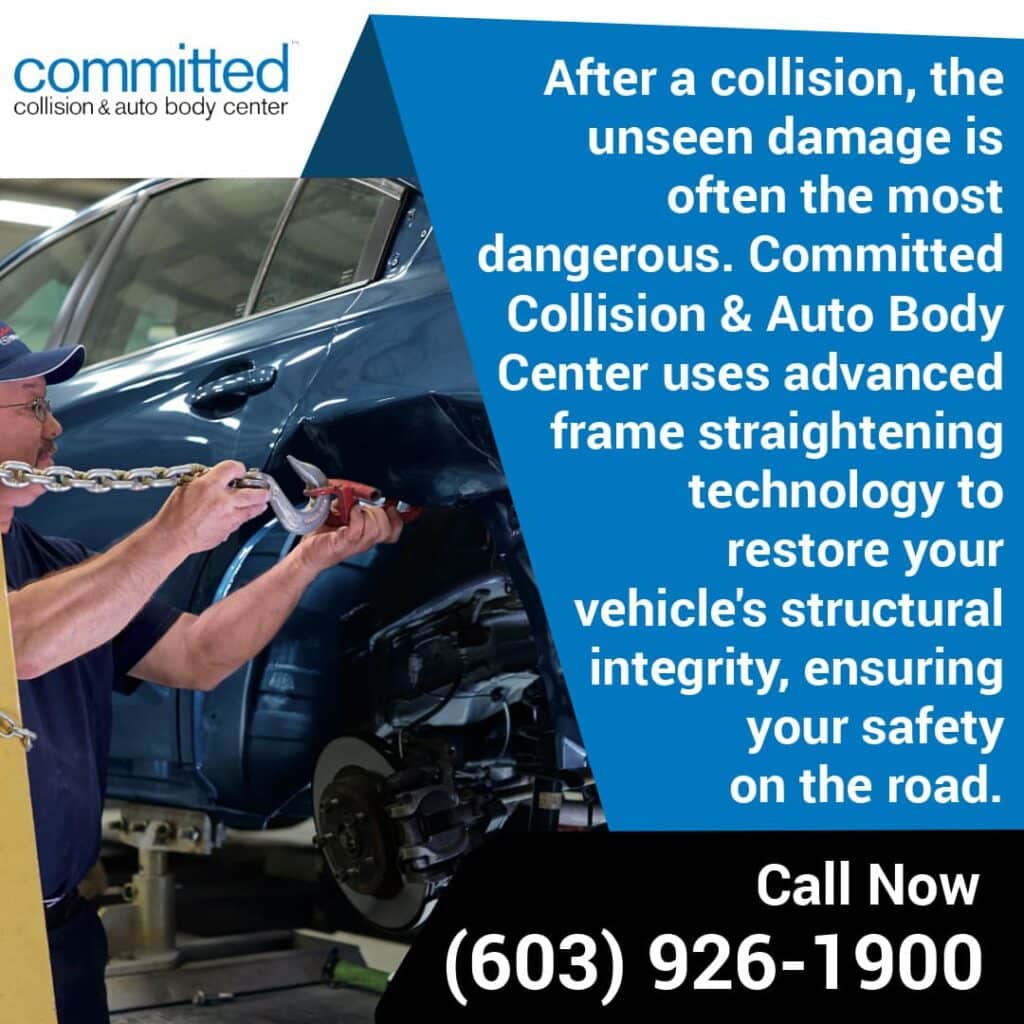
What Happens to a Vehicle’s Frame During a Collision
Your vehicle’s frame serves as its structural foundation. Modern cars typically use unibody construction, where the frame and body form a single integrated structure. This design provides excellent crash protection while reducing weight for better fuel efficiency.
The Role of a Vehicle Frame
Unibody frames contain engineered crumple zones that absorb collision energy. When impact occurs, these zones compress and deform in controlled ways, redirecting force away from the passenger compartment. Cross-members and frame rails work together to maintain rigidity in critical areas while allowing controlled deformation in designated zones.
Trucks and some SUVs use body-on-frame construction with a separate ladder-style frame. This traditional design offers exceptional load-carrying capacity and durability, though it typically weighs more than unibody structures.
How Collisions Affect Vehicle Structure
Even seemingly minor accidents can compromise structural integrity. Front-end impacts often create “mash damage” where the frame compresses like an accordion. Side collisions produce “sway damage” that pushes the frame laterally out of alignment. Rear impacts can affect suspension mounting points and trunk structures.
The real danger lies in hidden damage beneath exterior panels. A fender bender that looks minor might conceal twisted frame rails or misaligned structural mounting points. This hidden damage affects safety, handling, and your vehicle’s ability to protect you in future collisions.
| Collision Type | Common Frame Issues | Repair Considerations |
| Low-Speed (under 25 mph) | Minor bends, small alignment shifts | Industry data suggests 20-30% may need structural assessment |
| Moderate (25-40 mph) | Crumple zone compression, rail damage | Approximately 50% typically require frame attention |
| Severe (over 40 mph) | Multiple structural points affected | Around 80% generally need extensive repairs |
Based on collision repair industry assessments and vehicle damage patterns
Why Frame Straightening Is Critical for Safety and Performance
A bent or misaligned frame creates serious safety risks beyond appearance issues. Your vehicle’s protective systems depend on precise structural geometry to function as designed.
Safety Implications
Airbag sensors mount at specific frame locations with exact positioning requirements. Frame distortion can delay airbag deployment or cause improper inflation. Advanced Driver Assistance Systems like lane departure warnings and automatic emergency braking rely on cameras and sensors mounted to frame structures. Even small misalignments compromise these critical safety features.
We partner with Automotive Alignments & Calibrations to verify ADAS functionality after structural repairs. This collaboration reflects our commitment to complete, safe auto collision repair that addresses both mechanical and electronic systems.
Driving Performance Issues
Frame misalignment directly impacts how your car handles. Your steering may pull to one side despite fresh wheel alignment. Tires wear unevenly as suspension geometry shifts from factory specifications. Handling becomes unpredictable during emergency maneuvers when you need it most.
These symptoms indicate your frame geometry has changed. Professional frame straightening restores proper alignment and predictable handling characteristics.
Long-Term Impact
Driving on a bent frame causes progressive damage throughout your vehicle. Stress concentrates at damaged points, potentially causing cracks or additional bending. Your car’s engineered crumple zones cannot absorb energy properly in future collisions, putting occupants at greater risk. Professional body collision repair with proper frame straightening maintains your vehicle’s crash protection and preserves resale value.
The Frame Straightening Process Explained
Modern frame straightening combines precision technology with skilled craftsmanship. Our systematic approach follows manufacturer specifications at every step.
Step 1: Initial Inspection and Blueprinting
We mount your vehicle on our frame rack and connect the computerized measuring equipment. The Chief 3D Laser Measuring System compares your car’s current dimensions against factory specifications from the vehicle manufacturer.
This digital analysis reveals every measurement point that deviates from the original specs. Frame rails, suspension mounts, and body panel attachment locations are verified. The system identifies structural damage that visual inspection cannot detect.
Step 2: Vehicle Mounting and Measurement
Your vehicle is secured firmly to the hydraulic frame rack at undamaged structural points. Proper clamping prevents movement during straightening and allows precise force application.
We remove body panels, trim pieces, and damaged components to fully access frame damage. This disassembly often reveals additional problems hidden behind exterior parts, allowing us to create a complete repair plan.
Step 3: Hydraulic Pulling and Realignment
Specialized pulling equipment attaches to damaged frame sections using chains and precise anchor points. Our Spanesi Multibench pull stations apply controlled hydraulic pressure gradually, pulling bent metal back toward its original position.
This process requires constant monitoring with the Spanesi Touch Measuring System. Our certified technicians check dimensions repeatedly, making incremental adjustments to avoid over-correction.
Different materials need specific techniques. High-strength steel requires precise heat application with our Pro Spot welding equipment. Aluminum structures demand specialized procedures using our Aluminum Rivet System due to different material properties.
Step 4: Verification and Structural Reinforcement
After straightening, we re-measure the entire frame structure. Every critical dimension must match manufacturer specifications before proceeding with reassembly.
Structural components showing severe damage are replaced rather than straightened. This maintains the frame’s designed crash protection. We use high-quality OEM parts whenever possible to provide the best fit, performance, and maintain your vehicle’s value.
Advanced Technology Used in Modern Frame Repair
Frame straightening has evolved dramatically with computerized measuring systems and manufacturer-specific procedures. The equipment that a car collision repair shop uses determines repair quality and accuracy.
Laser Measuring Systems and Digital Blueprinting
Our Chief 3D Laser Measuring System projects laser beams to designated measurement points throughout the vehicle structure. The system calculates deviations in three dimensions, displaying results on a computer monitor in real-time.
This technology allows adjustments while monitoring progress continuously. Traditional mechanical gauges cannot match this precision or efficiency. We also use multiple Spanesi Multibench pull stations and the Spanesi Touch Measuring System for complex frame repairs requiring multiple pull points.
Integration With ADAS Calibration
Modern vehicles need ADAS recalibration after frame repairs affecting sensor mounting points. Our sister shop, Automotive Alignments & Calibrations, provides proper calibration using Hunter/Bosch DAS 3000 equipment and a Full Hunter Alignment Machine with an in-ground rack.
Frame straightening affects sensor angles and positions. Without proper recalibration, safety features including adaptive cruise control, lane-keeping assist, and automatic emergency braking may malfunction or provide inaccurate warnings.
| Technology | Function | Benefit |
| Chief 3D Laser Measuring System & Frame Machine | Measures frame deviations in three dimensions with hydraulic pulling capability | Provides accuracy within 1-2mm of factory specs |
| Spanesi Multibench Pull Stations (6 units) & Touch Measuring | Multiple simultaneous pull points with precision measurement | Handles complex frame damage requiring multi-directional force |
| Hunter/Bosch DAS 3000 Calibration Equipment | Calibrates ADAS sensors after frame repairs | Verifies safety system functionality and proper sensor alignment |
Signs Your Vehicle May Need Frame Straightening
Many drivers miss frame damage symptoms, attributing them to other causes. Recognizing these warning signs helps you seek professional inspection promptly.
Visible Structural Issues
Watch for these signs of potential frame damage:
- Uneven gaps between body panels or doors that don’t match on both sides
- Doors or trunk that stick, don’t close properly, or fail to latch securely
- Hood that sits unevenly or won’t close flush with fenders
- Visible wrinkles, buckles, or creases in floor panels near door jambs
- Vehicle roofline that appears crooked or uneven when viewed from a distance
Driving Symptoms
Your driving experience changes noticeably when frame damage exists:
- Car pulls consistently to one side even after recent wheel alignment
- Steering wheel vibrates or shakes at highway speeds
- Unusual clunking or creaking noises while driving over bumps
- Tires wear unevenly or excessively on one side
- Suspension feels loose or unstable during turns
Professional inspection identifies whether collision repair specialists need to address frame damage or if suspension issues are causing these symptoms.
Electronic or Safety Alerts
Dashboard warning lights for stability control, traction control, or ADAS features may activate after frame damage. These systems detect abnormal vehicle behavior caused by structural misalignment. Never ignore these warnings. They indicate safety systems cannot function properly, potentially compromising your protection during emergencies.
Common Misconceptions About Frame Damage
Misunderstandings about frame damage lead many drivers to make poor repair decisions. Here are the facts about common myths:
“Frame Damage Means the Car Is Totaled”
Insurance companies declare vehicles totaled when repair costs exceed approximately 70-80% of the pre-accident value. However, many frame-damaged vehicles can be restored to full safety and functionality through proper body collision repair. Professional assessment determines whether frame straightening is feasible and cost-effective. Modern repair techniques and equipment allow successful restoration of many vehicles.
“Any Shop Can Straighten a Frame”
Frame straightening requires specialized equipment, manufacturer-specific procedures, and certified training. Not every collision repair shop possesses these resources or expertise. Our I-CAR Gold Class certification demonstrates commitment to proper training and technique.
Advanced equipment, including the Chief 3D Laser Measuring System, Spanesi Multibench pull stations, and Pro Spot welding systems, enables collision repairs meeting manufacturer specifications.
“It’s Just Cosmetic”
This dangerous misconception puts drivers and passengers at risk. Frame damage affects structural integrity, crash protection, and vehicle handling regardless of exterior appearance. Your vehicle’s safety systems depend on proper frame geometry. Misaligned frames compromise airbag deployment, crumple zone effectiveness, and ADAS functionality.
Frame Straightening and the Insurance Process
Understanding your rights and the insurance process helps you make frame repair decisions effectively.
How Insurance Companies Assess Structural Damage
Insurance adjusters evaluate frame damage severity and repair costs. They compare collision repair estimates against your vehicle’s pre-accident value to determine if the car should be totaled or repaired. Professional documentation from qualified shops carries significant weight during these assessments. Detailed measurement reports and repair plans help insurers understand the work required for safe, proper repairs.
Your Right to Choose a Repair Shop
New Hampshire law protects your right to choose any car collision repair shop for your vehicle. Insurance companies cannot require you to use their preferred providers, though they may suggest Direct Repair Program shops. While DRP agreements can streamline paperwork, prioritize shops with proper equipment, certifications, and a reputation. Your safety depends on choosing the best collision repair shop in North Hampton, NH, with proven expertise in frame straightening.
Documentation and Communication
Professional collision repair specialists provide detailed documentation throughout the frame straightening process. We photograph damage before and after repairs, maintain measurement records, and track all work performed. This documentation supports insurance claims and protects your interests if disputes arise. We communicate directly with insurance adjusters to advocate for proper repairs that restore your vehicle’s safety.
Why Choose Committed Collision & Auto Body Center for Frame Straightening
Two decades of experience have taught us that frame straightening demands precision, expertise, and unwavering commitment to safety. Our facility combines advanced technology with skilled technicians trained in current repair techniques.
Certified Technicians and Advanced Tools
Our qualifications and equipment demonstrate our commitment to excellence:
- I-CAR Gold Class Certification: Demonstrates technician knowledge of current procedures and ongoing training
- ASE Certification: Validates mechanical expertise for frame-related systems
- Chief 3D Laser Measuring System & Frame Machine: Industry-leading precision measurement
- Spanesi Multibench Pull Stations: Multiple pull points for complex damage
- Spanesi Touch Measuring System: Real-time verification during repairs
- Pro Spot i4s and i5s Spot Welders: High-strength steel joining
- Pro Spot SP-5 Smart MIG Welder: Advanced welding for structural components
- Aluminum Rivet System: Proper aluminum frame joining techniques
- USI Spray Booths with Prep Deck: Professional refinishing environment
- Glasurit 100 Line Waterborne Paint: High-quality color matching
Technology-Driven Accuracy
We invest in industry-leading equipment that handles any frame straightening challenge to manufacturer specifications. Our sister shop, Automotive Alignments & Calibrations, provides specialized ADAS calibration equipment for complete, safe repairs addressing both structural and electronic system needs.
Customer-Centered Service
Transparent communication defines our approach. We explain the repair process, show measurement data, and discuss options clearly. You’ll understand what work is needed and why each step matters for your safety.
Our limited lifetime warranty on workmanship and parts performance backs our commitment to quality. This warranty covers frame repairs for as long as you own your vehicle. We also provide free estimates and work directly with all major insurance companies to streamline your repair experience.
Local Reputation and Experience
Over 20 years of serving the New Hampshire Seacoast have built our reputation for quality and reliability. Our family-owned business has over 70 years of combined autobody repair experience, ensuring every vehicle receives expert attention focused on your specific needs.
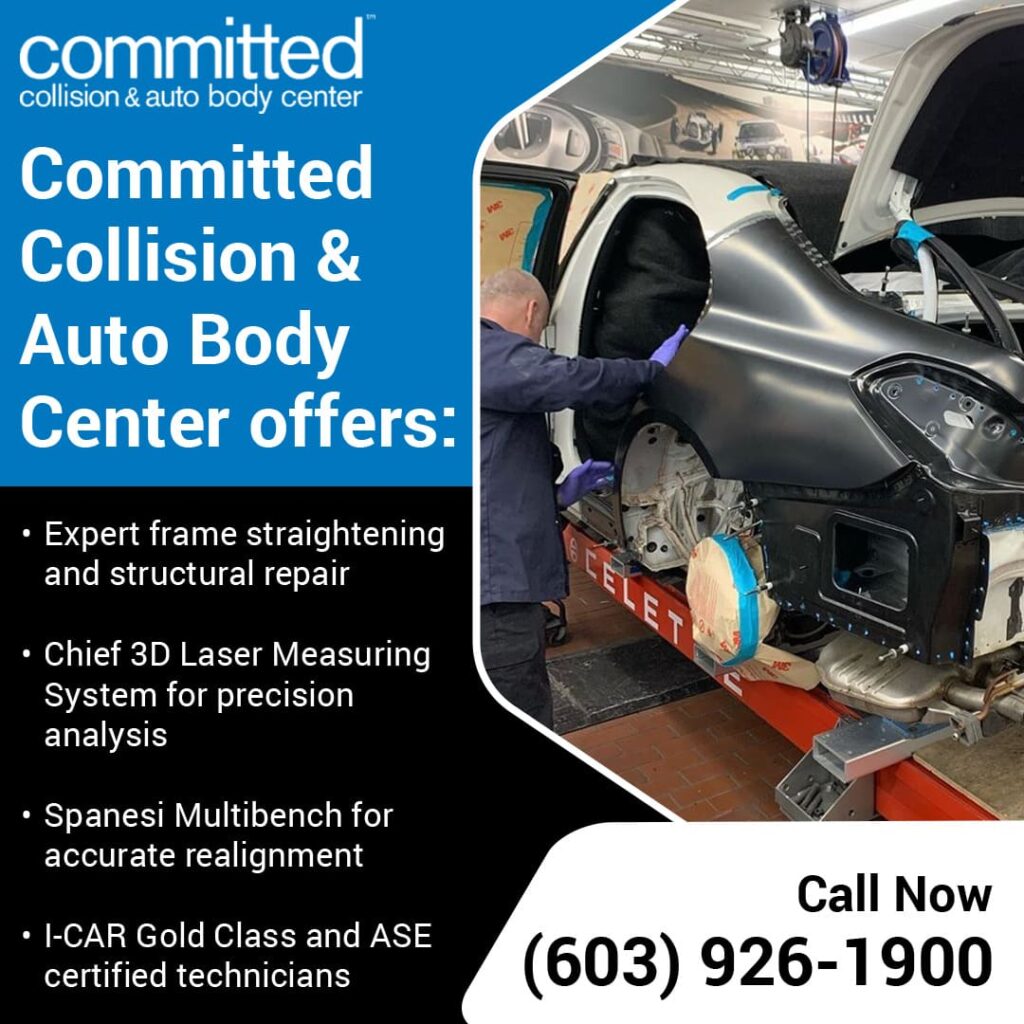
Restore Safety and Strength After a Collision
Frame straightening protects more than your car’s appearance. Proper structural repair maintains crash protection, vehicle handling, and safety system functionality. These factors directly affect your family’s safety and your vehicle’s long-term value.
We combine advanced technology with I-CAR Gold Class certified expertise to restore your vehicle to manufacturer specifications. Our commitment to quality, technology, and the repairs you deserve has served North Hampton drivers for over two decades.
If your vehicle has been damaged in an accident, schedule a professional inspection at Committed Collision & Auto Body Center in North Hampton, NH. Call (603) 926-1900 or email info@committedcollision.com for a free estimate today. Let our certified collision repair specialists restore your vehicle’s structural integrity and your confidence to drive.