
Synopsis:
Hidden collision damage can compromise safety, handling, and long-term vehicle value. Committed Collision & Auto Body Center explains how structural shifts, ADAS misalignment, suspension issues, and poor refinishing are often missed. Learn why proper auto collision repair requires full inspection, diagnostics, and OEM procedures to restore your vehicle correctly.
After a collision, the damage you can see is only part of the story. Hidden structural shifts, disrupted safety sensors, and compromised suspension can all go undetected during a quick visual check. Yet each one affects your vehicle’s safety, performance, and long-term value.
Modern vehicles are engineered with layered materials and tightly integrated electronics that absorb and distribute impact force in ways that aren’t visible from the outside. If you need auto collision repair in North Hampton, NH, don’t rely on appearances alone. At Committed Collision & Auto Body Center, our process is built to find what a quick look misses before it becomes a bigger problem.
Why Some Collision Damage Goes Unnoticed
Visible vs. Hidden Damage
Surface dents, cracked bumper covers, and broken lights are easy to spot. But impact force travels through the entire vehicle, into the frame, suspension, electronics, and safety systems, well beyond the point of contact. Modern crumple zones and layered materials are designed to absorb energy, which is exactly what makes hidden damage so common. The exterior can look fine while internal components have shifted, bent, or cracked.
Why Visual Estimates Miss Problems
A visual-only estimate documents what the eye can see. Hidden damage can only be confirmed through disassembly, scanning, and structural measurement. We never finalize a repair scope from a visual inspection alone. After you authorize repairs and drop off your vehicle, we disassemble, scan, and measure before the work plan is set.
What Happens When Damage Is Missed
Unaddressed damage compounds over time. Stress from daily driving amplifies structural issues. Hidden electrical faults grow harder to trace. What could have been corrected right after the accident becomes a larger, costlier problem months later. This is why a thorough inspection at a qualified car collision repair shop is necessary before repairs begin.
Structural Damage That Weakens Your Vehicle Over Time
Frame Misalignment and Crash Safety
Even a slight frame misalignment reduces your vehicle’s ability to protect you in a future crash. Modern vehicles route impact energy through specific structural paths. When the frame is even marginally out of spec, those paths change, and the vehicle may not perform as designed in a subsequent collision. Most modern cars and crossovers use unibody construction, meaning impact forces can cause stress and deformation far from the point of contact.
Hidden Damage in Modern Materials
High-strength steel and aluminum, standard in today’s late-model vehicles, behave differently from conventional steel when damaged. High-strength steel can lose its structural properties even if it looks straight. Aluminum can crack internally without obvious deformation. Both require OEM-specified repair procedures that cannot be substituted.
Why Measuring Systems Matter
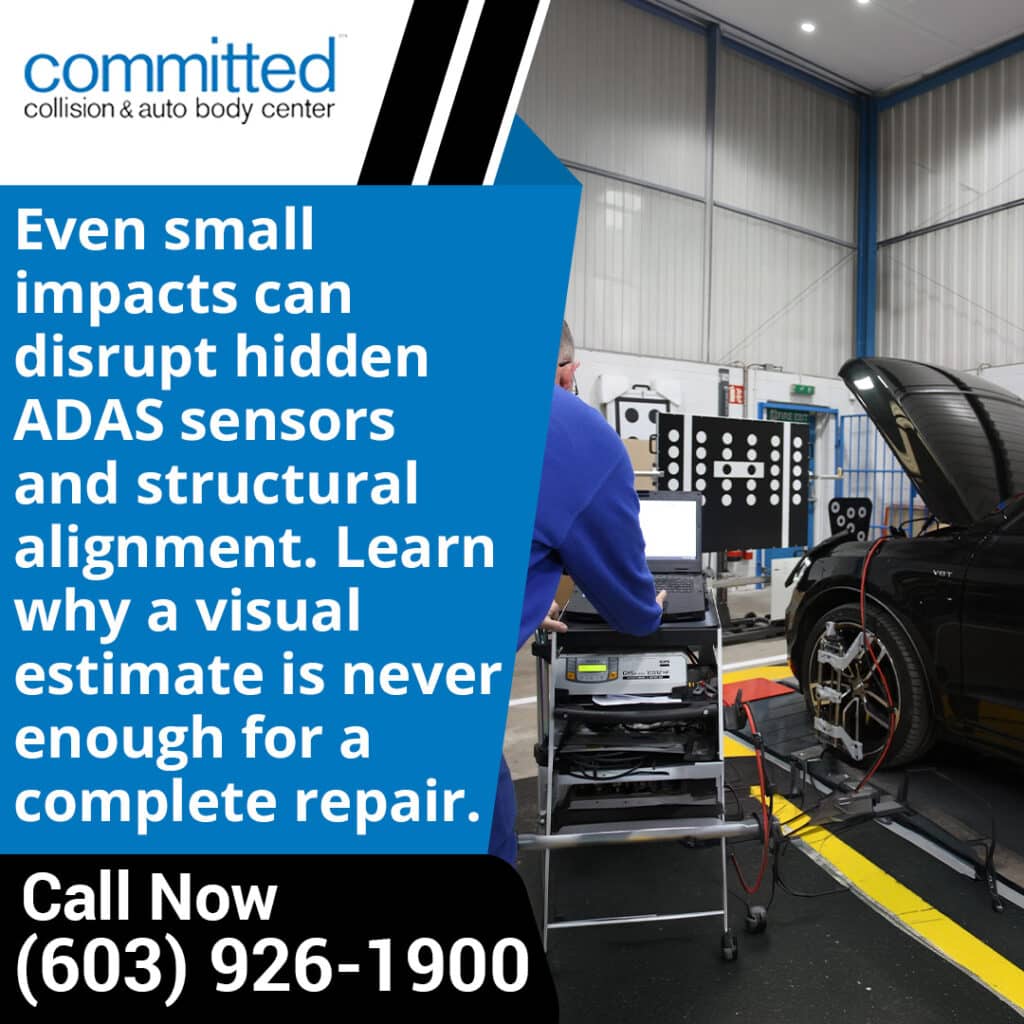
Accurate structural repair requires detecting millimeter-level shifts. At Committed Collision & Auto Body Center, we use the Chief 3D Laser Measuring System to identify frame geometry deviations that a visual inspection cannot detect. This data drives the repair plan and confirms the vehicle is back within factory specifications before it leaves our facility. This is the standard body collision repair that modern vehicles require.
ADAS and Sensor Damage Most Drivers Never Think About
How Minor Collisions Disrupt Sensors
Advanced Driver Assistance Systems (ADAS), including lane departure warning, automatic emergency braking, and adaptive cruise control, rely on cameras and radar sensors positioned at precise angles. A fender bender can knock a sensor out of its calibrated position without any visible damage. Dashboard alerts do not always appear when ADAS systems are misaligned. You could be driving with compromised safety features and not indicate that anything is wrong.
Industry data indicates that roughly 61% of vehicles arriving for collision repair now require ADAS calibration. Yet, calibration procedures appear on only about 36% of direct-repair estimates, meaning many vehicles leave shops with safety systems potentially misaligned.
Why Calibration Cannot Be Skipped
Vehicle manufacturers widely require ADAS recalibration following any collision, no matter how minor. Bumper repairs, suspension work, and structural adjustments can all shift sensor positioning. A collision repair specialist who follows OEM procedures treats calibration as part of the repair, not an afterthought.
Post-repair ADAS calibration is handled through our sister company in North Hampton, Automotive Alignments & Calibrations LLC (AAC), using Hunter/Bosch DAS 3000 equipment and a full Hunter alignment system with an in-ground rack.
Suspension and Alignment Damage That Shows Up Later
Symptoms That Emerge Days or Weeks After a Collision
Suspension damage rarely announces itself right away. Common signs include:
- Steering pull: the vehicle drifts without input
- Uneven tire wear: one side wears down faster than the other
- Vibration at speed: felt through the wheel or seat
- Rough ride: noticeably more jarring than before the accident
By the time these symptoms appear, many drivers no longer connect them to the original accident.
Why This Matters on NH Seacoast Roads
Control arms, struts, and tie rods can bend from collision forces without any visible sign of damage. The result is reduced stability, longer stopping distances, and difficulty holding a lane. In wet or icy conditions, common on NH Seacoast roads from late fall through early spring, these handling changes become a genuine safety concern.
Post-repair quality control at our shop includes a road test and a thorough function inspection. Wheel alignment and any required ADAS recalibration are carried out by AAC before the vehicle is returned to you.
Paint and Corrosion Issues That Develop Months Later
Why Refinishing Matters Beyond Appearance
Paint is a barrier between metal and the elements. When applied without an adequate primer or not properly cured, moisture reaches the metal, and corrosion spreads beneath the surface long before it becomes visible. Improper surface prep leads to peeling and bubbling. Poor primer application allows rust to take hold at the substrate level, invisible until it has already progressed.
The North Hampton Climate Factor
Coastal New Hampshire’s environment accelerates corrosion in ways that inland regions don’t face. Road salt lingers into spring on undercarriage components and panel seams. Coastal humidity adds year-round exposure. At Committed Collision & Auto Body Center, we use Glasurit 100 Line waterborne paint, a system used by over 80% of OEM manufacturers, applied in our USI spray booths. Proper prep, primer, and paint system selection are what separate a repair that holds up from one that fails within a season.
Electrical Faults That Surface After a Collision
Why Vehicle Electronics Are Vulnerable
According to Statista/Deloitte, electronics are projected to account for roughly 50% of a new vehicle’s cost by 2030. Modern vehicles contain an average of 80 sensors and 100 electronic control units. A collision that looks minor can jostle wiring harnesses, loosen connectors, and stress control modules throughout the vehicle, with effects that surface weeks later as intermittent warning lights, erratic system behavior, or safety features that stop working without explanation.
Why Pre- and Post-Repair Scanning Is Required
Post-collision scanning reads fault codes stored in the vehicle’s computer even when no dashboard light is active. We use OBD-II diagnostic tools at intake and again after repairs are complete. Codes present before repairs are documented separately, so nothing is attributed to our work that predates it.
Why Proper Disassembly Changes Everything
Bumper covers can conceal bent reinforcement bars and crushed energy absorbers. Side panels can hide frame rail deformation. What appears cosmetic on the surface may involve structural repairs underneath. During teardown, our technicians look for:
- Bent or cracked inner structure behind bumpers
- Shifted or broken sensor and light mounting points
- Damaged brackets holding structural and suspension components
- Frame rail deformation not visible at the panel surface
A repair plan built without disassembly is incomplete. We complete a full teardown and blueprinting process before locking in scope, parts ordering, or timeline, because the real extent of damage only becomes clear once the vehicle is opened up.
How to Choose a Car Collision Repair Shop That Catches Hidden Damage
Not every shop follows the same process. Here’s what a thorough repair should cover, and what each step is designed to catch:
| Repair Step | What It Finds or Confirms |
| Pre-wash and visual inspection | Surface-level damage documentation |
| OBD-II diagnostic scan | Electronic fault codes, pre-existing system issues |
| Full disassembly and blueprinting | Structural, internal, and concealed damage |
| Laser frame measurement | Millimeter-level structural deviations |
| OEM structural and body repair | Restores integrity to factory specifications |
| Paint prep and refinishing | Guards against moisture infiltration and rust |
| ADAS calibration (via AAC) | Restores sensor accuracy and safety function |
| Road test and quality control | Confirms real-world performance post-repair |
Before choosing a shop, ask: Do you scan before and after repairs? Do you disassemble before writing the final repair plan? Do you follow OEM procedures for my vehicle’s make and model? Is ADAS calibration included in your process?
Shops holding I-CAR Gold Class certification with ASE-certified technicians train annually to stay current with the repair demands of late-model vehicles. When looking for the best collision repair shop in North Hampton, NH, choose one like ours that documents every step, follows OEM standards, and verifies all systems before returning your vehicle.
Common Hidden Damage: Quick Reference
| Damage Type | How It Typically Presents | Risk if Left Unaddressed |
| Frame misalignment | No visible sign; found by laser measurement | Reduced crash protection; potential NH inspection failure |
| ADAS sensor disruption | No dashboard alert in many cases | Safety systems fail when needed most |
| Suspension damage | Steering pull, uneven tire wear, days/weeks later | Loss of control; longer stopping distance |
| Paint and corrosion | Bubbling or rust visible months later | Structural deterioration; reduced resale value |
| Electrical faults | Intermittent warning lights or system errors | Cascading failures; hidden safety risks |
Why North Hampton Drivers Need to Be Thorough After Any Accident
Salt from winter road treatment collects on undercarriage components and panel seams well into spring. Coastal humidity accelerates rust on improperly sealed repairs throughout the year. New Hampshire’s vehicle inspection standards require safety systems to function correctly, and a vehicle with unresolved frame or suspension damage may not pass. These conditions make thorough auto collision repair in North Hampton, NH, more consequential than many drivers realize after what seems like a minor accident.
The Right Repair Starts With the Right Process
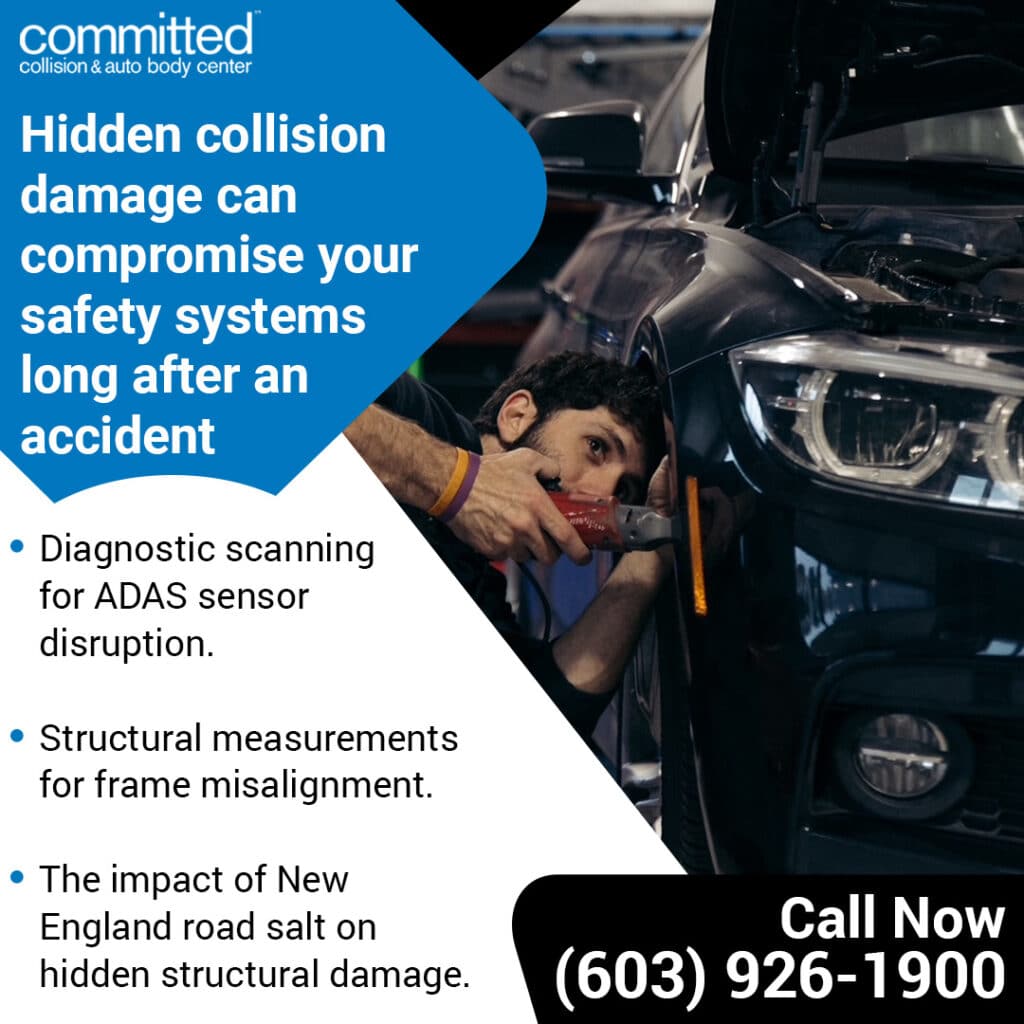
The damage that shows immediately is the part you can see. What matters more is what surfaces weeks later or what never shows up at all without a proper inspection. Structural shifts, disrupted sensors, suspension changes, inadequate paint prep, and electrical faults are all manageable when caught right after an accident. Left unaddressed, each carries a cost in safety, reliability, and resale value.
Our process at Committed Collision & Auto Body Center is designed to find these issues before they become your problem. We back all workmanship, paint, and parts with a limited lifetime warranty, coordinate directly with your insurance company, and keep you informed at every stage.
Schedule a Free Inspection After Your Collision
Don’t wait for symptoms to appear weeks later. Contact Committed Collision & Auto Body Center at (603) 926-1900 or email info@committedcollision.com for a free estimate. We provide precise auto collision repair in North Hampton, NH, and the surrounding Seacoast communities. Request an estimate online or visit us at 203 Lafayette Road, North Hampton, NH. All major insurance providers are accepted.