
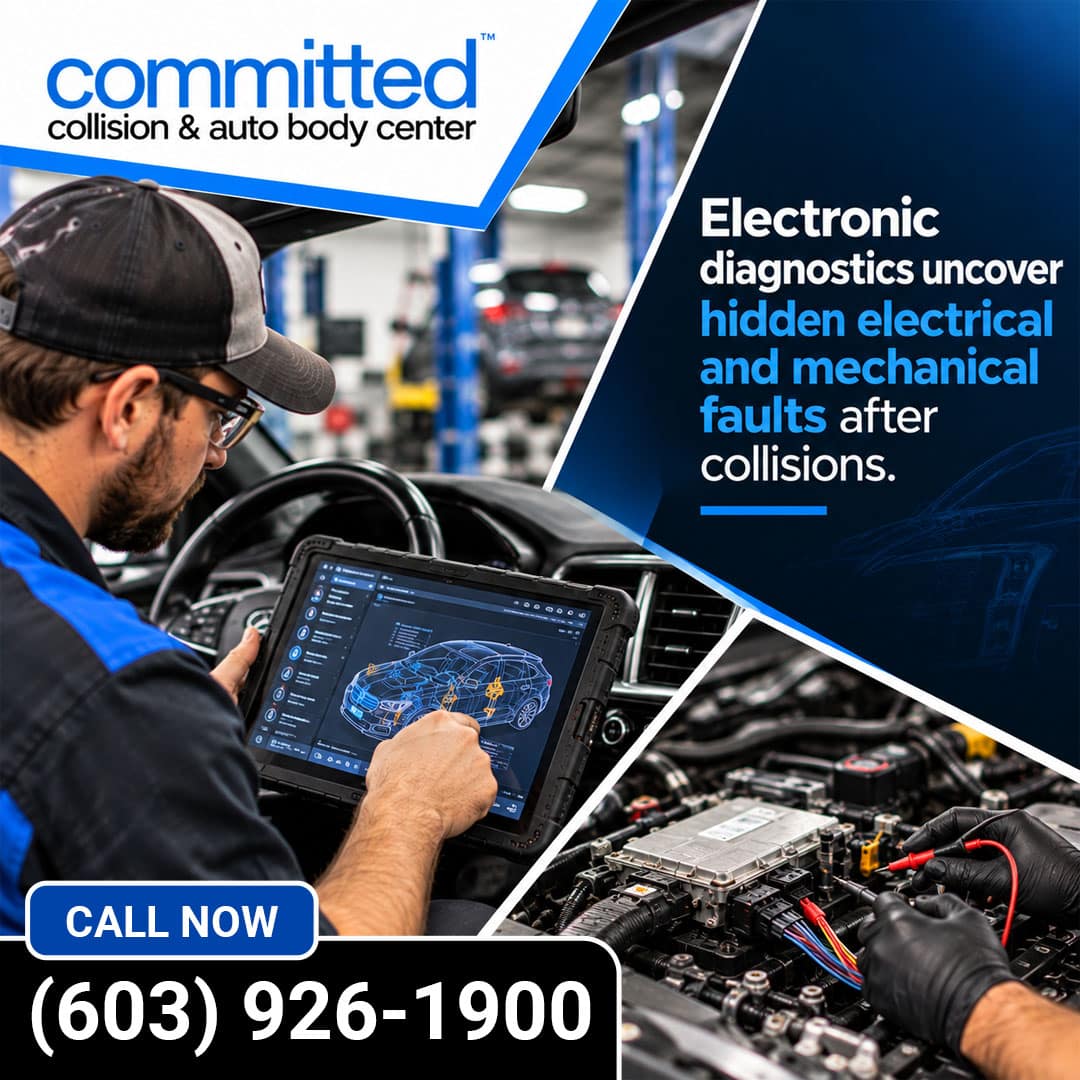
Auto mechanical diagnostics can reveal electronic faults and operating problems that looking at damaged panels cannot establish. Committed Collision & Auto Body Center combines scanning with collision assessment and coordinates mechanical work through our sister shop. The findings help guide further testing rather than relying on exterior appearance or dashboard warnings alone.
Key Takeaways:
- Investigate codes: A trouble code identifies a condition to test, not necessarily a failed part.
- Combine evidence: Electronic scanning and physical inspection answer different questions.
- Check requirements: A clear scan does not replace required inspections or calibration.
What Can Testing Reveal Beyond a Visual Inspection?
Diagnostic testing can identify electronic faults without obvious damage to the affected component. A connector may appear intact while a circuit problem disrupts operation. We consider scan findings alongside the impact location and the symptoms you report.
A diagnostic trouble code (DTC) records a condition detected by a vehicle’s electronic control system. Further testing helps determine whether the cause involves wiring, a connection, or another component.
Collision forces can damage electrical circuits and components in ways that visual inspection cannot readily diagnose. Honda also states that dashboard warning lights are not an acceptable method to determine whether post-collision scans are necessary. The guidance applies to the Honda and Acura vehicles covered by the statement.
| Assessment method | What the method can reveal | Main limitation |
| Visual inspection | Visible damage, leaks, displaced parts | Cannot establish electronic system status |
| Electronic scanning | Stored faults in supported control systems | Does not identify every physical defect |
| Targeted mechanical testing | Evidence about a suspected operating fault | Depends on the tests selected |
Does a Clear Scan Mean No Further Work Is Needed?
A clear scan does not establish that every mechanical component is sound or every required calibration is complete. Auto mechanical diagnostics must be considered alongside physical findings and manufacturer procedures. We treat scanning as part of the assessment.
For example, a suspension component can be damaged without generating a code. Pulling after an impact may require inspection and alignment measurements before car suspension repair is recommended.
Honda’s statement also notes that some driver-assistance systems may require aiming or calibration without displaying DTCs. Scanning retrieves diagnostic information; calibration adjusts a system according to the applicable procedure.
How Do We Use Diagnostic Findings in Your Repair Plan?
We connect diagnostic findings with the collision assessment and coordinate mechanical needs through our sister shop. Committed Collision & Auto Body Center works closely with Automotive Alignments & Calibrations LLC (AAC), which performs mechanical repairs, suspension work, wheel alignment, and driver-assistance system calibration.
Our documented repair approach includes:
- Scanning and disassembly: Our collision repair process investigates electronic faults and damage behind exterior panels.
- Mechanical diagnostic equipment: AAC lists manufacturer scan tools and Bosch equipment for fault investigation.
- Repair explanations: Our collision plan identifies proposed procedures and parts. AAC’s mechanical process includes pricing and customer approval.
At Committed Collision & Auto Body Center, we explain additional findings identified during collision repairs. AAC also provides general auto repair, including brake services and routine maintenance. We explain which services relate to your accident damage before you approve the proposed work.
What Should You Ask Before Approving Diagnostic Work?
Ask what auto mechanical diagnostics will cover, what the estimate includes, and which additional tests require approval. We recommend choosing a trusted car mechanic who explains how the proposed testing relates to your vehicle’s symptoms and damage.
- Describe changes: Explain when a warning, noise, or handling problem began.
- Clarify the scope: Ask whether the estimate includes scanning and further testing.
- Review recommendations: Request the findings behind each proposed repair.
Frequently Asked Questions
Should I clear diagnostic trouble codes before bringing the vehicle in?
We recommend leaving stored codes intact. Using a scan tool to erase codes can remove information useful to the diagnostic assessment.
How long does diagnostic testing take?
The time depends on the symptoms, affected systems, and tests required. Contact us to discuss the assessment and scheduling for your vehicle.
Can a trouble code prove that a fault came from the accident?
No. A trouble code alone does not establish the cause or timing of a fault. We consider diagnostic findings alongside the collision damage and symptoms you report.

Committed Collision & Auto Body Center Can Arrange a Diagnostic Assessment
Contact Committed Collision & Auto Body Center at (603) 926-1900 or info@committedcollision.com to discuss auto mechanical diagnostics after an accident. We can explain our repair process and AAC’s role in auto mechanical repair in North Hampton, NH. We don’t let your vehicle go back unsafe or with incomplete repairs.