
Synopsis
Even a minor fender bender can create hidden structural, paint, and sensor-related damage in today’s vehicles. Committed Collision & Auto Body Center explains the most common auto body repairs after low-speed collisions and why proper inspections, refinishing, structural measuring, and post-repair ADAS calibration matter for drivers in North Hampton.
A fender bender may seem minor when you first inspect your vehicle. Many drivers only notice a cracked bumper, a paint scratch, or a small dent after the collision. The visible damage, however, may only show part of the problem. Today’s vehicles contain advanced safety systems, structural reinforcements, and electronic components that can sustain hidden damage during even a low-speed impact.
We frequently help drivers throughout North Hampton and the New Hampshire Seacoast after parking lot accidents, rear-end collisions, and stop-and-go traffic incidents along Route 1 and nearby intersections. Spring traffic during May often increases congestion around shopping areas, beaches, and coastal roads, which can raise the risk of minor collisions. If you are searching for auto body repair in North Hampton, NH, after a fender bender, it is important to understand that even low-speed impacts can create hidden structural or sensor-related damage.
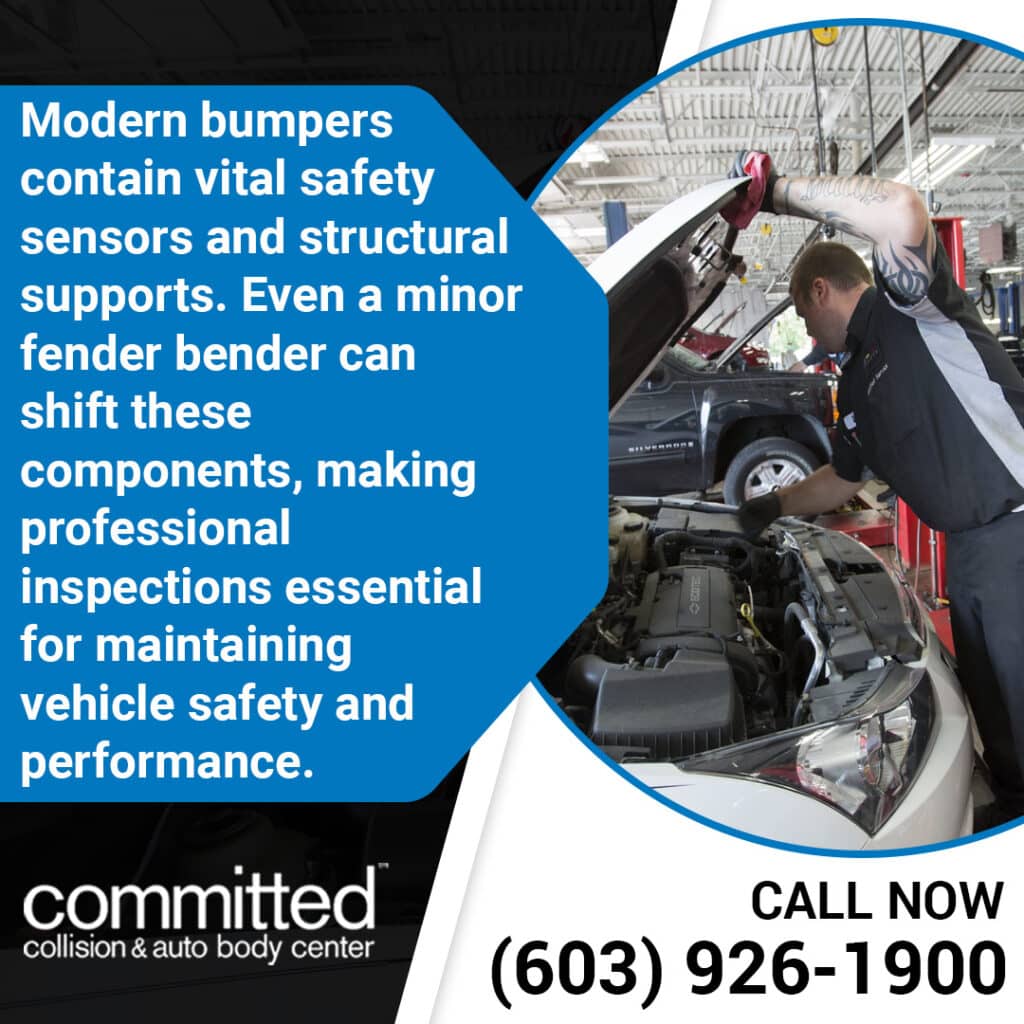
At Committed Collision & Auto Body Center, we inspect vehicles carefully after collisions because modern repairs involve more than replacing damaged panels. Depending on the impact, the repair process may include structural measuring, refinishing, panel fitment corrections, and post-repair ADAS calibration through Automotive Alignments & Calibrations LLC to help restore vehicle safety and performance.
According to the National Highway Traffic Safety Administration (NHTSA), rear-end collisions account for nearly 29% of crashes in the United States. Many occur during lower-speed traffic conditions.
Why Fender Benders Can Create Hidden Damage
A vehicle may still appear drivable after a low-speed collision. Hidden damage beneath the surface can still affect safety, alignment, and vehicle performance.
Modern Bumpers Absorb Collision Energy
Late-model vehicles use bumper systems designed to absorb impact forces before they reach passengers. These systems contain more than the visible bumper cover.
Many bumper assemblies now include reinforcement bars, energy absorbers, mounting brackets, parking sensors, radar units, and cameras. During a collision, these components help distribute crash energy across the vehicle structure.
Plastic bumper covers may flex during impact without showing major exterior damage. Internal supports underneath can still crack, bend, or shift. You may assume a bumper only needs cosmetic work when hidden damage actually exists behind the surface.
This is one reason we recommend professional inspections after any collision, even when the damage initially appears minor.
Minor Accidents Can Affect Safety Systems
Many late-model vehicles now include Advanced Driver Assistance Systems (ADAS). These systems rely on sensors and cameras positioned throughout the vehicle to support safer driving.
Examples include:
- Blind spot monitoring
- Adaptive cruise control
- Rear cross-traffic alerts
- Lane departure warnings
- Automatic emergency braking
A low-speed impact may slightly alter sensor positioning. Even small alignment changes can affect calibration accuracy and system performance later.
At Committed Collision & Auto Body Center, we inspect these systems during the repair process because proper operation matters after auto body repairs are completed.
Bumper Repair and Replacement After a Fender Bender
Bumper damage remains one of the most common repairs after a minor collision. You may first notice scratches, loose corners, or cracked plastic after a bumper impact. Hidden structural damage behind the bumper is also common.
Common Signs Your Bumper Needs Repair
Several warning signs may indicate the bumper system needs professional attention after a collision.
| Visible Damage | Possible Hidden Problem |
| Paint scuffs | Broken mounting clips |
| Cracked bumper cover | Damaged reinforcement bar |
| Loose corners | Shifted mounting brackets |
| Dashboard warning lights | Sensor calibration issues |
| Uneven panel gaps | Structural movement |
We recommend scheduling an inspection if the bumper feels loose, warning lights appear, or the panels no longer line up correctly. These symptoms may indicate deeper structural or sensor-related problems beneath the surface.
When a Bumper Can Be Repaired
Some bumper damage may qualify for repair instead of replacement. Cosmetic scratches, minor paint damage, and small cracks may often be repaired if the internal structure remains intact.
Plastic repair and refinishing methods may restore the original appearance while preserving factory components. This approach may also help maintain fitment consistency across surrounding panels.
When Replacement Becomes Necessary
Replacement may become necessary when the collision damages mounting points, reinforcement bars, or sensor mounting areas. Structural cracks across larger sections of the bumper may also require replacement instead of repair.
At our auto body repair shop, we inspect both visible and hidden damage before creating a repair plan. This process helps identify safety concerns early and allows us to follow the manufacturer’s repair procedures throughout the repair process.
Paint Damage and Scratch Repair After a Minor Collision
Paint damage may appear cosmetic at first. Delaying repairs can create larger problems later, especially near the New Hampshire coast, where moisture and road salt exposure remain common.
Why Paint Damage Should Be Repaired Promptly
Vehicle paint protects metal surfaces from water, moisture, and salt exposure. Scratches and paint chips may expose bare metal underneath.
New Hampshire Department of Environmental Services’ materials note that road salt is a major source of corrosion concerns in New Hampshire. Corrosion may begin beneath damaged paint before rust becomes visible externally. Small paint chips can eventually spread if moisture reaches the surrounding layers.
Paint Damage Often Extends Beyond the Visible Area
A collision may weaken nearby paint layers beyond the visible scratch area. Damage sometimes spreads underneath surrounding paint surfaces after impact.
Professional refinishing typically includes surface preparation, sanding damaged areas, primer application, color matching, clear coat application, and final polishing. Each stage helps restore appearance while protecting repaired panels from future environmental exposure.
At Committed Collision & Auto Body Center, we use Glasurit 100 Line waterborne paint systems and computerized color-matching technology during refinishing.
Why Accurate Paint Matching Matters
Color matching involves more than locating the factory paint code. Several factors affect how repaired paint appears after refinishing.
These include:
- Sun exposure
- Paint aging
- Metallic flake orientation
- Factory paint variation
- Lighting conditions
Blending adjacent panels may also help create a more consistent finish across repaired areas.
Dent Repair and Panel Alignment Following a Fender Bender
Small dents can sometimes indicate larger issues beneath the surface. Proper panel alignment affects appearance, fitment, and long-term durability after repairs.
Paintless Dent Repair for Minor Damage
Paintless Dent Repair (PDR) removes certain dents without repainting the panel. This process works best when the paint remains intact, and the metal has not stretched significantly.
PDR may help preserve factory paint while reducing repair time for certain types of damage. The repair method depends on dent depth, panel location, and access behind the damaged area.
Some Dents Suggest Hidden Impact Stress
Dents near wheel openings or panel edges sometimes indicate additional stress underneath the surrounding structure. What appears minor externally may involve movement behind adjacent panels.
Our technicians inspect mounting brackets, inner supports, wheel alignment angles, and surrounding panels to identify hidden movement after collisions.
Why Panel Alignment Matters After Repairs
Improper alignment can affect both appearance and vehicle function after repairs.
Misaligned panels may create:
- Wind noise
- Water leaks
- Uneven body gaps
- Door closure issues
- Additional hinge stress
Our local auto body repair specialists use manufacturer repair procedures and measuring systems to restore proper fitment after collisions.
Hidden Structural Damage After a Fender Bender
Many drivers associate structural damage with major accidents only. Minor collisions can also affect structural components underneath the vehicle.
What Can Shift During a Low-Speed Collision
Even lower-speed impacts may affect frame rails, suspension mounting points, reinforcement bars, core supports, and radiator supports.
Visible exterior damage does not always reflect the full impact underneath the surface. Structural movement may occur behind the bumper or underneath the vehicle without obvious exterior warning signs.
According to the Insurance Institute for Highway Safety (IIHS), vehicle structure plays an important role in occupant protection during future crashes.
Structural Movement Can Affect Vehicle Performance
You may notice symptoms days after a collision, including steering pull, uneven tire wear, vibrations, suspension noise, or misaligned body panels. These symptoms may point to hidden structural movement that requires professional inspection.
Professional auto body repair involves more than cosmetic work because structural measurements and repair procedures directly affect vehicle safety after a collision.
Why Measuring Systems Matter During Repairs
Modern repairs rely on digital measuring systems that compare vehicle dimensions against manufacturer specifications.
At Committed Collision & Auto Body Center, we use Chief 3D Laser Measuring Systems during structural inspections and repairs.
These systems help us:
- Detect hidden movement
- Verify frame dimensions
- Restore alignment accuracy
- Compare repairs against OEM standards
Structural repairs help restore vehicle safety and collision performance after repairs are completed.
ADAS Calibration After a Fender Bender
ADAS calibration has become an important part of collision repair for many late-model vehicles.
What ADAS Systems Can Be Affected?
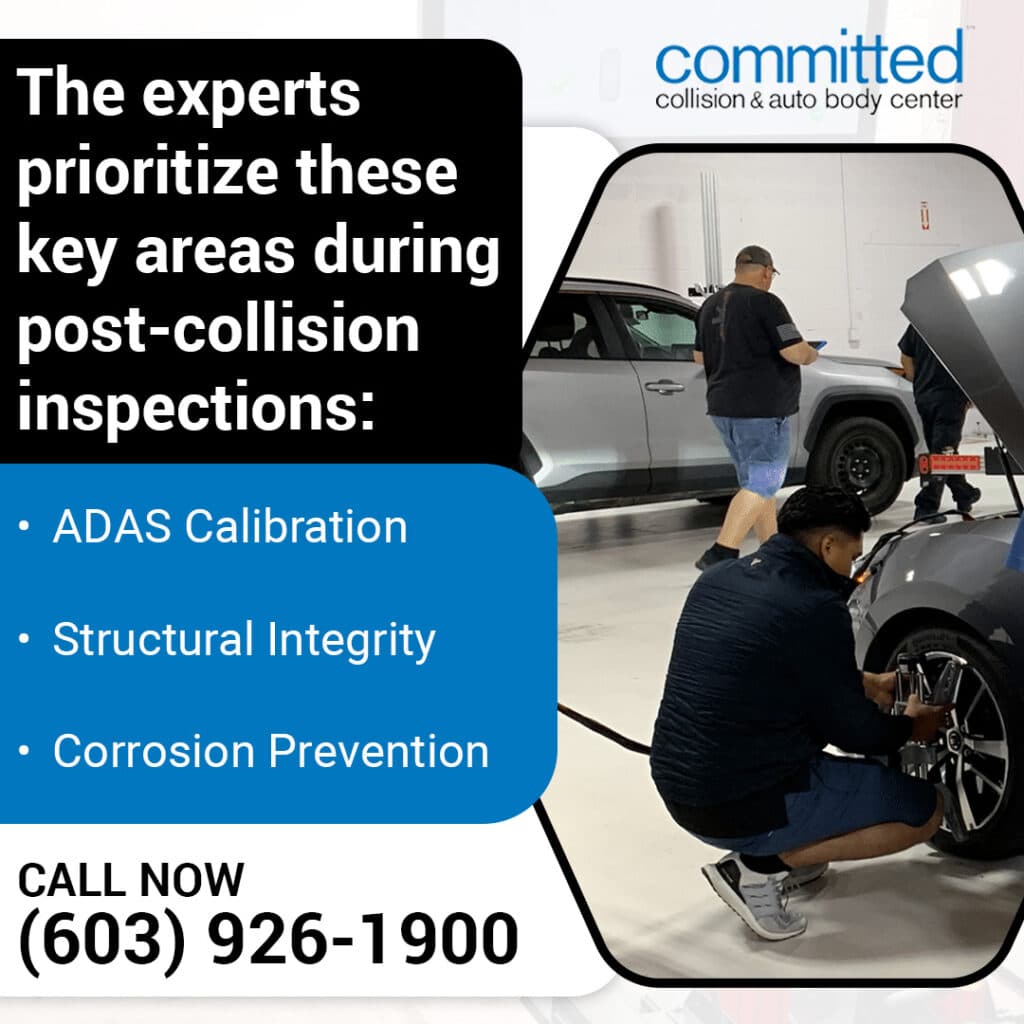
A fender bender may affect blind spot monitoring, parking assist systems, forward collision warning systems, lane keeping systems, and adaptive cruise control.
These systems rely on sensors and cameras mounted throughout the vehicle. A bumper shifting slightly during impact may alter sensor positioning enough to affect system accuracy.
Why Calibration Is Part of Proper Repairs
Calibration helps restore manufacturer specifications after repairs.
Committed Collision & Auto Body Center works closely with Automotive Alignments & Calibrations LLC for post-repair ADAS calibration services in North Hampton.
Modern collision repairs may involve:
- Diagnostic scanning
- Sensor inspections
- Wheel alignment checks
- Calibration procedures
- Post-repair scans
These steps help verify system operation after repairs are completed.
Why Choosing the Right Auto Body Shop Matters
Repair quality affects safety, appearance, and long-term vehicle performance. Repair procedures and equipment vary between facilities. Choosing an experienced auto body shop in North Hampton, NH that drivers trust can help reduce the risk of incomplete repairs or overlooked structural damage.
Questions Drivers Should Ask Before Repairs Begin
Before approving repairs, we encourage you to ask whether the repair facility follows OEM repair procedures, performs diagnostic scans, and inspects ADAS systems after repairs.
We also encourage you to ask about:
- Written repair plans
- Warranty coverage
- Structural measuring procedures
- Calibration capabilities
- Communication during repairs
These questions help drivers compare repair quality more clearly.
Why Ongoing Training Matters for Modern Repairs
Late-model vehicles now use high-strength steel, aluminum body panels, sensor-integrated bumpers, and advanced electronics. Repair methods continue evolving alongside vehicle design.
Our technicians receive ongoing industry training to stay current with repair procedures and technology. We also follow manufacturer repair procedures and maintain clear communication throughout the repair process.
| Repair Stage | Purpose |
| Visual inspection | Identify visible damage |
| Disassembly | Detect hidden damage |
| Diagnostic scanning | Check electronic systems |
| Structural measurements | Verify alignment |
| Refinishing | Restore appearance |
| Calibration checks | Verify system operation |
| Final inspection | Confirm repair quality |
What To Do After a Fender Bender
The steps taken after a collision can affect repair timelines and hidden damage detection.
Important Steps After a Minor Accident
You should document visible damage, warning lights, vehicle positioning, and road conditions immediately after the accident. These details may help during inspections and insurance discussions later.
We also recommend monitoring your vehicle for steering pull, vibrations, fluid leaks, dashboard warnings, or unusual noises after the collision. Some problems may not appear immediately.
We recommend scheduling a professional inspection promptly to help identify hidden structural or sensor-related damage before conditions worsen.
We believe a written repair plan should also outline required parts, inspections, calibration needs, and estimated repair timelines so you understand the repair process clearly.
Restore Your Vehicle Safely After a Fender Bender
A fender bender can leave behind more damage than drivers initially expect. Structural movement, paint damage, alignment problems, and sensor issues may all develop after a low-speed collision.
Proper repairs involve more than cosmetic work. Structural inspections, refinishing, diagnostic scans, and calibration procedures all help restore vehicle safety and performance.
At Committed Collision & Auto Body Center, we help drivers across North Hampton and nearby Seacoast communities repair collision damage using manufacturer-focused repair methods and advanced equipment. Our team communicates clearly throughout the repair process and works carefully to restore vehicles properly after accidents.
We provide professional auto body repair that North Hampton, NH, drivers can rely on for accurate inspections, manufacturer-focused repairs, and clear communication throughout the repair process.
If your vehicle was recently involved in a collision, contact us at (603) 926-1900 or info@committedcollision.com to schedule an inspection or request a free estimate.