
Synopsis
Spring in coastal New Hampshire exposes vehicles to pollen, tree sap, gravel, and leftover road salt that can damage clear coat finishes and lead to corrosion. Committed Collision & Auto Body Center explains how seasonal contaminants affect automotive paint, warning signs to watch for, and when professional auto body repair may help prevent larger repairs.
Spring weather in coastal New Hampshire brings more than warmer temperatures and longer days. Vehicles also face heavy pollen buildup, tree sap exposure, and leftover gravel from winter road treatment. Over time, these seasonal hazards can damage clear coat finishes, create scratches, and expose painted surfaces to moisture and corrosion.
For late-model vehicles, paint damage is not only cosmetic. Modern paint systems help protect body panels, maintain resale value, and preserve the condition of advanced vehicle components.
At Committed Collision & Auto Body Center, we inspect many vehicles each spring for seasonal paint damage across the NH Seacoast. We explain how pollen, sap, and spring road debris affect your vehicle’s finish, what warning signs to look for, and when professional auto body repair in North Hampton, NH, may help prevent larger repairs later. Understanding how these seasonal hazards affect modern paint systems can help you address minor damage before it spreads.
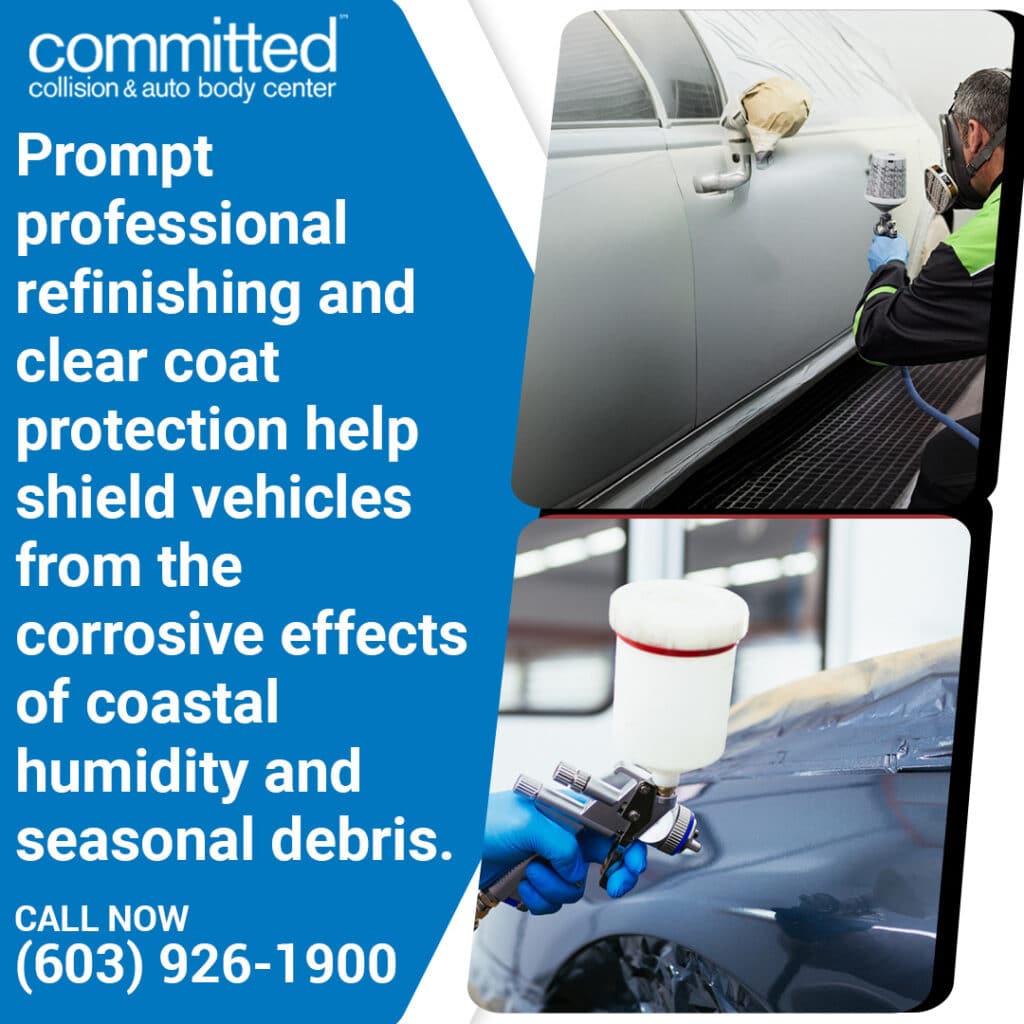
Why Spring Is Hard on Your Vehicle’s Paint
New Hampshire winters put your vehicle through months of road salt, sand, and temperature swings. When the snow clears in March and April, that material does not disappear; it dries on road surfaces and gets thrown against your lower panels, bumper, and hood by passing traffic. Overnight temperatures still drop low enough to cause your paint layers to contract, reopening micro-cracks that cold weather started. As humidity rises and trees release pollen, those micro-cracks can allow moisture and contaminants to remain trapped against the paint surface.
Your vehicle’s paint system is built in layers: primer bonded to bare metal, a base coat carrying the color, and a clear coat that shields both. Pollen acid, sap resin, and gravel impact all targets that clear coat first. Once it fails in even a small area, the layers beneath have no protection from moisture or UV exposure. On the NH Seacoast, where coastal humidity and residual road salt remain common through spring, an unaddressed paint chip exposing bare metal can begin developing corrosion surprisingly quickly.
What Pollen Does to Your Vehicle’s Finish
How Pollen Damages Your Paint
Pollen may appear harmless, but when combined with moisture, heat, and prolonged exposure on your vehicle’s surface, it can contribute to staining and clear coat etching over time. Many pollen grains also have textured surfaces that allow them to cling tightly to automotive paint.
Tree pollen from oak, maple, birch, and pine peaks between April and June across New Hampshire. When pollen on your hood or roof gets wet from rain or morning dew and then dries under the sun, its acidic compounds activate. That wet-heat-dry cycle is what causes etching, and the longer it repeats on your vehicle without a proper wash, the deeper the acid works into the paint.
The Types of Finish Damage Pollen Causes
If pollen remains on your vehicle through repeated wet-dry cycles, several forms of surface damage can develop over time:
- Acid etching: Dull, hazy patches on your clear coat that do not wash away
- Staining: Yellow discoloration that sets into your paint, most visible on white and silver vehicles
- Fine scratches: Caused when you wipe dry pollen off your hood before rinsing
- Swirl marks: From circular wiping motions on a pollen-coated surface
Always rinse your vehicle with water before making any contact with the surface. Use a pH-balanced soap and a clean microfiber mitt. Never use a dry cloth or hand on a pollen-covered panel. Apply wax or paint sealant after washing to slow future pollen adhesion. If etching has already set in on your finish, paint correction is needed. Washing over it will not restore clarity.
Tree Sap: Why Waiting Makes It Worse
How Sap Bonds To Your Paint
Sap flows most actively in spring when freezing nights alternate with warm days. If you park under trees during this period, sap drops land on your roof, hood, and trunk, and they cause problems proportionally larger than their size. Fresh sap is water-soluble and removable with the right product, but that window closes fast. Consumer Reports notes that heat causes sap to bond tighter to paint with each passing day. As sap hardens and remains exposed to heat and sunlight, it can stain or etch the clear coat and make removal more difficult.
Signs That Sap Has Damaged Your Paint
After you remove sap, these signs mean your finish has been altered and needs professional attention:
- A dull or hazy circle remains where the drop sat on your panel
- Your paint surface feels rough or pitted in that area
- A discolored spot persists that does not wash away
- The finish looks cloudy under direct light
These are signs of etching and oxidation. Polishing is the minimum repair your vehicle needs at this stage. More serious damage requires paint correction or panel refinishing to restore the clarity and protection of the affected surface.
What to avoid when removing sap from your vehicle
- Do not scrape with a fingernail, card, or any hard edge. This scores your clear coat
- Do not use acetone, paint thinner, or household solvents. These strip your finish
- Do not scrub with abrasive pads or paper towels. These leave scratch patterns
Use a purpose-made automotive sap remover on a microfiber cloth. Let it soak into the deposit before wiping. If roughness or discoloration remains after removal, professional paint correction may be needed to restore the damaged area properly.
Road Debris and Paint Chips After Winter
Why NH Spring Roads Put Your Paint at Risk
The sand and coarse salt spread on seacoast roads all winter do not disappear when the snow melts. It dries on road surfaces and becomes airborne through March and April. At highway speeds, gravel and sand particles strike your front bumper, hood, and lower panels with enough force to chip paint, fracture the clear coat, and, in some cases, reach bare metal in a single impact. A 2004 AAA Foundation for Traffic Safety study found road debris contributed to roughly 25,000 accidents in the U.S in 2001. Paint damage from the same debris is far more common, particularly on Route 1 and I-95, where spring cleanup on the Seacoast runs into late April.
Where Your Vehicle Takes The Most Damage
Some sections of your vehicle face more direct impact exposure than others during spring highway driving. Check these areas first:
- Your front bumper and lower fascia: Take the most direct impact at highway speeds
- Your hood’s leading edge: Stone chips from traffic traveling ahead of you
- Your rocker panels and lower doors: Spray thrown upward by your own tires
- Your wheel well edges: Gravel caught in the tire rotation
How A Paint Chip On Your Vehicle Becomes a Rust Problem
A chip through only your clear coat is a surface issue today. A chip that exposes bare metal can begin developing corrosion relatively quickly in coastal New Hampshire conditions. Once rust forms beneath your paint, it spreads laterally. By the time it breaks through to the surface, it has been growing underneath for some time. A spot repair in April becomes a rust treatment and full panel refinishing job by late summer if you leave it alone.
Steps to Reduce Spring Paint Damage on Your Vehicle
- Wash your vehicle weekly through April and May when pollen and debris are at their heaviest
- Apply wax or paint sealant after your first thorough spring wash
- Increase your following distance behind trucks on gravel-covered roads
- Address chips on your bumper or hood early before moisture reaches the base coat and starts corrosion beneath the surface.
Signs It’s Time to Bring Your Vehicle to an Auto Body Repair Shop
If you notice any of the following after a spring wash, at-home care is no longer the right response:
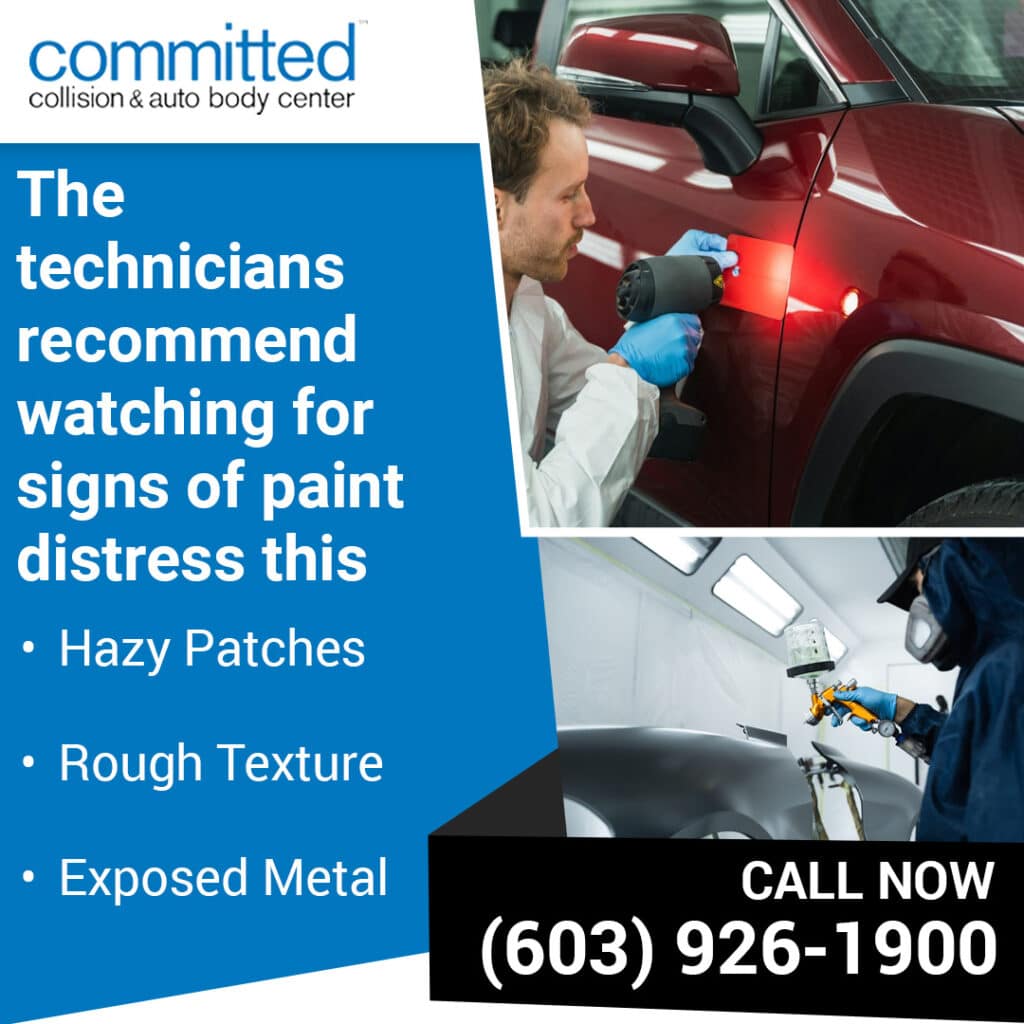
- Dull or hazy patches on your paint that remain after washing. This is an etching, not surface dirt
- Paint bubbling anywhere on a panel. This is due to moisture trapped beneath your finish
- Your finish peeling back from the edge of a chip or scratch
- Scratches on your hood or doors that expose a lighter or bare surface below the color
- Rust spots forming on your lower panels, wheel wells, or door edges
- Sap spots that stayed rough or discolored after proper removal
Drivers often seek auto body repair in North Hampton, NH, once paint damage begins, exposing metal surfaces to moisture and corrosion.
Why Early Inspection Saves You Money
What looks like a surface scuff on your vehicle can conceal a fracture through both the clear coat and base coat below it. A faded sap spot on your hood may have etched into the primer. A hands-on inspection helps determine the actual depth of the damage. It also helps identify the right repair approach, whether that involves polishing, paint correction, a spot respray, or full panel refinishing. Local auto body repair specialists can identify whether damage remains on the surface or has already reached the primer or bare metal underneath. Addressing damage in May is consistently less involved and less costly than the same job in September, after a summer of UV exposure and coastal humidity.
How We Handle Spring Paint Repairs at Committed Collision & Auto Body Center
We have worked with NH Seacoast vehicle owners since 2005, and we are familiar with spring paint damage on vehicles: pollen etching, hardened sap, and stone chips from Route 1. Drivers searching for a trusted auto body shop in North Hampton, NH, often visit us after spring weather damages their vehicle’s finish. Our I-CAR Gold Class-certified and ASE-certified technicians assess each vehicle individually rather than applying a one-size-fits-all repair approach.
For spring paint and finish repairs, we provide dent and scratch repair, paintless dent repair using our Keco PDR and Glue Pull Station for damage that qualifies, and full panel refinishing when the damage has gone deeper. We match your color through a computerized system that reads your vehicle’s original manufacturer paint code directly, not a visual approximation. We apply Glasurit 100 Line waterborne paint in our USI Spray Booths to support accurate color matching and OEM-quality refinishing.
Every paint repair we do includes proper sanding, cleaning, priming where metal is exposed, and application in the correct base coat and clear coat sequence, following OEM procedures at each stage. If your vehicle has rust at a chip site, we treat it before refinishing so it does not return. All our paint and workmanship repairs are backed by a limited lifetime warranty for as long as you own your vehicle.
Different spring contaminants affect vehicle finishes in different ways. The table below summarizes the most common seasonal paint hazards seen across the NH Seacoast.
| Hazard | How It Damages Your Paint | Panels Most Affected | When To Get Professional Help |
| Pollen | Acid etching, staining, swirl marks from dry wiping | Hood, roof, trunk, all horizontal panels | Haze or dull patches remain after washing |
| Tree sap | Bonds chemically to the clear coat; cracks and oxidizes the finish | All panels; worst under tree canopy | Rough texture or discoloration after sap removal |
| Road debris / gravel | Chips and scratches can fracture through to the bare metal | Front bumper, hood edge, lower doors, rocker panels | Any chip at the bare metal, peeling edges, or rust forming |
| Winter salt residue | Corrosion on lower panels and wheel wells | Rocker panels, wheel wells, and lower door edges | Bubbling paint, visible rust, or surface pitting |
Protect Your Vehicle’s Finish This Spring
Pollen, sap, and road debris each damage your vehicle’s finish differently, but all three get worse the longer they sit. Pollen etching that remains untreated through May often becomes more difficult to correct as temperatures and UV exposure increase during summer. A stone chip skipped through summer can mean rust treatment and panel refinishing by fall.
At Committed Collision & Auto Body Center, we help drivers address seasonal paint damage before it becomes necessary to get extensive auto body repair in North Hampton, NH. We serve drivers throughout North Hampton, Hampton, Rye, Portsmouth, Exeter, and surrounding Seacoast communities. Call us at (603) 926-1900, email info@committedcollision.com, or request a free estimate online. We will assess your vehicle’s paint condition, explain exactly what we find, and walk you through the recommended repair process before any work begins.