
After a collision in North Hampton, stop, check for injuries, and call 911 for injuries or immediate danger. Exchange information, document the scene safely, and notify your insurer. Committed Collision & Auto Body Center provides collision repair in North Hampton, NH, starting with an assessment of your vehicle’s damage.
Key Takeaways:
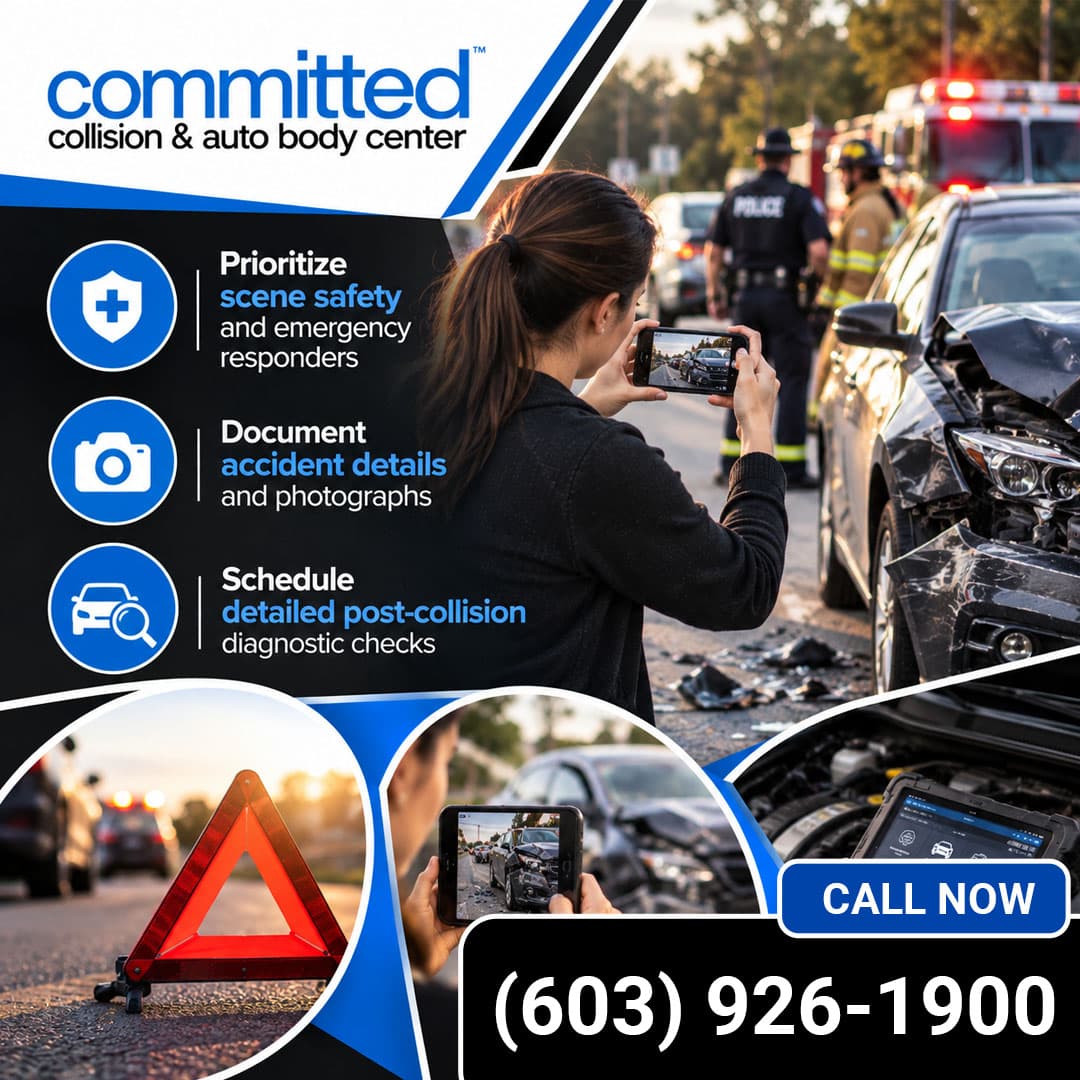
- Protect people: Follow emergency responders’ directions before gathering photographs.
- Keep records: Save driver information, witness contacts, and towing receipts.
- Report changes: Tell us about warning lights, unusual noises, or steering problems.
What Should You Do While Still at the Scene?
Check for injuries and avoid moving traffic. We recommend following emergency responders’ instructions. Do not move an injured person unless immediate danger requires action.
Turn on hazard lights if possible. Move the vehicle out of active traffic only when safe, while remaining near the scene. Photographs can wait until taking them does not expose anyone to danger.
A vehicle that starts may still have damage affecting safe operation.
| What you notice | Appropriate next step |
| Fluid leak or visibly damaged tire | Avoid driving; arrange towing |
| Deployed airbag or steering difficulty | Avoid driving; arrange towing |
| Apparently cosmetic damage | Schedule an inspection for possible concealed damage |
What Details Should You Record Before Leaving?
Collect accurate information once everyone is safe. Your insurer needs collision records to evaluate the claim. At Committed Collision & Auto Body Center, we also ask about the impact and changes in vehicle operation.
- Exchange details: Obtain names, contact information, license plates, and available insurance information.
- Photograph safely: Record damage, signs, and road conditions without entering traffic.
- Save documents: Keep witness contacts, the police incident number, and towing paperwork.
Ask responding police whether additional reporting is required. Then notify your insurer and ask about towing coverage, rental benefits, and claim documentation.
How Do We Assess Your Vehicle After a Collision?
We inspect visible damage, then investigate additional repair needs through diagnostics and authorized disassembly. Your account of the incident is the starting point for collision repair. Tell us where the vehicle was struck and what changed afterward.
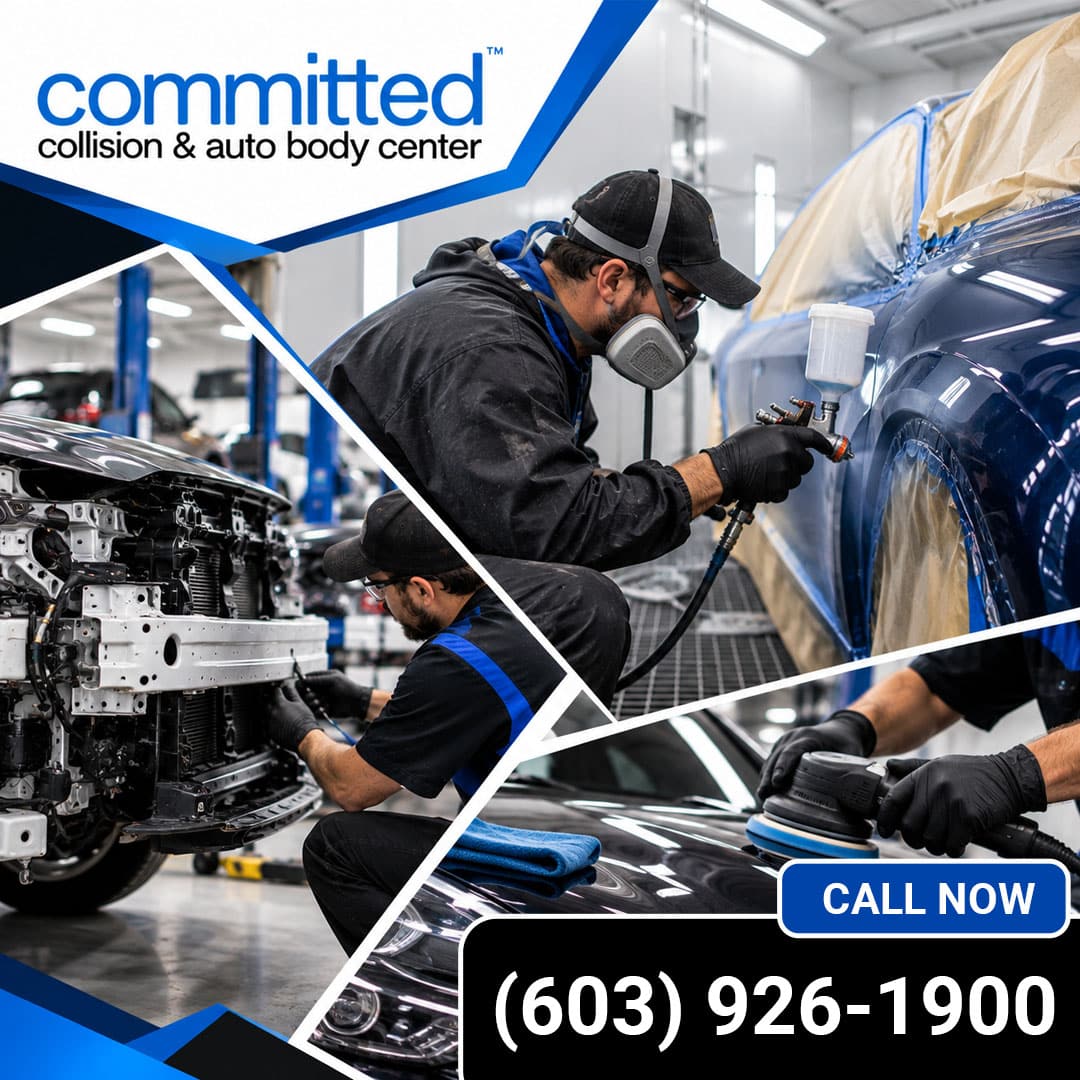
Our collision repair process includes diagnostic scanning and structural measurements. A bumper cover can conceal damaged components. Car frame repair addresses structural damage according to applicable manufacturer procedures. An exterior dent alone does not establish that structural repairs are needed.
Our auto collision center also handles accident-related mechanical repairs. Steering changes or unusual wheel noises deserve attention alongside damaged panels.
For equipped vehicles, we evaluate advanced driver assistance system (ADAS) requirements. We coordinate ADAS calibration with Automotive Alignments & Calibrations LLC when required by the vehicle’s repair procedures.
How Do We Help You Review the Repair Plan?
We explain proposed work and document additional findings before proceeding with the required authorization. At Committed Collision & Auto Body Center, our repair plan identifies procedures, parts, estimated costs, and an expected timeline.
We communicate with major insurers and provide repair documentation. Your policy determines coverage. Concealed damage may require work beyond the visual estimate, which we explain as findings become available.
When comparing certified collision repair options, ask which credentials apply to your vehicle. If your insurer recommends a collision shop, check the repair team’s qualifications and use of manufacturer procedures. Insurer participation does not establish manufacturer certification.
This Google review by our customer Nicholas B. shows what the collision repair process feels like. “I scheduled 2 of our vehicles for inspections and repairs and was blown away by the communication, the education, and the value. All auto repairs can be sticker shock-inducing; however, the people at Committed Collision were able to explain the reasoning behind their recommended repairs. They also allowed me to take my vehicle elsewhere to go out for a second opinion. No pressure, just calm reasoning. I felt very comfortable with their service. I will be going back and recommend others do as well.”
Frequently Asked Questions
Does my child’s car seat need replacement after a collision?
NHTSA recommends replacing car seats after moderate or severe crashes. Replacement may not be necessary after a minor crash that meets all NHTSA criteria. Always follow the car seat manufacturer’s instructions, which may require replacement even after a minor crash.
When can you tell me how long repairs will take?
We provide an estimated timeline after completing the repair plan. Parts availability, additional damage, and insurance approvals can affect completion. We keep you informed when the expected timeline changes.
What should I remove before bringing my vehicle in?
If you can safely retrieve them, remove valuables and personal belongings before drop-off. Contact us beforehand to confirm which keys and documents to bring.
How Can You Arrange a Vehicle Assessment?
For collision repair, contact Committed Collision & Auto Body Center at (603) 926-1900 or info@committedcollision.com. Our insurance-approved collision shop works to provide accurate, safe, and high-quality repairs.